
Weighted Pull-Up: Multiply Your Pulling Power
The weighted pull-up, an iconic exercise in streetlifting and strength training, holds a dominant place in any serious training program. Today, a growing number of enthusiasts look to push the limits of their performance by turning to advanced techniques. Among these, the weighted pull-up stands out, offering an extra challenge and exceptional results.
How to Perform a Weighted Pull-Up Correctly
Performing a weighted pull-up with precision and efficiency requires a combination of skill, technique, and focus.
Step 1: Choose the Right Dip Belt
Before you start, make sure you select an appropriate dip belt. Go for an adjustable belt that fits comfortably around your waist. Belt stability is crucial for ensuring smooth execution of the movement.
Step 2: Adopt the Right Grip
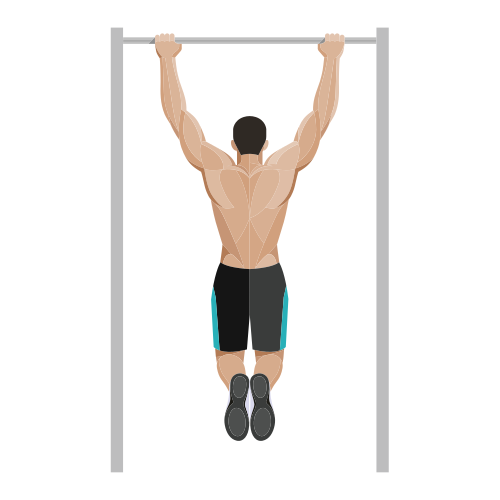
Grab the bar with a fixed overhand (pronated) grip that matches your goals. A wide grip targets the lats, while a close grip places greater emphasis on the biceps. Make sure your hands are positioned evenly to avoid unnecessary stress on the joints.
Step 3: Engage Your Core and Maintain a Stable Posture
Before starting the movement, brace your core muscles to maintain a solid posture. Avoid excessive swinging by keeping your body still throughout the exercise. Correct posture is essential for maximizing the effectiveness of the weighted pull-up and preventing injuries.
Step 4: Execute the Movement with Control
On the way up, focus on muscle recruitment by driving your elbows back and down. Avoid swinging your body so you maximize lat contraction. Control the descent by resisting gravity in a smooth, controlled manner. Synchronize your breathing – inhale on the way down and exhale on the way up. Get your chin above the bar without jerking with your feet to count the rep.

Techniques and Tips: Maximize Your Performance
By perfecting your weighted pull-up technique, you optimize every rep for exceptional results. As a coach, here are some tips to maximize your performance.
Grip
Adjust your grip according to your goals. A wide grip works the lats more, while a close grip intensely targets the biceps. Experiment to find the optimal grip for your needs.
Breathing
Synchronize your breathing with your movements to optimize oxygen delivery to the muscles. Controlled breathing improves endurance and power during the weighted pull-up.
Posture
Maintain correct posture to prevent injuries and maximize the efficiency of each rep. Keep your back straight and your shoulders back for optimal muscle recruitment.
Chalk
Apply chalk to your hands before grabbing the bar. Chalk improves grip by reducing sweat, allowing you to maintain a firm hold throughout the exercise. A solid grip is essential for effective execution of the weighted pull-up.
Making Progress on Your Weighted Pull-Up
Making progress on your weighted pull-up requires a strategic approach and unwavering consistency. First, establish a realistic starting point by determining your 1RM – in other words, the maximum weight you can add for a single rep. Then train below that load by performing sets. For example, 3 sets of 5 reps at 70% of your max load. The key lies in regularity: schedule dedicated sessions for the weighted pull-up in your training program, paying close attention to movement quality.
Vary Your Grip
Vary your grip and experiment with different widths to target different muscles. Add variations such as supinated (underhand) or pronated (overhand) pull-ups to hit the biceps or lats more intensely. If you hit a plateau, use intensification techniques such as slow negatives or partial pull-ups to stimulate muscle growth. Also invest in your overall strength by incorporating complementary exercises such as deadlifts and rows.
Rest – Recovery Is the Key
Do not underestimate the importance of recovery. Give your muscles the time they need to recover by spacing out your weighted pull-up sessions. Quality beats quantity, so focus on precise movements rather than overloading.