
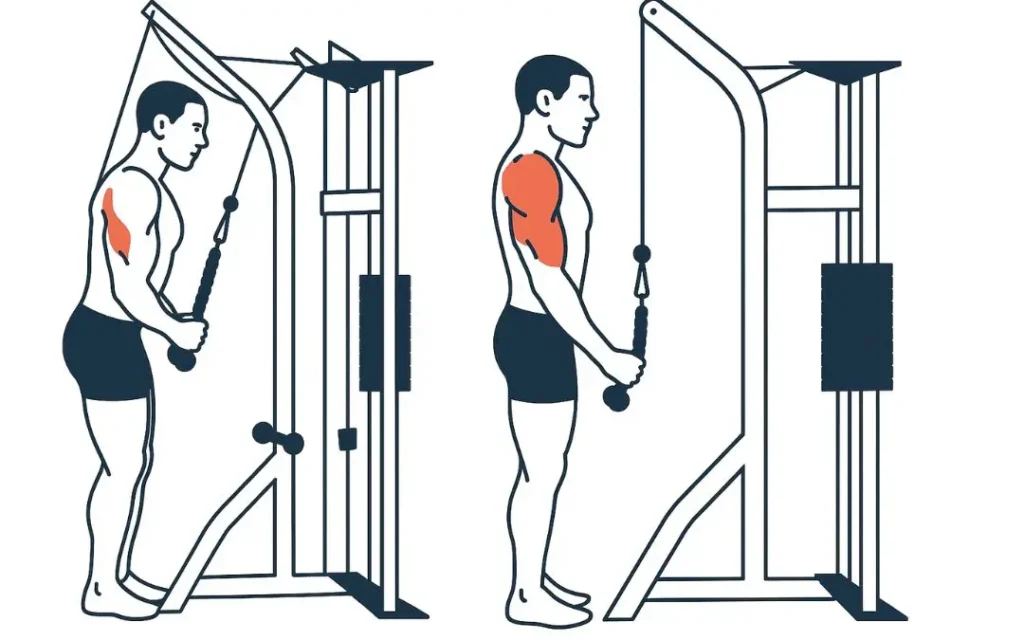
The cable tricep pushdown is a must-have exercise for developing and sculpting the muscles of your arms, particularly the triceps. This movement, commonly performed at the gym, is simple to execute but requires good technique to get the most out of it. In this article, we cover every aspect of the exercise so you can integrate it effectively into your training while avoiding common mistakes.
Exercise technique
Correct execution of cable tricep pushdowns is essential for maximising efficiency and preventing injury. The exercise is performed on a cable machine, typically fitted with a straight bar or a rope attachment, depending on your preferences and goals.
Unlike the low-pulley tricep extension, the technique involves pushing the weight downward by targeting the triceps primarily, while maintaining perfect control of the movement. Unlike compound exercises, tricep cable pushdowns isolate this muscle, making them an ideal option for targeted work.
Key technique points:
- Keep your back straight and engage your core throughout.
- Pin your elbows close to your torso for the entire range of motion.
- Control the weight in both the downward (concentric) and upward (eccentric) phases.
Program or coaching?
Find your ideal format
Answer 4 questions and get a personalised recommendation based on your level and goals.
Tailored result
Free
Muscles targeted
Like dumbbell or skull crusher variations, the cable tricep pushdown is a single-joint exercise that directly targets the triceps brachii, which is made up of three heads:
- Long head: located at the back of the arm, it is particularly engaged during the eccentric phase.
- Lateral head: responsible for the « horseshoe » appearance of the triceps.
- Medial head: often overlooked, yet crucial for stability and strength.
In addition to the triceps, this exercise subtly engages other stabilising muscles such as the posterior deltoids, the trapezius, and the core muscles. These help maintain correct posture throughout the exercise.
How to perform the cable tricep pushdown
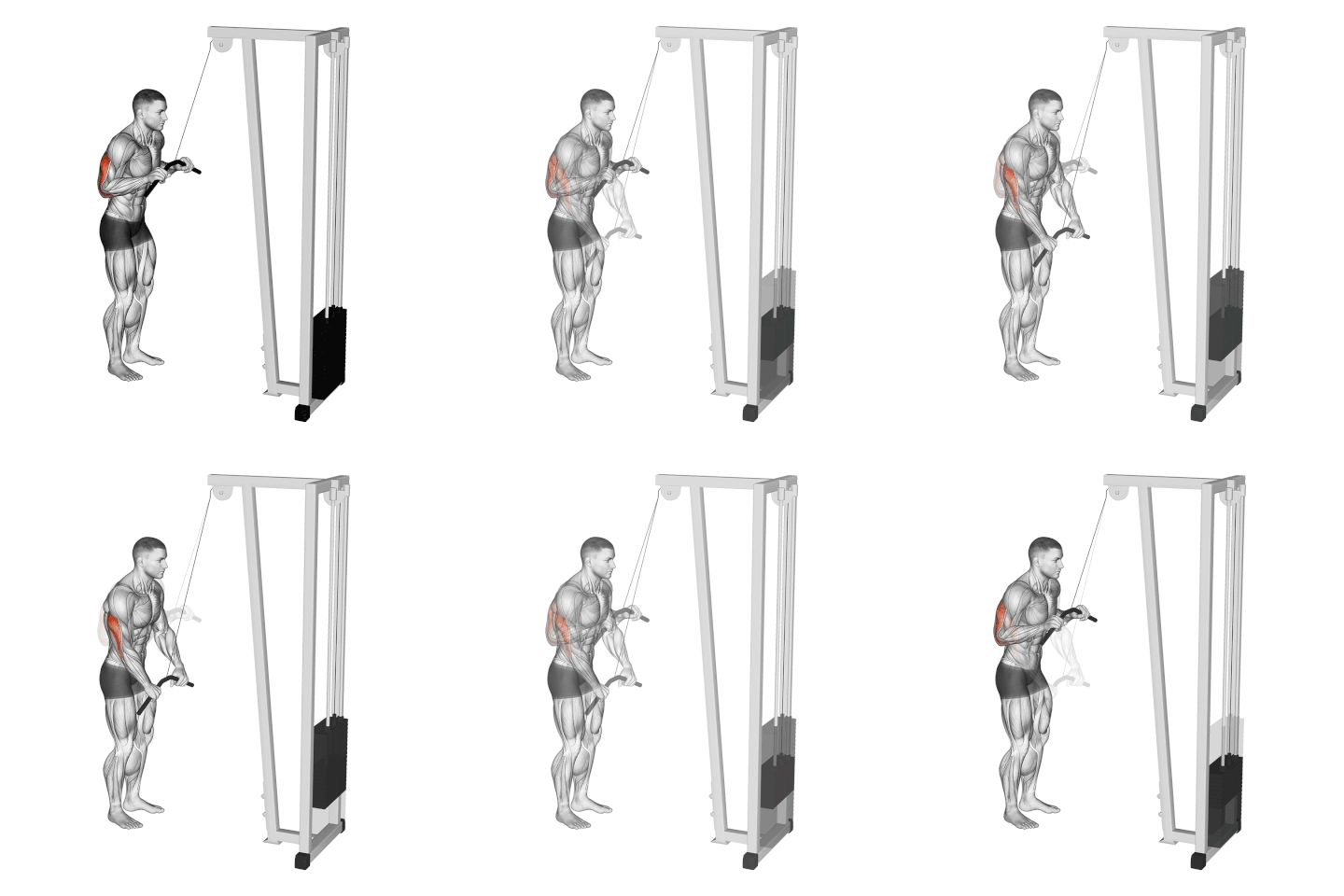
Setup for the cable tricep pushdown
Before starting the exercise, proper preparation is key to optimal results and injury prevention.
- Set the pulley: Make sure the pulley is positioned at shoulder height or slightly above.
- Choose your attachment: Use a rope for more targeted muscle activation, or a straight bar for a classic grip.
- Adjust the weight: Start with a moderate load to master the technique before progressively increasing.
Execution
-
Starting position:
- Stand with your feet hip-width apart for good stability.
- Grip the bar or rope firmly, palms facing down.
- Keep your elbows close to your body.
-
Downward phase:
- Push the weight down by fully extending your arms.
- Exhale at the end of the movement.
-
Upward phase:
- Slowly return the weight until your forearms are just above parallel.
- Inhale during this phase.
Errors to avoid to prevent injury
Although the cable tricep pushdown is a relatively safe exercise, certain mistakes can limit its effectiveness or increase the risk of injury.
Letting the elbows flare out: Your elbows must stay fixed close to your torso. If they drift outward, other muscles compensate and the triceps do less work.
Using too much weight: Starting too heavy compromises technique and raises injury risk, particularly at the elbows and shoulders.
Moving too fast: A controlled tempo is essential for maximising muscle tension. Jerky movements lead to poor execution and inefficient muscle recruitment.
Rounding the back: Maintain an upright posture with a slight core brace to protect your spine.
Coach’s conclusion
The cable tricep pushdown is a versatile exercise, suitable for all levels and essential for building strong, well-defined triceps. By mastering the technique and avoiding common errors, you can integrate this exercise into your programme safely and effectively.
To optimise your results, consider combining this exercise with other triceps movements such as weighted dips or diamond push-ups.
More triceps exercises
- Assisted dips
- Chair dips
- Triceps kickback
- Bench dips
- Skull crusher
- Skull crusher (barbell)
- Low cable tricep extension
- Dumbbell tricep extension