
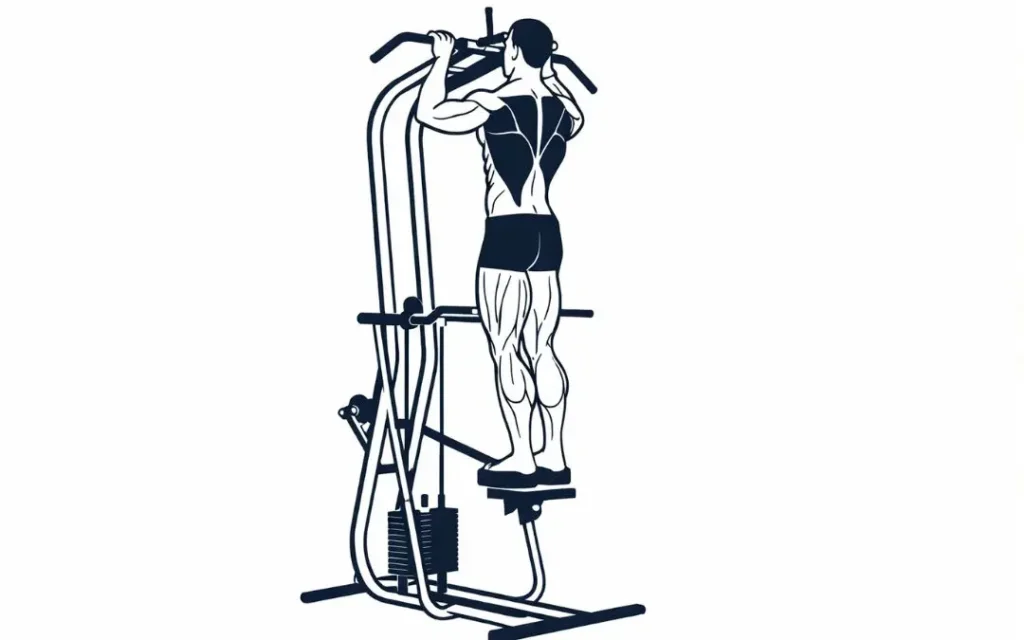
Assisted pull-ups are an excellent way to build the strength needed to master standard pull-ups. Whether you are a beginner or returning from injury, this variation lets you work the right muscles while reducing the difficulty of the movement. The key is knowing how to do them properly, with the right technique and the right equipment. In this article, we walk you through it step by step.
How to do assisted pull-ups
There are two main methods for performing assisted pull-ups: with a resistance band or on an assisted pull-up machine at the gym. In both cases, the goal is the same: to support you through the movement during a streetlifting training program so you can strengthen your back, arms, and shoulders without overexerting yourself.
Band-assisted pull-ups
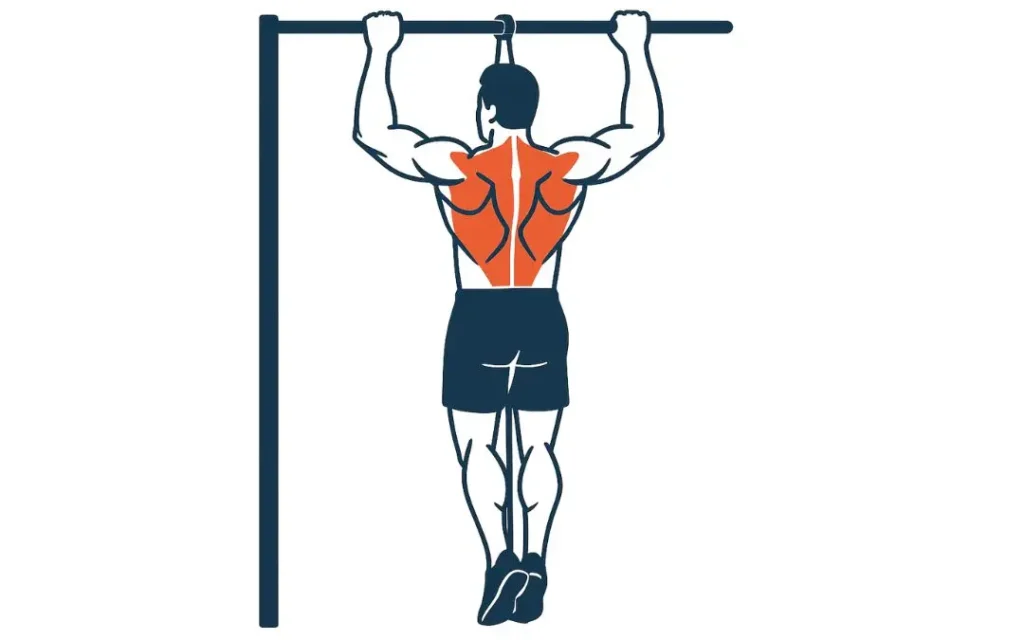
Band-assisted pull-ups are easy to set up, effective, and accessible anywhere. Simply hook a resistance band onto a pull-up bar, loop it around your feet or knees, and pull yourself up using the combined force of your body and the band.
Here is how to do them:
- Choose a band suited to your level (the thicker the band, the more assistance it provides).
- Attach it securely to the bar.
- Place one knee (or both feet) in the loop.
- Grip the bar with an overhand or underhand grip.
- Pull your chest toward the bar, keeping your torso upright.
- Control the descent: do not let the band pull you back down too fast.
Machine-assisted pull-ups
The assisted pull-up machine, found in most gyms, is a safe and accessible alternative. It has a platform (or knee pad) that rises or falls depending on the weight you select: the more weight you add, the greater the assistance.
Steps to use it correctly:
- Set the weight according to your level (more weight = more help).
- Position your knees on the platform.
- Grip the handles with a suitable grip.
- Perform the pull-up by drawing your elbows back and down.
- Lower yourself slowly, keeping muscular tension throughout.
Program or coaching?
Find your ideal format
Answer 4 questions and receive a personalized recommendation based on your level and your goals.
Tailored result
Free
Muscles targeted
Like standard pull-ups, assisted pull-ups target several key upper-body muscle groups:
- Latissimus dorsi: the primary back muscle responsible for the pulling motion.
- Biceps brachii: works intensely with every arm curl.
- Trapezius and rhomboids: stabilize the shoulder blades.
- Shoulders (posterior deltoids): contribute to the pulling movement.
- Abdominals: engaged to stabilize the torso during the exercise.
Benefits of assisted pull-ups
Choosing assisted pull-ups, whether with a band or a machine, offers several concrete advantages:
- ✓ Build strength: you develop the foundation needed for unassisted pull-ups.
- ✓ Refine technique: better movement quality without cheating.
- ✓ Reduce injury risk: assistance lowers the load on your joints.
- ✓ Adapt to any level: ideal for beginners as well as advanced athletes in recovery.
- ✓ Maintain effective intensity: assistance lets you perform more reps, which means more training volume.
Transitioning to unassisted pull-ups
The goal of assisted pull-ups is to progressively lead you toward bodyweight pull-ups with no assistance. Here is how to make that transition effectively:
- Reduce the assistance: choose a thinner band or lower the machine weight.
- Increase volume: more sets, more reps to strengthen the muscles.
- Work eccentrically: start at the top of the movement and lower yourself slowly.
- Mix in variations: add Australian pull-ups or negative pull-ups.
- Test your progress regularly: attempt an unassisted pull-up every 1 to 2 weeks.
Once you master bodyweight pull-ups… you can move to the next level:
When standard pull-ups become too easy, it is time to move on to weighted pull-ups. This variation involves adding an external load (weighted vest, dip belt, dumbbell between the legs) to keep progressing in strength and muscle mass.
Tip: make sure you can perform at least 8 to 10 strict pull-ups before adding weight.
Common mistakes to avoid to stay injury-free
Even when assisted, pull-ups must be performed with technical rigor. Here are the most common mistakes to avoid:
- ✗ Pulling with the arms only: your back should initiate the movement.
- ✗ Using momentum: focus on a slow, controlled movement.
- ✗ Relying too much on the assistance: gradually reduce the help over time.
- ✗ Incorrect hand placement: a grip that is too wide or too narrow throws off the effort balance.
- ✗ Excessive lower-back arch: maintain solid core tension throughout the movement.
Coach’s conclusion
Assisted pull-ups are far more than a beginner’s shortcut: they are a strategic step in the progression toward unassisted pull-ups and then weighted ones. Whether you choose band-assisted pull-ups or a machine, what matters most is progressing gradually, with clean technique and a clear goal: become stronger, more stable, and fully capable of controlling your own bodyweight.