Ring Muscle Up
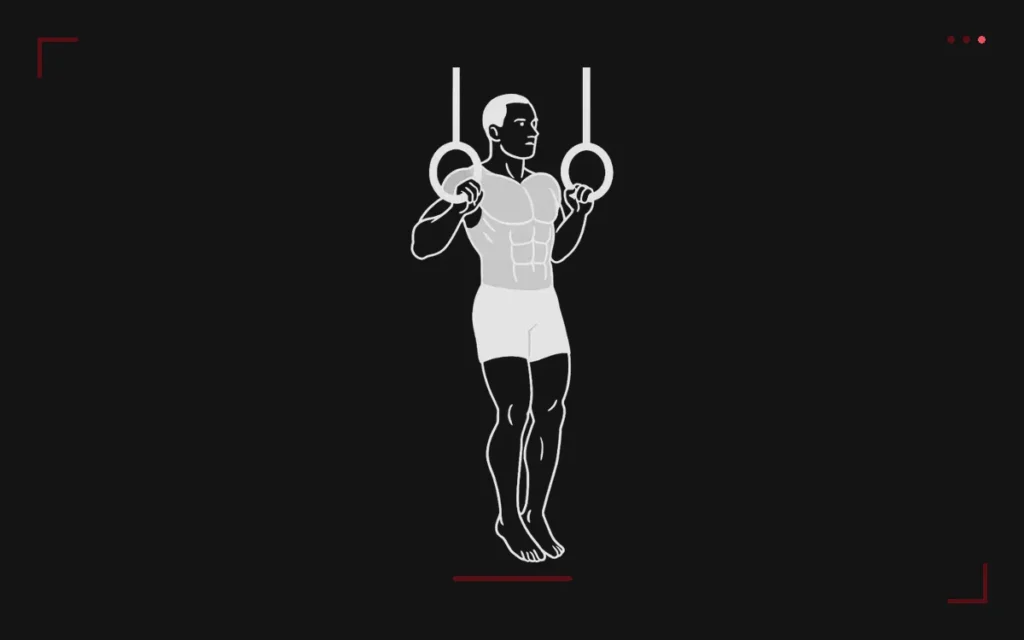
The ring muscle up is one of the most impressive movements in streetlifting. It combines power, technique, and mobility to transition from a hang into a support position above the rings. Whether you are a beginner or an experienced street workout athlete, this complete guide is for you.
How to Do the Ring Muscle Up
The ring muscle up is an explosive transition between a pull-up and a dip. Here are the key steps to execute it correctly:
- Starting position: Hang from the rings with a false grip – your wrists resting above the rings. This is essential for a successful transition.
- Pull phase: Perform an explosive pull, driving your elbows back rather than down. The goal is to bring your chest as high as possible, ideally up to ring level.
- Transition: The critical moment. Shift your shoulders above the rings quickly while keeping your wrists well positioned. This is where scapular mobility and technique make all the difference.
Ring Muscle Up vs. Bar Muscle Up: Key Differences
The bar muscle up and the ring muscle up are two distinct movements:
- Stability: rings are unstable, which places greater demand on the stabilizing muscles (shoulders, scapulae, core).
- Grip: the false grip is virtually mandatory on rings, whereas on the bar a standard grip can be enough.
- Range of motion: rings allow a more natural range of motion, reducing joint stress, especially at the wrists and elbows.
- Strength vs. coordination: the bar muscle up demands more explosiveness, while the ring version requires greater body control.
Why Train the Ring Muscle Up
Training the ring muscle up offers many benefits, both for calisthenics enthusiasts and streetlifting athletes:
- Full upper-body strength: intensely activates the back, biceps, triceps, deltoids, chest, and core.
- Joint stability: improves proprioception and shoulder stability.
- Mobility: develops better scapular and thoracic range of motion.
- Versatility: builds a foundation for more advanced movements such as the front lever or the strict muscle up.
- Competition preparation: essential for performing in streetlifting, where ring muscle ups are frequently required.
The Ring Muscle Up Variation Preferred by Female Streetlifting Athletes
Among female athletes, the ring muscle up is often trained in a strict version or band-assisted version. This allows for effective progress without relying on momentum, with a strong emphasis on core engagement and technique. This variation builds lasting functional strength while reducing injury risk.
High-level female competitors also favor tempo work (slow on the descent, explosive on the way up) to maximize movement control.
Tips to Master the Ring Muscle Up
Here are the best coaching tips to master the ring muscle up:
- Train your false grip: hang regularly in false grip to get your wrists used to the position.
- Build pulling power: do explosive pull-ups, isometric pull-ups, and chest-to-ring pull-ups.
- Be solid on ring dips: you should be able to perform 8-10 clean ring dips to secure your lockout.
- Master the technique: practice with broken-down repetitions. Use resistance bands to learn the correct movement pattern without cheating.
- Shoulder mobility: incorporate thoracic opening exercises, external rotation drills, and scapular control work.
- Film yourself: reviewing your videos helps you identify breakdowns in the transition.
Coach’s Conclusion
The ring muscle up is a cornerstone movement in streetlifting. It demands patience, technique, and a solid strength base. By mastering the false grip, building your stability, and working through the right progressions, you can achieve this iconic movement in a clean, safe, and efficient way.
Don’t get discouraged: every attempt brings you closer to success. Surround yourself with experienced practitioners, vary your methods, stay consistent, and progress at your own pace. The ring muscle up is not reserved for the elite – it is accessible to everyone with intelligent, structured training.

mathieu
Street workout athlete since 2019, I discovered streetlifting in 2023. Today I share my passion for the sport through streetliftings.com.