
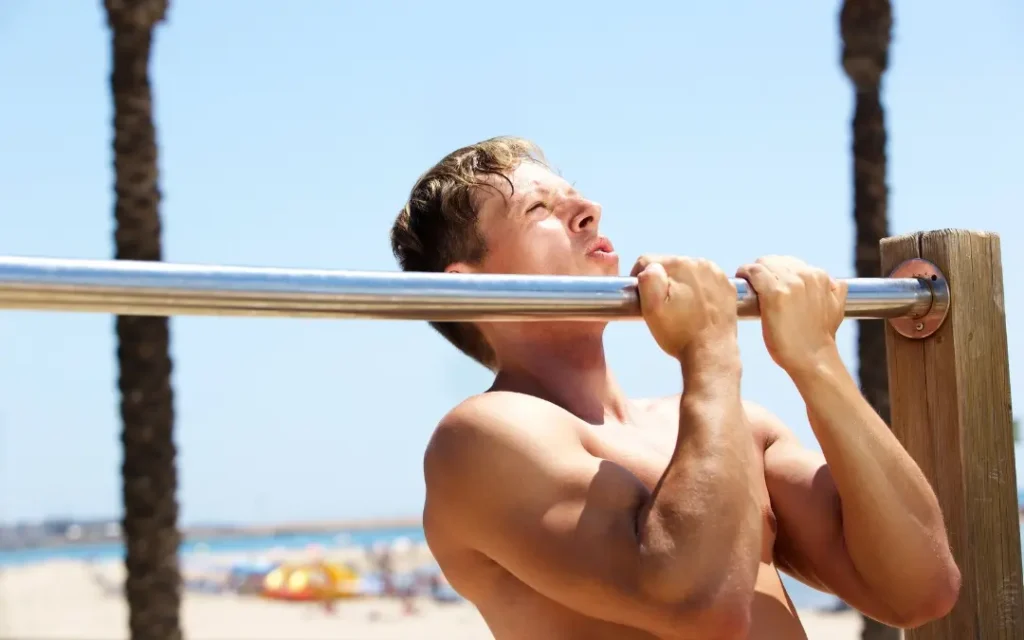
Want to build a powerful, well-rounded upper body? Supinated pull-ups are the exercise you need. This compound movement – pulling your body up to a bar with your palms facing you – recruits a large number of muscle groups. But which muscles do supinated pull-ups actually target? Are they really the ones you think? Let’s break down the anatomy of this essential exercise.
Start Here
- Streetlifting Program
- Weighted Muscle Up Program
- Weighted Pull-Up Program
- Weighted Dips Program
- Squat Program
What is a supinated pull-up?
Before diving into the anatomical details, it is important to understand what a supinated pull-up actually is. Picture yourself hanging from a pull-up bar with your arms fully extended. By contracting your back and arm muscles, you pull your body upward until your chin clears the bar. That is the basic pull-up movement. What sets the supinated pull-up apart from other pull-up variations is the position of your hands.
Hand position: the key to the exercise
As its name suggests, the supinated pull-up is defined by a supinated grip – meaning your palms are turned toward you. This hand position slightly changes the pulling angle and recruits the muscles differently compared to a pronated grip (palms facing away).
Program or coaching?
Find your ideal format
Answer 4 questions and get a personalized recommendation based on your level and goals.
Tailored result
Free
Which muscles do supinated pull-ups work?

Thanks to their complex movement pattern, supinated pull-ups recruit a large number of muscles, primarily located in the back and arms.
Back muscles: the strength builders
The back is the most heavily worked area during pull-ups. Think of your back as a large sail – the more developed it is, the more force you can apply to the bar.
- Latissimus dorsi: These are the primary drivers of the movement. They act like wings, pulling the arms downward and drawing the shoulder blades together. They are what bring you up to the bar.
- Trapezius: These muscles act like the stays of a bridge, stabilizing the shoulder blades and maintaining good posture throughout the movement.
- Rhomboids: Think of them as elastic bands pulling the shoulder blades toward the spine. They play a crucial role in scapular retraction, an essential movement for proper pull-up technique.
- Teres major: This muscle assists the latissimus dorsi by providing additional support during the pulling phase.
Arm muscles: the movement finishers
The arms play a complementary role by providing the force needed to flex the elbow and maintain the grip.
- Biceps brachii: This is the muscle that visibly bulges when you flex your elbow. It contributes to both elbow flexion and forearm supination, which is particularly important for supinated pull-ups.
- Brachialis: Located beneath the biceps, it is a powerful elbow flexor. It works in synergy with the biceps to pull your body upward.
- Brachioradialis: This deeper muscle enables the palm to rotate upward (supination), which is the starting position for supinated pull-ups.
How do supinated pull-ups work?
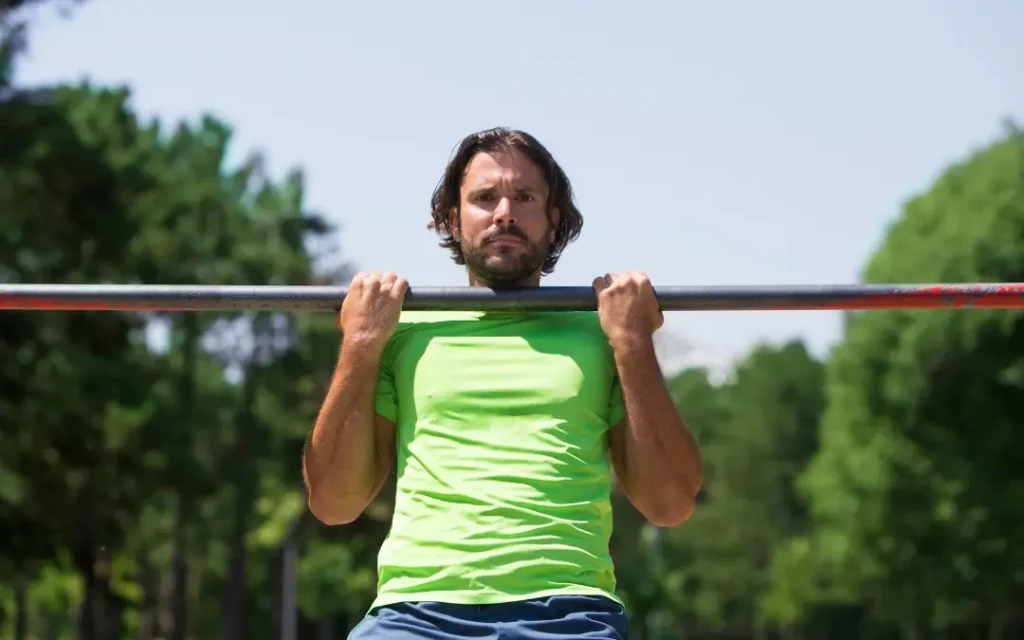
Understanding the mechanics of the movement is essential for optimizing your training and preventing injuries. The muscles targeted by supinated pull-ups work in synergy to execute this complex movement.
Simplified biomechanics
When you perform a supinated pull-up, several joints are involved: the shoulder, the elbow, and the wrist. The shoulder performs adduction and internal rotation while the elbow flexes. The wrists are supinated – hence the name of the exercise. This complex coordination between different parts of the body allows the pulling movement to be executed efficiently.
The importance of the negative phase
Often overlooked, the negative phase – the controlled lowering of your body – is crucial for developing strength and muscular endurance. By slowing down the descent, you increase tension on the muscles targeted by supinated pull-ups, promoting their growth.
Conclusion
Supinated pull-ups are a versatile and effective exercise for developing a powerful, well-rounded upper body. By evenly targeting all the muscles worked in supinated pull-ups, they help improve your physique, strength, and posture. Do not hesitate to incorporate this exercise into your training routine to take full advantage of its benefits.