
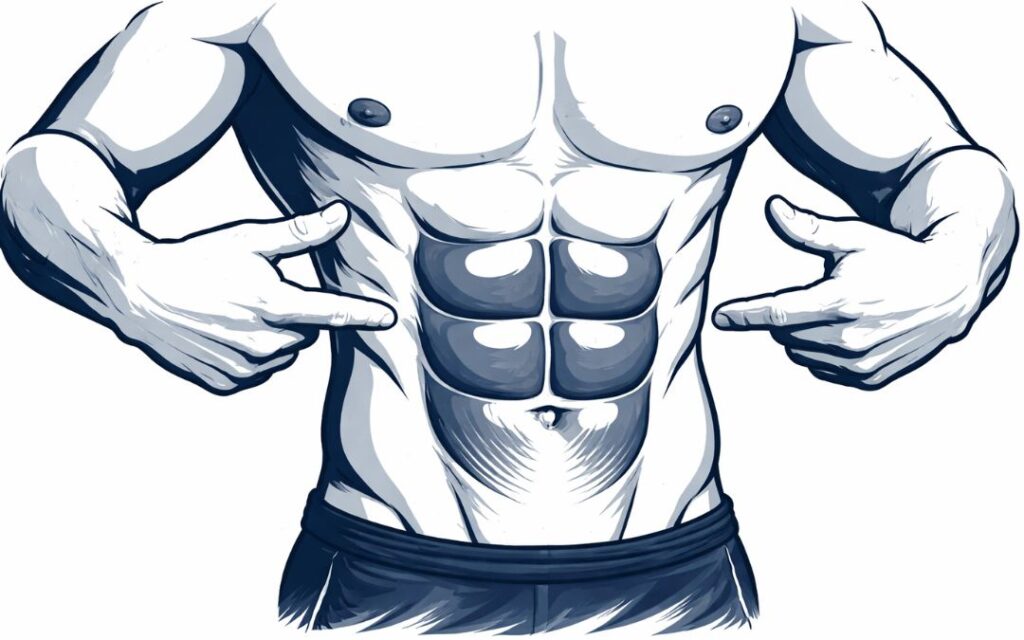
Classic ab exercises like crunches are often considered essential for strengthening your core. Yet these movements can be a persistent source of lower back pain and pelvic floor problems, especially after the age of 40. Find out why these traditional exercises can harm your back and how to adopt gentler, equally effective alternatives.
Start Here
- Streetlifting Program
- Weighted Muscle Up Program
- Weighted Pull-Up Program
- Weighted Dip Program
- Squat Program
Traditional Crunches: Hidden Risks and Effective Alternatives
Many people experience back pain after doing classic ab exercises, which can be attributed to excessive pressure on the spine and surrounding muscles. To avoid these issues, it makes sense to explore gentler alternatives that protect your back while still strengthening your abs. One effective method is to adopt the stomach vacuum technique. This practice deeply engages the trunk muscles without placing excessive strain on the lower back, promoting better posture and a flatter stomach.
Classic ab exercises place excessive pressure on the spine and the pelvic floor. This repeated stress can worsen existing back problems and even create new ones, especially when technique is not perfectly mastered.
Impact of Pressure on the Lumbar Discs
Did you know that doing crunches can put your intervertebral discs under serious strain? With each movement, these exercises place pressure on them equivalent to several kilograms. This repeated tension can weaken the support structures of your back.
The risk of developing herniated discs is very real. Over time, this constant compression can also aggravate pre-existing back problems. It is therefore crucial to be aware of the potential impact of such exercises on back health and to consider alternatives or adaptations that are more considerate of the spine.
Strengthening the Pelvic Floor
Doing classic ab exercises may seem like a good idea for strengthening the core, but these exercises have a hidden impact. They increase intra-abdominal pressure, which pushes the organs downward. This can weaken the perineum, a crucial area of the body.
In some women, especially after pregnancy, this excessive pressure can lead to uncomfortable issues. We are talking about problems such as incontinence or even organ prolapse. These consequences are not rare and deserve our full attention when choosing physical exercises.
Ab Exercises and Back Pain: Surprising Causes and Solutions
The relationship between poorly executed ab exercises and back pain is explained by the biomechanics of the body. Traditional exercises often neglect the deep muscles that actually stabilize the spine, focusing instead on more visible superficial muscles.
Causes of Muscular Imbalance and Prevention
Crunches are often the first choice for those looking to tone their stomach, but they focus mainly on the rectus abdominis. The problem? They completely neglect the transverse abdominis and the deep obliques, muscles that are nevertheless essential for a balanced core.
This underuse of the deep abdominal muscles can weaken your natural support. This type of imbalance reduces the protection of your back, increasing the risk of lower back pain. For a more complete and protective workout, it is wise to include exercises that engage all the abdominal muscles.
Problems Related to Stabilizer Muscle Activation
When doing classic ab exercises, people often use the hip flexors instead of the deep abdominals. This bad habit can be dangerous for the lower back.
Traditional ab exercises, although popular, can often lead to back pain due to the excessive pressure they place on the spine. For those looking for a gentler alternative, there are options that strengthen the core without compromising the back. Bodyweight exercises are ideal for targeting the abdominal muscles while protecting your back, offering a complete and safe workout.
Indeed, this compensation places excessive stress on the lumbar vertebrae and causes temporary hyperlordosis. This weakens the lumbar region because the pressure is not distributed correctly. To protect your back while strengthening your core, it is crucial to clearly identify the muscles you want to work and to adopt a technique that genuinely engages the deep abdominals. This takes a little practice, but your body will thank you in the long run.
Natural Alternatives for Optimal Well-Being
Hypopressive breathing represents a far more anatomically respectful approach. This technique, originally developed for post-partum rehabilitation, offers benefits superior to classic ab exercises without their drawbacks.
Stomach Vacuum: Effectively Strengthening Your Core
The stomach vacuum is a fascinating technique that involves a complete exhale followed by a contraction of the stomach to create an internal vacuum. By holding the air out, the transverse abdominis muscle – this natural belt that supports our back – is intensely engaged.
This exercise is valued for its positive effects on posture. By strengthening the transverse abdominis, it improves body alignment without placing excessive pressure on the spine. Practiced regularly, it provides better stability and contributes to a slimmer silhouette.
Targeted Core Bracing: Effective and Focused Exercises
Gentle bracing exercises, such as the knee plank or the bird-dog, are ideal for those looking to strengthen their deep muscle chain without overstressing the joints. These movements stabilize the back and the abdominals, offering effective support while respecting the natural curves of the spine.
By incorporating these variations into your routine, you work effectively on stability and balance. These are functional positions that provide a solid foundation for other physical activities. You might be surprised by the level of control these exercises bring, while at the same time preserving your joint health.
Goodbye Back Pain, Hello Peaceful Core Bracing
Abandoning traditional crunches in favor of exercises such as hypopressive breathing and the stomach vacuum allows you to effectively strengthen your abs without putting your back at risk. These gentle but powerful techniques precisely target the deep muscles that support your spine and improve your overall posture. By adopting this anatomically respectful approach, you will achieve not only a more toned stomach, but also a stronger and less painful back for years to come.
Summary Table
| Aspect | Key Information |
|---|---|
| Lower back pain and traditional crunches | Crunches place excessive pressure on the spine, which can cause back pain. |
| Alternatives to classic ab exercises | Using the stomach vacuum technique offers core strengthening without excessive tension. |
| Impact on the pelvic floor | The intra-abdominal pressure from crunches can weaken the perineum, increasing the risk of incontinence. |
Frequently Asked Questions
Why can crunches cause back pain?
Crunches place significant pressure on the spine, which can cause or worsen lower back pain.
What are the alternatives to traditional ab exercises?
One effective alternative is the stomach vacuum technique, which engages the trunk muscles without placing excessive strain on the lower back.
What are the risks associated with classic ab exercises for the pelvic floor?
These exercises increase intra-abdominal pressure, which can weaken the perineum and cause problems such as incontinence.
Is the impact on the lumbar discs significant during crunches?
Yes, each crunch movement places pressure equivalent to several kilograms on the intervertebral discs, increasing the risk of herniated discs.
Can I continue doing classic ab exercises after the age of 40?
It depends on your physical condition. It is advisable to explore gentler alternatives to protect your back and pelvic floor.
In 1 minute
Program or coaching?
Find your ideal format
Answer 4 questions and receive a personalized recommendation based on your level and goals.
1 min flat
Tailored result
Free