
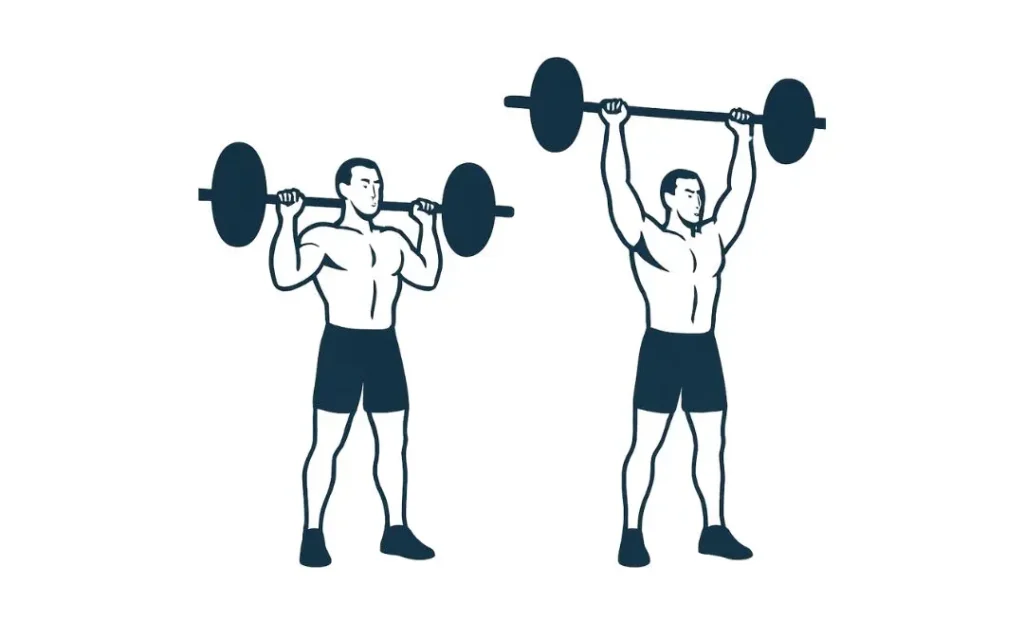
The military press is a fundamental strength training exercise, ideal for
building upper-body strength and muscle mass. Whether you are an experienced athlete or a
beginner, mastering this movement is essential for making progress. This guide covers everything
you need to know to perform the military press correctly, the muscles it works, its benefits,
and the mistakes to avoid.
What is the military press?
The military press is a strength training movement in which you push a barbell
overhead. It is typically performed with a barbell or dumbbells, either standing or seated. It
primarily targets the shoulder muscles, but also engages other muscle groups such as the triceps
and trapezius. The
pike push-up is an alternative for
those who do not have access to a gym.
How to perform the military press
Mastering the technique of the military press is crucial for avoiding injuries
and maximising results. Here is a step-by-step guide for performing this exercise correctly.
Execution
-
Starting position: Grip the barbell slightly wider than shoulder-width.
Your palms should face forward, and the bar should rest on your upper chest. -
Posture: Stand with feet hip-width apart and brace your core to stabilise
your torso. Good posture is essential to avoid placing excessive stress on the lower back. -
Press: Keeping your elbows slightly forward, press the bar straight
overhead without arching your back. As the bar clears your head, bring your shoulders
slightly together to finish the press. -
Controlled return: Lower the bar in a controlled manner back to the
starting position at collarbone level.
Muscles worked in the military press
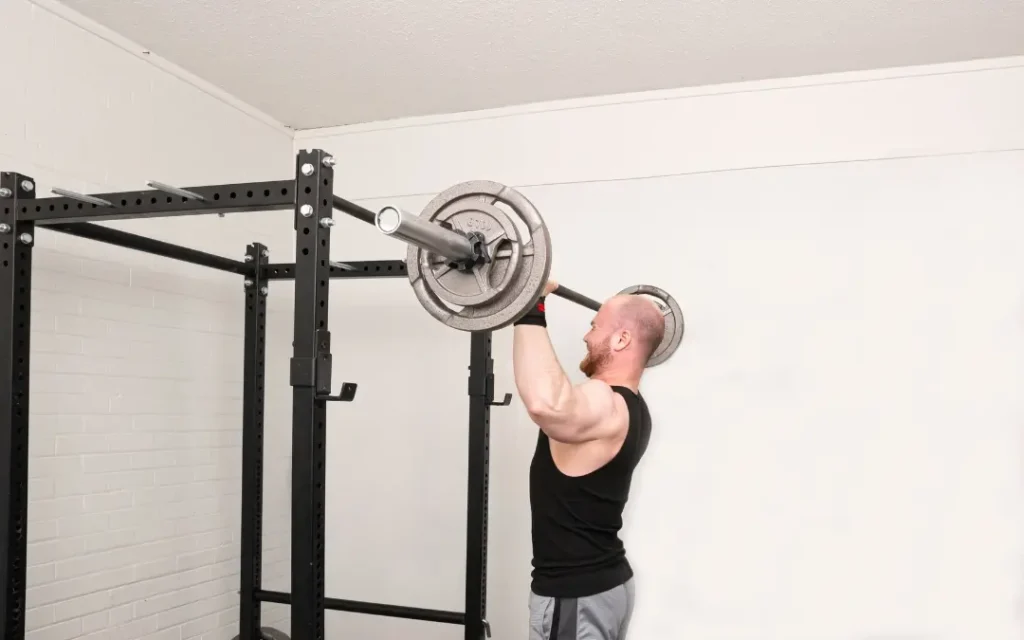
The military press is a compound movement, meaning it engages several muscle
groups at once. Here are the primary muscles targeted:
-
Deltoids: The main muscles worked. They consist of three portions – anterior,
lateral, and posterior – and are responsible for driving the arms overhead. -
Triceps: Located at the back of the arm, they assist with elbow extension
as the bar rises. -
Trapezius: These upper-back muscles are activated during the final phase of
the press and help stabilise the movement. -
Stabiliser muscles: Your abdominals, lower back, and even leg muscles are
engaged to stabilise the body throughout the movement.
Benefits of the movement
The military press offers several benefits for athletes at every level,
including improved performance on movements such as
weighted muscle ups
and
weighted dips.
Here is why this exercise deserves a place in your training routine:
-
Overall upper-body strength: It targets not only the shoulders but also the
triceps and upper back, building balanced strength across the entire upper body. -
Better posture: By strengthening the shoulder and back muscles, this
exercise helps correct postural imbalances. -
Power development: The explosive pressing motion overhead helps develop
strength and power in the muscles involved. -
Versatility: The military press can be performed with a barbell, dumbbells,
or even machines, allowing you to vary angles and adjust intensity to suit your needs.
Tips and mistakes to avoid
Although the military press is a highly effective exercise, certain mistakes
are common and can limit results or cause injuries – as is also the case with the
behind-the-neck press
or the
seated dumbbell press.
Here are some tips to avoid these pitfalls:
-
Do not arch your lower back: Poor posture at the lower back level can cause
pain and injuries. Remember to brace your abdominals and glutes to protect your spine. -
Do not lower the bar too far: The bar should come down to collarbone level,
but no lower, to avoid placing excessive pressure on the shoulders. -
Do not use too much weight: It is tempting to go heavy, but prioritise
movement quality above all. Too much weight leads to poor technique. -
Stabilisation: Do not underestimate the importance of bracing. Contract
your abdominal muscles to maintain optimal balance throughout the entire movement.
Coach’s conclusion
The military press is an essential strength training exercise for building
upper-body strength and muscle mass. By mastering the technique, understanding the muscles
involved, and avoiding common mistakes, you will be able to maximise the benefits of this
exercise while staying injury-free. Add it to your training programme to strengthen your
shoulders and triceps and improve your overall posture.
Start Here
- Streetlifting Program
- Weighted Muscle Up Program
- Weighted Pull-Up Program
- Weighted Dips Program
- Squat Program