
Programme squat force : décuple ta puissance
Le squat est l’exercice par excellence du bas du corps. Il combine, force, technique et mobilité. C’est également le 4ème et dernier mouvement de streetlifting et le 1er mouvement de powerlifting. Voici un programme pour progresser sur le squat et décupler sa force et puissance sans se blesser.
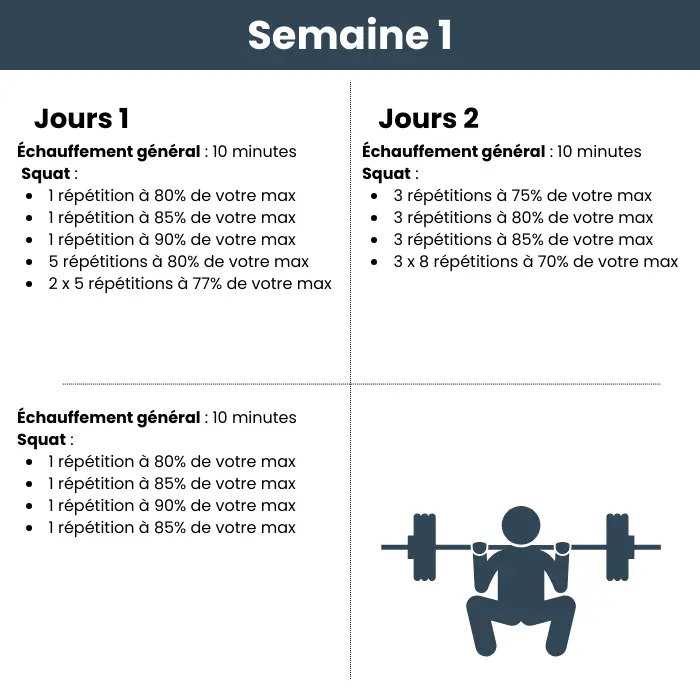
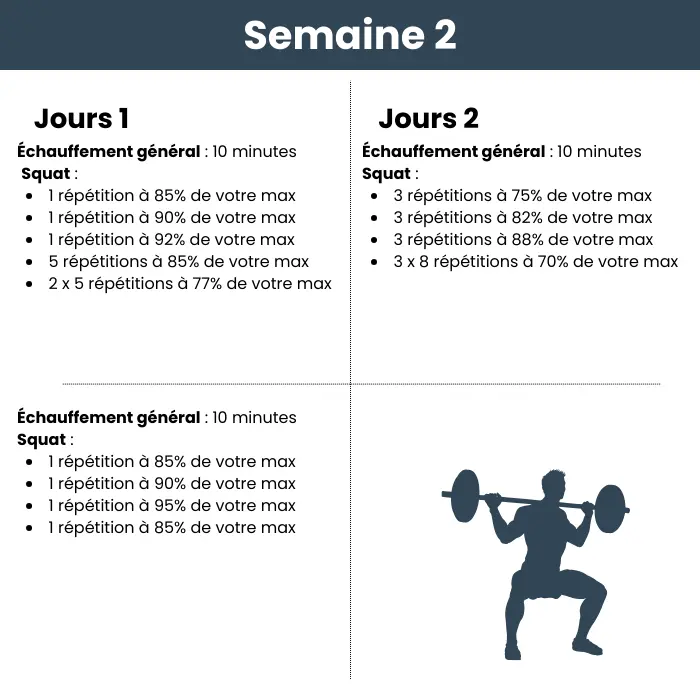
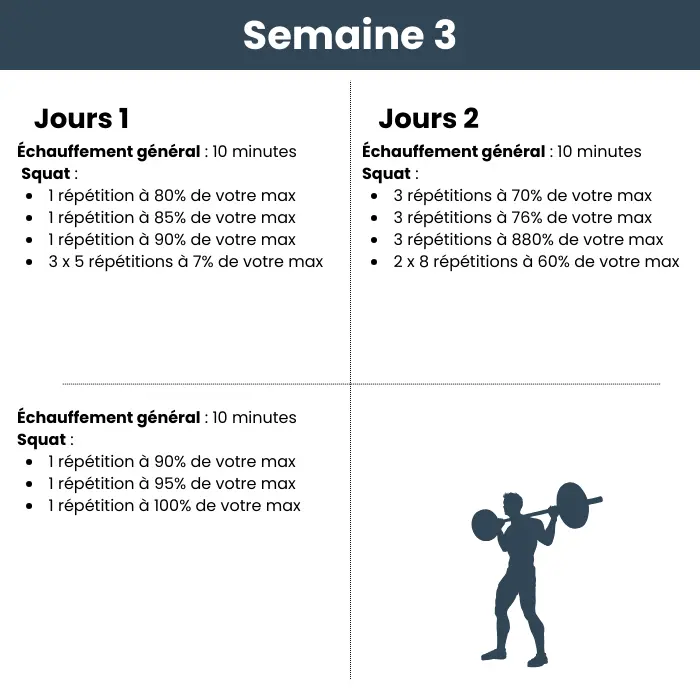
Ton programme pour gagner en force sur ton squat en 3 semaines
Avant de commencer, assure toi de maîtriser la technique des squats pour ne pas te blesser. Essaye également de soulever ton 1 rm ou bien la charge maximal que tu peux faire en une répétition.

Conseils et astuce
Technique avant tout :
- Assure toi que ta technique est correcte. La forme appropriée protège contre les blessures et cible les muscles de manière optimale.
Progression progressive :
- Augmente progressivement la charge pour stimuler la force. Ne te précipite pas pour soulever des poids lourds sans construire une base solide.
Amplitude de mouvement totale :
- Travaille sur une amplitude de mouvement complète pour activer tous les muscles impliqués dans le squat. Descend jusqu’à que l’articulation de tes hanches casse la parallèle avec celle de ton genoux.
Récupération adéquate :
- La récupération est cruciale pour la force. Assurez-vous de dormir suffisamment, et n’hésitez pas à prendre des jours de repos si nécessaire.
Nutrition adaptée :
- Une alimentation équilibrée et suffisamment calorique est essentielle pour soutenir la croissance musculaire et la récupération. Consommer suffisamment de protéines, de glucides et de graisses saines.
Échauffement dynamique :
- Avant chaque séance, effectue un échauffement dynamique pour augmenter la température corporelle et préparer les muscles et les articulations.
Contrôle de la respiration :
- Apprends à respirer correctement pendant le squat. Inspire profondément pendant lavant a descente et expirez en remontant pour maintenir la stabilité du tronc.
Travaillez la mobilité :
- Une bonne mobilité articulaire, en particulier au niveau des chevilles, des hanches et des épaules, facilitera une meilleure exécution du squat. Tu peux aussi utiliser des chaussures de squat qui te permettre d’améliorer ta mobilité.
Intégrez des accessoires :
- Utilise des accessoires tels que des ceintures de squat ou des chaussures d’haltérophilie si nécessaire, mais n’en dépendez pas exclusivement.
Pourquoi développer sa force au squat ?
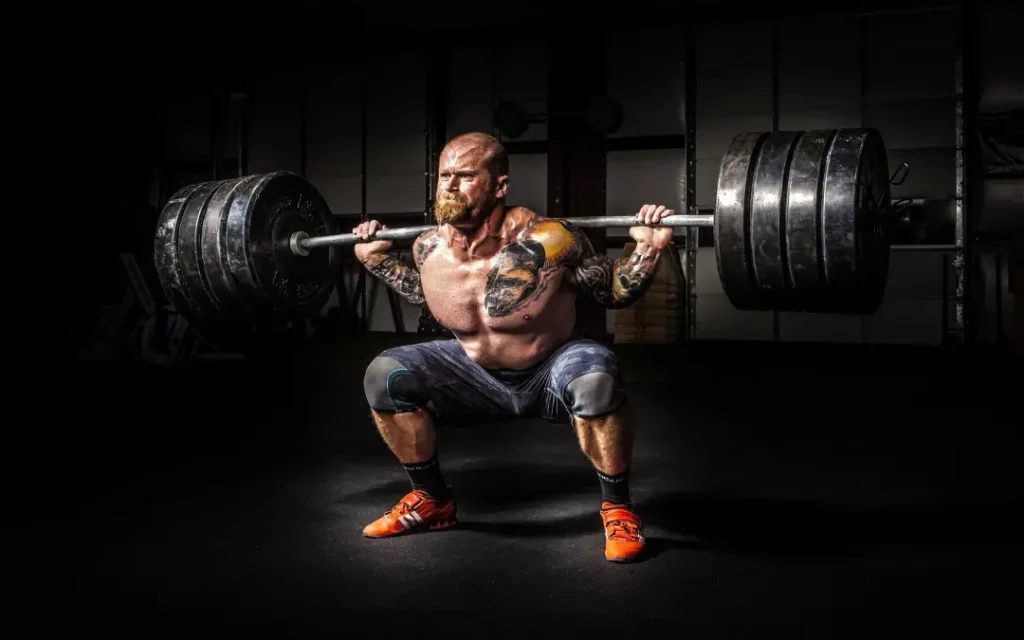
Le développement de la force au squat offre une multitude d’avantages, allant au-delà de l’apparence physique. Voici quelques raisons convaincantes pour lesquelles intégrer le squat dans votre programme d’entraînement pour renforcer vos muscles est essentiel :
Renforcement Musculaire Complet : Le squat est un exercice composé qui engage plusieurs groupes musculaires en même temps, notamment les quadriceps, les ischio-jambiers, les fessiers, les muscles du tronc et même les muscles du dos. Cela permet un développement musculaire complet et équilibré.
Prévention des Blessures : Le squat renforce les muscles stabilisateurs et améliore la stabilité articulaire, réduisant ainsi le risque de blessures. Une musculature bien développée contribue à soutenir les articulations et à prévenir les déséquilibres musculaires.
Développement de la Puissance : La force au squat s’accompagne souvent d’une amélioration de la puissance musculaire. Cela peut être avantageux dans de nombreux sports et activités, où la combinaison de force et de vitesse est essentielle.
FAQ du programme squat force
Q : Quelle est la fréquence idéale pour le programme de squat force ?
R : Idéalement, squattez au moins deux à trois fois par semaine pour maintenir une fréquence de stimulation musculaire élevée. Cependant, la fréquence peut être ajustée en fonction de votre niveau de récupération et de votre programme d’entraînement global.
Q : Comment ajuster la charge de travail au fil du temps pour continuer à progresser ?
R : Augmentez progressivement la charge, en visant une augmentation de 2 à 5 % par semaine. Si vous atteignez vos répétitions prescrites avec facilité, ajoutez du poids. La progression constante est essentielle pour développer la force.
Q : Dois-je faire des squats tous les jours pour maximiser ma force ?
R : Non, il est essentiel de permettre une récupération adéquate. Squattez deux à trois fois par semaine avec des jours de repos entre les séances. La récupération est cruciale pour éviter les blessures et favoriser la croissance musculaire.
Q : Quels sont les signes que ma forme de squat pourrait nécessiter une correction ?
R : Si vous ressentez une douleur, une tension excessive dans une zone particulière, ou si votre forme se détériore, cela peut indiquer un problème. Consultez un professionnel de la santé ou un coach pour des conseils sur la correction de la forme et la prévention des blessures.