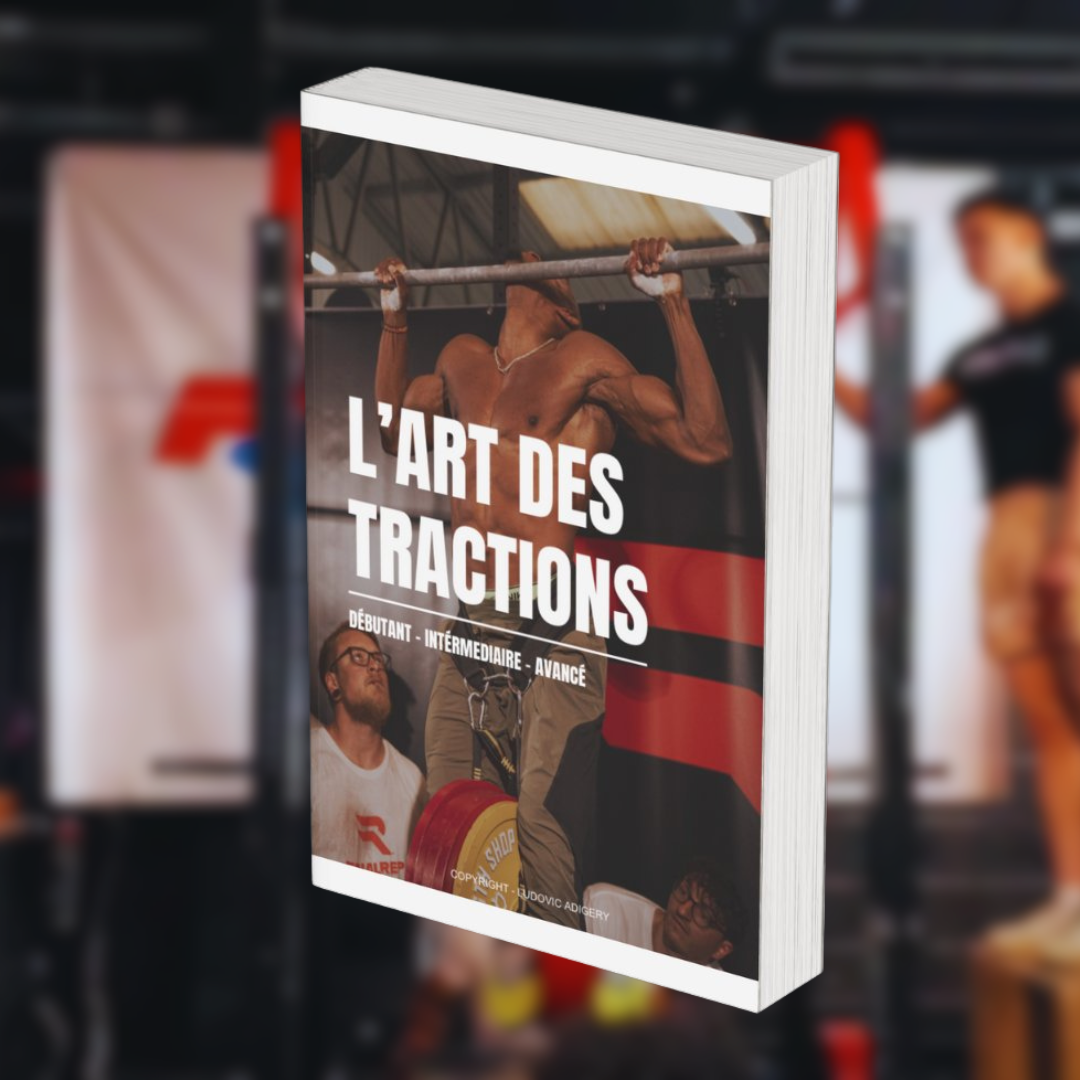
Streetlifting: The Complete Guide to the Strength Sport
Streetlifting is a strength sport that consists of performing weighted pull-ups, weighted dips, and squats with the maximum possible load. Born from the fusion of street workout and powerlifting, it is practiced in bodyweight categories and is the subject of official competitions governed by national and international federations. Streetlifting attracts thousands of new participants every year in France and around the world, drawn by its accessibility and community spirit.
What is Streetlifting?
Streetlifting is a strength sport built around three fundamental movements: the weighted pull-up, weighted dips, and the squat. The objective is simple: lift the heaviest possible load for a single repetition (1RM) in each of these movements. The total of the three lifts determines the competition ranking.
The term « streetlifting » is a contraction of street workout (outdoor training) and powerlifting (maximal strength). The sport was born in the early 2010s in the street workout parks of Eastern Europe, notably Russia and Ukraine. Calisthenics practitioners who were already training weighted pull-ups and dips naturally began adding weight to test their strength limits.
The philosophy of streetlifting rests on several pillars. First, accessibility: a pull-up bar, a dip bar, and a dip belt are enough to get started. Then, simplicity: the three movements are fundamental exercises that everyone knows. Finally, community spirit: streetlifting developed in public parks where mutual support and sharing are core values.
The World Street Lifting Federation (WSLF) is the international body that governs the sport. It defines the official rules, weight categories, and organizes the World Championships. In France, the French National Streetlifting Federation (FNSL) manages competitions and qualifications.
The 3 Official Streetlifting Movements
Streetlifting is built around three fundamental strength movements. Each movement is performed for a maximum single repetition (1RM) in competition. The total of the three lifts constitutes the streetlifting total, which determines the final ranking.
The Weighted Pull-Up
The weighted pull-up is the signature movement of streetlifting. The athlete must complete a full pull-up in a pronated grip with an additional load suspended from a dip belt. The movement starts with arms fully extended (dead hang position) and ends when the chin clears the bar. Any form of kipping or swinging is prohibited.
The weighted pull-up primarily targets the lats, biceps, traps, and forearms. It requires both pulling strength and excellent grip strength. The world’s best athletes exceed +100 kg of added weight on the weighted pull-up.
To progress on the weighted pull-up, see our complete weighted pull-up guide.
Weighted Dips
Weighted dips are the second official movement. The athlete must perform a full dip on parallel bars with an additional load. The movement requires descending until the elbows reach a minimum angle of 90 degrees, then pressing back up to full arm extension. The torso must remain relatively upright, without excessive forward lean.
Weighted dips primarily target the chest, triceps, and anterior deltoids. This is the movement where the heaviest loads are generally achieved. The world’s best athletes exceed +120 kg of added weight on weighted dips.
To progress on weighted dips, see our complete weighted dips guide.
The Squat
The squat is the third official streetlifting movement. It is performed with a barbell on the shoulders, as in powerlifting. The athlete must descend until the hip crease drops below the top of the knee (parallel or below), then stand back up to full extension. The streetlifting squat follows rules similar to those of powerlifting.
The squat targets the quadriceps, hamstrings, glutes, and spinal erectors. It is the movement that distinguishes streetlifting from simple weighted bar work. Its inclusion reinforced the « complete strength sport » dimension of the discipline.
To progress on the squat, see our complete squat guide.
Summary of the 3 Movements
| Movement | Primary muscles | Equipment needed |
|---|---|---|
| Weighted pull-up | Lats, biceps, traps, forearms | Pull-up bar, dip belt, weight plates |
| Weighted dips | Chest, triceps, anterior deltoids | Parallel dip bars, dip belt, weight plates |
| Squat | Quadriceps, hamstrings, glutes | Olympic barbell, squat rack, plates |
Weight Categories in Streetlifting
As in most strength sports, streetlifting organizes its competitions by bodyweight categories. This system ensures fairness between athletes. Weigh-in takes place on the day of the competition, generally in the morning before the events begin. Categories are defined by the WSLF and applied by national federations.
Men’s categories
| Category | Bodyweight (BW) |
|---|---|
| -60 kg | Up to 60.00 kg |
| -65 kg | 60.01 to 65.00 kg |
| -70 kg | 65.01 to 70.00 kg |
| -75 kg | 70.01 to 75.00 kg |
| -80 kg | 75.01 to 80.00 kg |
| -85 kg | 80.01 to 85.00 kg |
| -90 kg | 85.01 to 90.00 kg |
| -100 kg | 90.01 to 100.00 kg |
| +100 kg | Over 100.00 kg |
Women’s categories
| Category | Bodyweight (BW) |
|---|---|
| -50 kg | Up to 50.00 kg |
| -55 kg | 50.01 to 55.00 kg |
| -60 kg | 55.01 to 60.00 kg |
| -65 kg | 60.01 to 65.00 kg |
| -70 kg | 65.01 to 70.00 kg |
| -75 kg | 70.01 to 75.00 kg |
| +75 kg | Over 75.00 kg |
In addition to the per-category ranking, competitions often use the DOTS coefficient or a similar coefficient to establish an overall ranking across all categories. This coefficient allows performances from athletes of different bodyweights to be compared by normalizing the loads lifted relative to bodyweight.
The Official Rules
The official rules of streetlifting are defined by the WSLF and applied uniformly across all affiliated competitions. Each attempt is evaluated by a panel of three judges, each giving a « good lift » or « no lift » signal. At least two positive signals out of three are required for the attempt to be approved.
How a competition unfolds
Each athlete has three attempts per movement. The movements are performed in the following order: squat, weighted pull-up, then weighted dips. The athlete announces their opening weight before the event begins. Weights must be increased between attempts (except in the case of a failure, where the same weight may be repeated). The best successful attempt for each movement counts toward the total.
Movement validation criteria
Weighted pull-up: the movement starts with arms fully extended (dead hang). The judge gives the start signal. The chin must clearly clear the bar. No swinging, kipping, or leg movement is permitted. The athlete must control the descent.
Weighted dips: the movement starts with arms extended at the top of the parallel bars. The judge gives the start signal. The elbows must reach a 90-degree angle or less at the bottom position. The athlete must press back up to full arm extension. The movement must be continuous, without bouncing or prolonged pause.
Squat: rules are similar to those of powerlifting. The athlete unracks the bar, steps back, and waits for the judge’s signal. The hip crease must drop below the top of the knee. The judge gives the ascent signal once the bottom position is reached. The athlete must rise continuously to full extension.
Approved equipment in competition
Streetlifting competitions allow certain equipment: a lifting belt, chalk, knee sleeves (of a regulated thickness), wrist wraps, and squat shoes. Squat suits or supportive gear are generally prohibited. The dip belt and weight chain are provided by the organizer or must meet specific standards.
Streetlifting in France
Streetlifting has experienced remarkable growth in France since the mid-2010s. The French National Streetlifting Federation (FNSL) is the body that structures the practice on French territory. It organizes official competitions, manages qualifications for international championships, and contributes to the promotion of the sport.
France now hosts several dozen competitions per year, spread across the entire country. The French Streetlifting Championships bring together the best national athletes in all weight categories every year. Qualified athletes then represent France at the European and World Championships.
The French streetlifting community is particularly active on social media, especially Instagram and YouTube. Many athletes share their training sessions, progress, and advice. This visibility helps raise the sport’s profile with the general public and attract new participants.
Several gyms and street workout parks in France now offer equipment suited to streetlifting: reinforced pull-up bars, stable dip bars, weight-loading systems, and squat racks. Some gyms even organize in-house competitions or dedicated group training sessions.
Competition Calendar
The streetlifting competition calendar in France runs throughout the year. There are several types of events: local and regional competitions, open to all levels; French Championships, which bring together the best national athletes; and international championships (Europeans and Worlds) organized by the WSLF.
Local competitions are ideal for first-time competitors. They offer a welcoming environment and allow athletes to become familiar with the rules and format of an official event. Registration is generally done through the FNSL’s social media pages or those of local organizers.
For dates and locations of upcoming competitions, visit our streetlifting competitions calendar.
Streetlifting vs. Powerlifting vs. Calisthenics
Streetlifting is often compared to powerlifting and calisthenics, the two disciplines it draws from. Here are the main differences and common points between these three sports.
| Criteria | Streetlifting | Powerlifting | Calisthenics |
|---|---|---|---|
| Movements | Weighted pull-up, weighted dips, squat | Squat, bench press, deadlift | Bodyweight skills (planche, front lever, muscle up) |
| Strength type | Maximal relative and absolute strength | Maximal absolute strength | Relative strength, body control |
| External load | Yes (added weight + barbell for squat) | Yes (barbell and plates) | No (bodyweight only) |
| Minimal equipment | Pull-up bar, dip bars, dip belt | Olympic barbell, rack, bench | Pull-up bar, parallel bars |
| Training venue | Gym or street workout park | Weightlifting gym | Street workout park or gym |
| Accessibility | High | Medium (costly equipment) | Very high |
| Weight categories | Yes | Yes | Yes (in competition) |
| Victory criteria | Total of 3 movements | Total of 3 movements | Judges’ score (skills) |
Streetlifting stands out for its dual component: it combines upper-body pulling strength (inherited from calisthenics) with lower-body strength (inherited from powerlifting). This combination makes it a particularly complete strength sport that tests the entire muscular chain.
Another advantage of streetlifting is its accessibility. Unlike powerlifting, which requires costly equipment (Olympic barbell, rack, bench press), streetlifting can be practiced in any street workout park equipped with bars. Only a dip belt and weight plates are needed for the upper-body movements.
How to Get Started in Streetlifting
Streetlifting is an accessible sport provided you follow a methodical progression. Here are the recommended steps to start safely.
Prerequisites before starting
Before adding weight, it is essential to master the movements at bodyweight. The recommended minimum is being able to perform 10 strict pull-ups and 15 strict dips without added load. For the squat, solid technique with an empty barbell (20 kg) is the starting point.
Recommended beginner progression
Progression in streetlifting follows a simple principle: add weight gradually. For pull-ups and dips, start with 5 kg of added weight and increase by 2.5 kg once you can complete 5 clean reps at the current load. For the squat, follow a classic linear progression by adding 2.5 kg each session.
A typical beginner program includes 3 to 4 sessions per week: two sessions focused on the upper body (weighted pull-ups and weighted dips) and one to two squat sessions. Each session includes heavy work (3 to 5 reps) and volume work (8 to 12 reps with a lighter load).
Sample beginner training week
Monday – Upper body (strength): weighted pull-ups 5×3, weighted dips 5×3, bodyweight pull-ups 3×8, inverted rows 3×10.
Wednesday – Squat: squat 5×5, lunges 3×10 per leg, leg curl 3×12, calf raises 3×15.
Friday – Upper body (volume): weighted pull-ups 4×6, weighted dips 4×6, bicep curls 3×12, tricep extensions 3×12, forearm work.
Saturday – Squat (volume): squat 3×8, leg press 3×10, Romanian deadlift 3×10, plank holds 3x45s.
For a complete structured program, see our streetlifting program adapted for all levels.
Common mistakes to avoid
Adding too much weight too fast. Progression must be gradual to avoid injuries, especially to the shoulders and elbows. Prioritize technique over load.
Neglecting the warm-up. Weighted movements place heavy demands on the joints. A progressive warm-up with lighter sets is essential before each session.
Forgetting the squat. Many beginners focus exclusively on pull-ups and dips. Yet the squat represents a significant portion of the competition total and must not be neglected.
Not training grip. Grip strength is often the limiting factor in heavy weighted pull-ups. Incorporate specific grip work into your training.
Essential Equipment
Practicing streetlifting requires a minimum of equipment. Here are the essential items and recommended accessories for safe progression.
Basic equipment
The dip belt is the number one piece of equipment for any streetlifter. It allows you to hang weight plates from your waist for pull-ups and dips. Choose a solid model with a long chain and a reliable buckle. See our dip belt buying guide to make the right choice.
The pull-up bar must be stable, sturdy, and capable of supporting your bodyweight plus added load. For home training, a wall-mounted bar or a power tower are recommended. Discover the best options in our pull-up bar comparison guide.
Competition equipment
The lifting belt stabilizes the lower back during the squat and heavy movements. It is allowed and recommended in competition. Our lifting belt guide will help you choose the right model.
Chalk improves hand grip on the bar. It is particularly useful during heavy weighted pull-ups. Liquid chalk is the most practical option for gym training. See our liquid chalk guide.
Complementary accessories
Other equipment can complete your setup: squat knee sleeves, wrist wraps, squat shoes, and a weight bag. For an overview of all available equipment, visit our complete streetlifting gear hub.
Streetlifting Records
Streetlifting being a relatively young sport, records continue to improve every year. Here are some remarkable performances that illustrate the level reached by the world’s best athletes.
Notable men’s records
| Movement | Athlete | Performance | Category |
|---|---|---|---|
| Weighted pull-up | Jordan Music | +120 kg added | -80 kg |
| Weighted dips | Christophe Music | +150 kg added | -90 kg |
| Streetlifting total | Multiple athletes | +500 kg total | All categories |
Notable women’s records
Women’s streetlifting is progressing rapidly. The best female athletes achieve impressive performances, with weighted pull-ups exceeding +40 kg added and weighted dips beyond +50 kg added. The number of female competitors increases every year, contributing to the continuously rising level.
Official records are registered at competitions sanctioned by the WSLF or affiliated national federations. They are regularly updated on the official websites of these organizations.
FAQ – Frequently Asked Questions About Streetlifting
What is streetlifting?
Streetlifting is a strength sport that consists of performing three movements with the maximum load: the weighted pull-up, weighted dips, and the squat. It combines elements of street workout and powerlifting. Competitions are organized by bodyweight categories, and the ranking is based on the total of the three movements.
How do you add weight for pull-ups and dips?
The most common method is to use a dip belt from which you hang weight plates via a chain. Weighted vests also exist but are less practical for heavy loads. The dip belt makes it easy to add weight and adjust between sets.
How much weight to start streetlifting?
To begin streetlifting, it is recommended to first master the movements at bodyweight: at least 10 strict pull-ups and 15 strict dips. Then start with 5 to 10 kg of added weight and progress in 2.5 kg increments. For the squat, start with an empty bar (20 kg) and add weight progressively.
What is the difference between streetlifting and powerlifting?
Powerlifting is based on the squat, bench press, and deadlift. Streetlifting replaces the bench press and deadlift with the weighted pull-up and weighted dips. Streetlifting therefore places greater emphasis on upper-body strength with added weight, while powerlifting centers on barbell movements.
Do you need a coach for streetlifting?
A coach is not mandatory, but can be very helpful for optimizing technique, structuring training, and avoiding injuries. It is especially recommended for beginners who want to progress quickly and safely. Discover our recommendations on our streetlifting coaching page.
What is the best streetlifting program?
The best program depends on your level and goals. A good streetlifting program includes strength work (heavy sets of 1 to 5 reps), volume work (sets of 6 to 12 reps), and accessory exercises to address weaknesses. See our streetlifting program to find a plan suited to your level.
Is streetlifting dangerous?
Like any strength sport, streetlifting carries a risk of injury if movements are poorly executed or if progression is too fast. The most common injuries involve the shoulders, elbows, and lower back. A proper warm-up, correct technique, and gradual progression considerably reduce these risks.
At what age can you start streetlifting?
There is no strict minimum age for streetlifting, but it is generally recommended to wait until the end of growth (16 to 17 years old) before working with heavy loads. Teenagers can nonetheless train with light loads while focusing on technique. Junior categories exist in competition.
How many times per week should you train?
To progress in streetlifting, 3 to 4 sessions per week is the optimal frequency. This allows each movement to be trained at least twice per week while leaving enough recovery time. Advanced athletes can go up to 5 or 6 sessions, but recovery must be adjusted accordingly.
Can you combine streetlifting and calisthenics?
Yes, streetlifting and calisthenics are perfectly complementary. Many athletes practice both disciplines. Weighted work improves the base strength needed for calisthenics skills, while bodyweight work improves body control and mobility. Some competitions even offer mixed formats.