
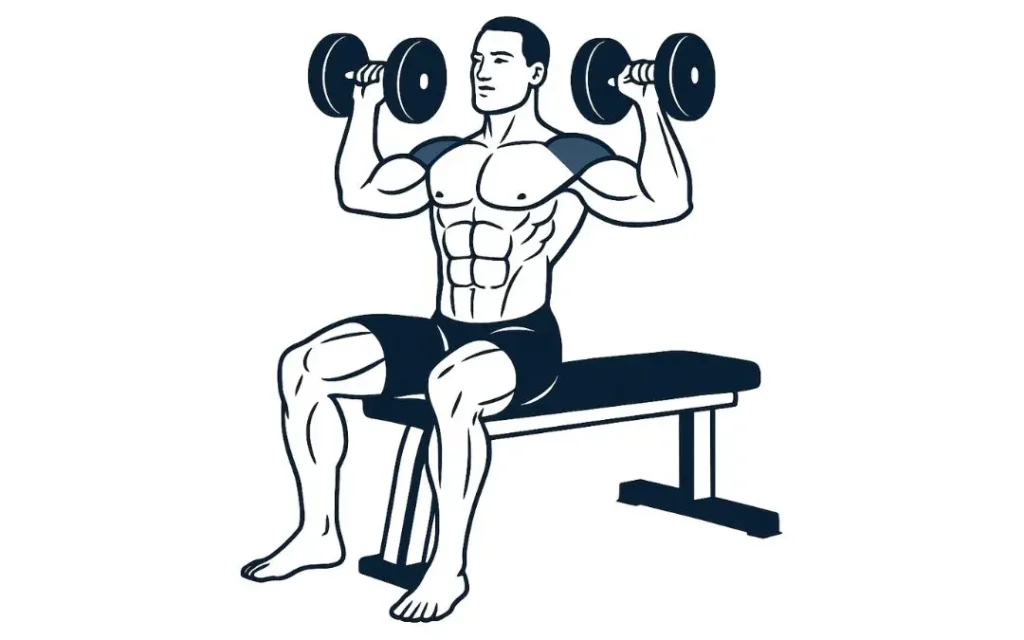
The seated dumbbell press, also known as the seated military press, is a key exercise for strengthening the shoulders and improving your weighted muscle up and weighted dips. Suitable for all levels, it fits perfectly into any training routine focused on muscle development and injury prevention. In this article, I will walk you through the best way to perform it, the muscles it targets, the mistakes to avoid, and its benefits.
How to perform the seated dumbbell press?
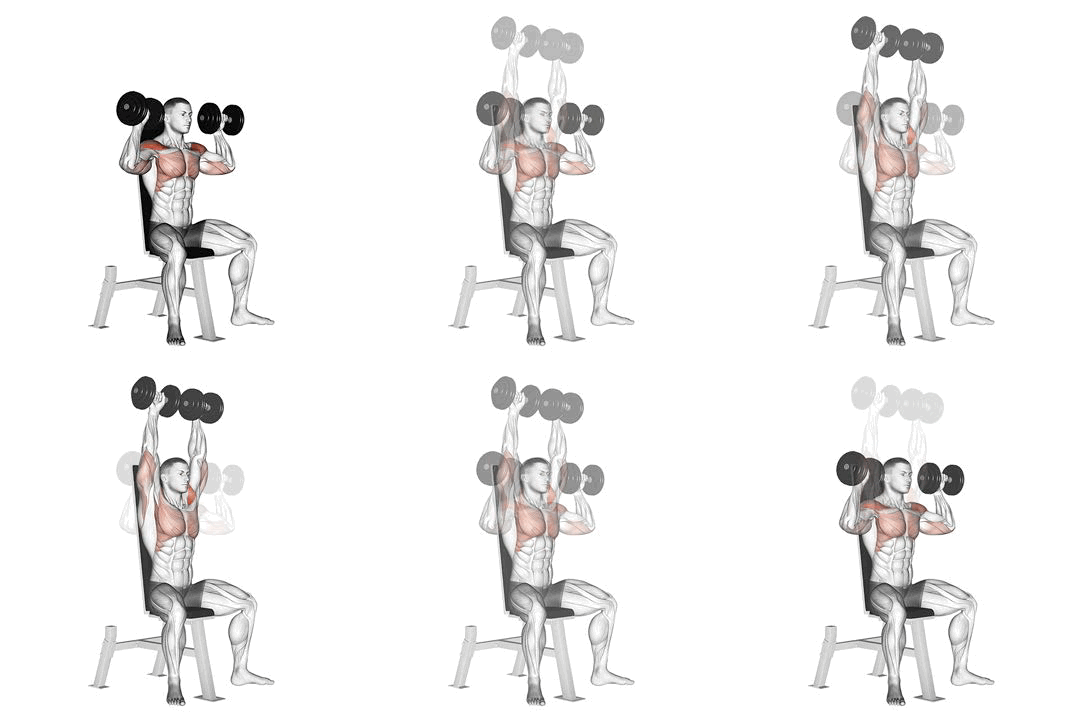
Before diving into the technical details, it is essential to understand why this exercise is so effective. The seated military press allows focused work on the deltoids, while also strengthening the stabilizing muscles of your core. To get the most out of it, correct execution is key.
Seated dumbbell press technique
-
Setup: Sit on a bench with a back support for optimal back support. Keep your feet firmly planted on the floor to ensure a stable base.
-
Grip: Grab two evenly weighted dumbbells and position them at shoulder height. Your palms should face forward.
-
Execution: Inhale while keeping your spine straight, then press the dumbbells upward until your arms are almost fully extended. Slowly return to the starting position as you exhale.
-
Reps: Perform 3 to 4 sets of 8 to 12 repetitions depending on your goal.
Program or coaching?
Find your ideal format
Answer 4 questions and receive a personalised recommendation based on your level and goals.
Tailored result
Free
Benefits of the seated dumbbell press
The seated dumbbell press offers numerous benefits, whether you are a beginner or an experienced athlete. Here are the main ones:
-
Targeted shoulder strengthening: This exercise works the deltoids in an isolated manner, allowing balanced muscle development.
-
Improved stability: The stabilizing muscles, particularly the core, are activated to maintain correct posture.
-
Versatility: Adaptable to all levels thanks to variable loads and the option to use an incline bench.
-
Reduced injury risk: Compared to the standing military press, the seated position provides better back support, reducing pressure on the spine.
-
Improved overall posture: By strengthening the postural muscles, this exercise helps correct imbalances.
Muscles targeted
The seated dumbbell press is primarily focused on the upper body, like the overhead press, and works several muscle groups:
Shoulders (deltoids): The deltoids are the primary muscles worked. This exercise targets all three heads (anterior, medial, and posterior), although the anterior head is the most engaged.
Triceps: During the pressing phase, the triceps brachii assist with arm extension.
Upper back: The trapezius and rhomboids play a stabilizing role during the exercise, contributing to smooth execution.
Mistakes to avoid to prevent injury
Like any strength training exercise, the seated military press requires perfect technique. Here are common mistakes and how to avoid them:
Poor posture: As with the behind-the-neck press, a misaligned spine can cause lower back pain. Use a bench with back support to preserve your posture.
Too much weight: Choosing a weight that is too heavy can compromise technique and increase the risk of injury. Start with lighter dumbbells to master the movement.
Incomplete range of motion: Not lowering the dumbbells far enough limits the range of motion and reduces the effectiveness of the exercise. Make sure the dumbbells return to shoulder level.
Using momentum: Do not swing the dumbbells. A controlled movement is far more beneficial for your muscles.
Skipping the warm-up: A targeted warm-up of the shoulders and core is essential before starting to avoid tension. You can begin with pike push-ups to warm up your shoulders.
Coach’s conclusion
The seated dumbbell press is an essential exercise for anyone who wants to strengthen their shoulders and improve their posture. By adopting impeccable technique and avoiding common mistakes, you will maximise your gains while preventing injuries. Remember that consistency and appropriate progression are the keys to your success.