
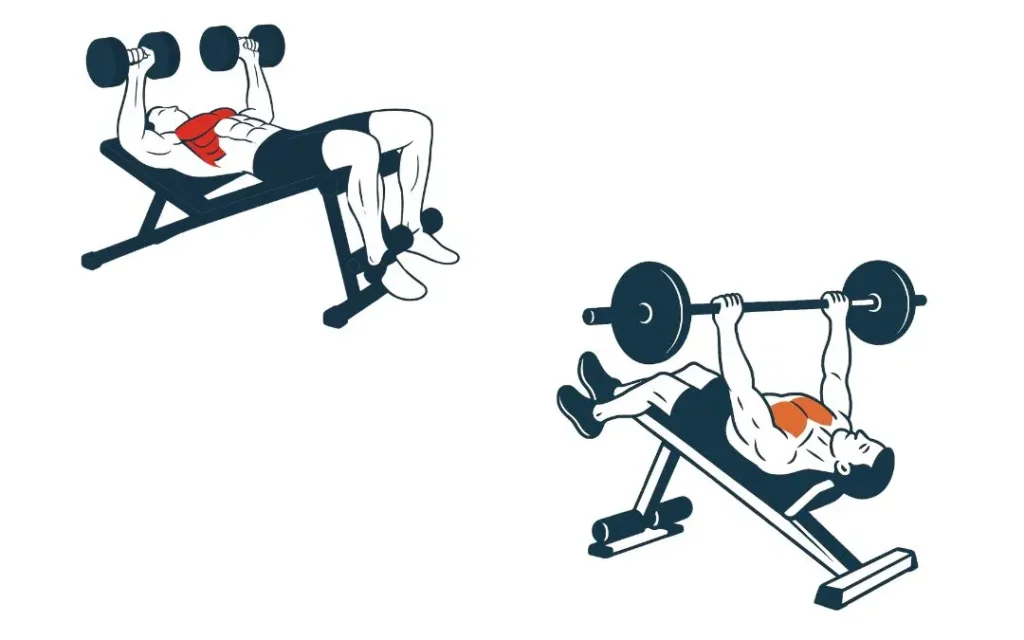
The decline bench press is an essential strength training exercise for effectively targeting the lower chest. Often overlooked in favour of the classic flat bench press, it deserves a place in any serious training programme. Whether you perform it with a barbell or dumbbells, this exercise will help you build a powerful, well-balanced chest. Let’s take a look at how to master it and integrate it into your workouts.
How to do the decline bench press
Bench setup and positioning
Before you start, it is essential to set up your bench correctly. Tilt it between 15 and 30 degrees downward: this angle maximises work on the lower chest while limiting shoulder involvement.
Get set up safely:
- Feet locked under the rollers to prevent any imbalance.
- Back flat against the bench.
- Eyes facing the ceiling, aligned with the bar if you are using a barbell.
- Warm-up essential to prepare your joints and avoid injury.
Barbell decline bench press – technique
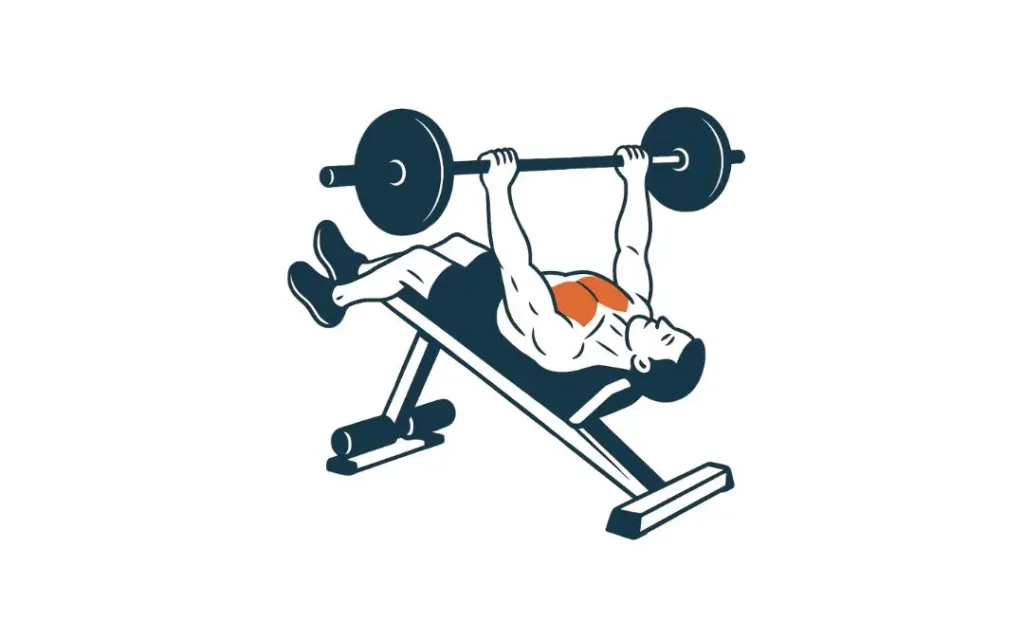
The barbell decline bench press is ideal for lifting heavy and building muscle mass.
- Grip: grip the bar in a pronated position (palms facing forward), slightly wider than shoulder-width.
- Controlled descent: lower the bar slowly toward the lower chest, without bouncing off your chest.
- Powerful extension: press the bar back up in a straight line to the starting position, squeezing your pecs.
- Breathing: inhale on the way down, exhale on the way up.
Dumbbell decline bench press – technique
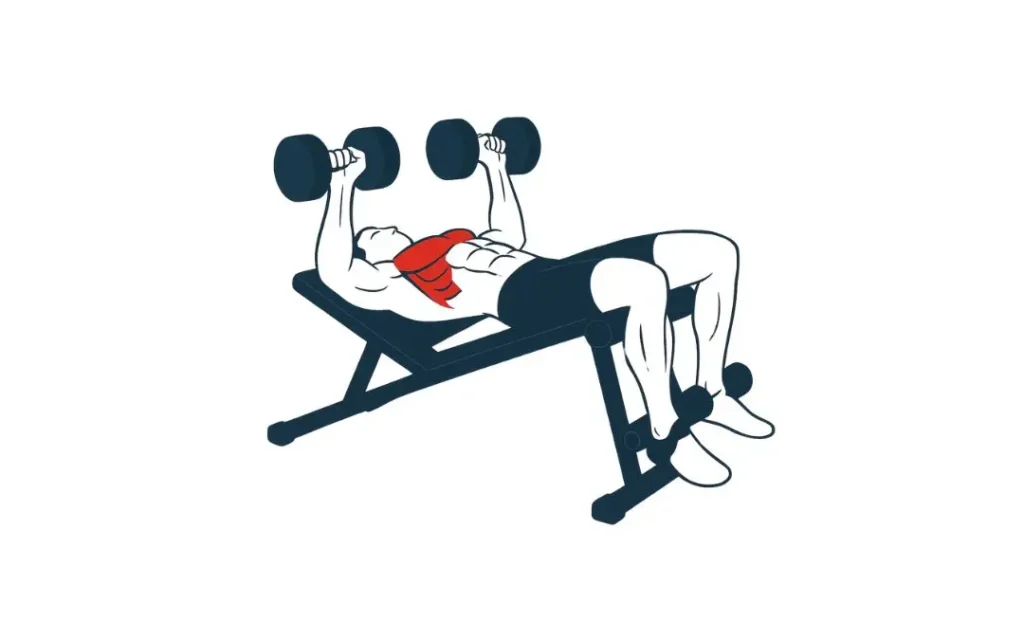
The dumbbell decline bench press allows a greater range of motion and a more balanced engagement of the stabiliser muscles.
- Lie back on the decline bench, holding the dumbbells above your chest.
- Lower the dumbbells slowly to either side of your chest, keeping your elbows slightly bent.
- Bring the dumbbells back up in an arc, until they meet above your chest.
- Always maintain control – do not lock your elbows at the top of the movement.
Program or coaching?
Find your ideal format
Answer 4 questions and get a personalised recommendation based on your level and goals.
Tailored result
Free
Barbell vs. dumbbell decline bench press
| Criterion | Barbell decline bench press | Dumbbell decline bench press |
|---|---|---|
| Maximum load | Heavier – ideal for strength | Lighter, but more balanced engagement |
| Range of motion | Slightly more limited | Greater range of motion |
| Stability | More stable thanks to the bar | More stabiliser muscle work |
| Goal | Muscle volume | Hypertrophy and symmetry |
| Level | Intermediate to advanced | Beginner to advanced |
Muscles worked
The decline bench press primarily targets the lower chest (pectoralis major, lower head). Other muscles are also involved:
- Triceps brachii
- Anterior deltoids (front of the shoulders)
- Stabiliser muscles (including the core and the shoulder girdle)
This synergistic work produces a complete and powerful upper body.
Advantages and comparisons of the decline bench press
Here is a clear comparison table between the decline bench press, the classic flat bench press and the incline bench press:
| Criterion | Decline bench press | Flat bench press | Incline bench press |
|---|---|---|---|
| Target area | Lower chest | Mid chest | Upper chest |
| Shoulder risk | Low | Moderate | Higher |
| Load lifted | High | Medium | Slightly lower |
| Range of motion | Good | Excellent | Excellent |
| Goal | Targeted lower chest volume | Overall mass | Upper chest |
| Accessibility | Intermediate | Beginner | Intermediate/advanced |
Adding the decline bench press to your training programme
To integrate the decline bench press effectively:
- Add it to your chest session after the flat or incline bench press.
- Do 3 to 4 sets of 8 to 12 reps.
- Prioritise quality of execution over maximum load.
- If you struggle to feel your chest, start with the dumbbell decline bench press to improve your mind-muscle connection.
- Vary your approach: alternate between barbell and dumbbells from session to session for balanced development.
Coach’s note
The decline bench press is an exercise that is too often overlooked, but it deserves your full attention if you are looking to build a powerful, well-balanced chest. Whether you are a beginner or experienced, adding the decline bench press to your programme will allow you to stimulate your chest from a different angle and optimise your progress. Remember: the key is consistency, perfect execution and adapting to your goals. So, ready to add this exercise to your arsenal? Get to the bar!