
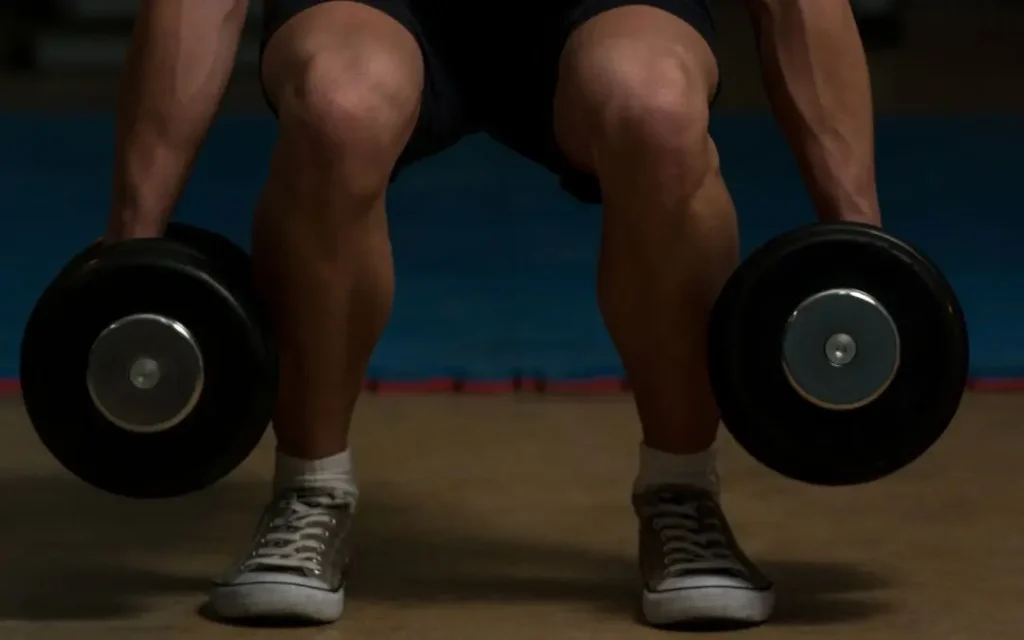
The dumbbell squat is a versatile training technique that offers numerous benefits for strengthening the lower-body muscles. Whether you are a beginner, intermediate, or advanced athlete, this complete guide will give you everything you need to master the technique, choose the right equipment, follow an effective training program, and understand why dumbbell squats can be preferable to barbell squats.
Start Here
- Streetlifting Program
- Weighted Muscle Up Program
- Weighted Pull-Up Program
- Weighted Dips Program
- Squat Program
Why Choose Dumbbell Squats?
Dumbbell squats offer several advantages that make them an essential exercise in any training program. First, they allow a greater range of motion, which puts more demand on the lower-body muscles. In addition, by reducing the tension on the arms compared to the barbell squat, they provide a safer alternative – especially for people with shoulder or elbow problems.
In 1 minute
Program or coaching?
Find your ideal format
Answer 4 questions and receive a personalised recommendation based on your level and goals.
1 min flat
Tailored result
Free
Perfect Dumbbell Squat Technique
Starting Position
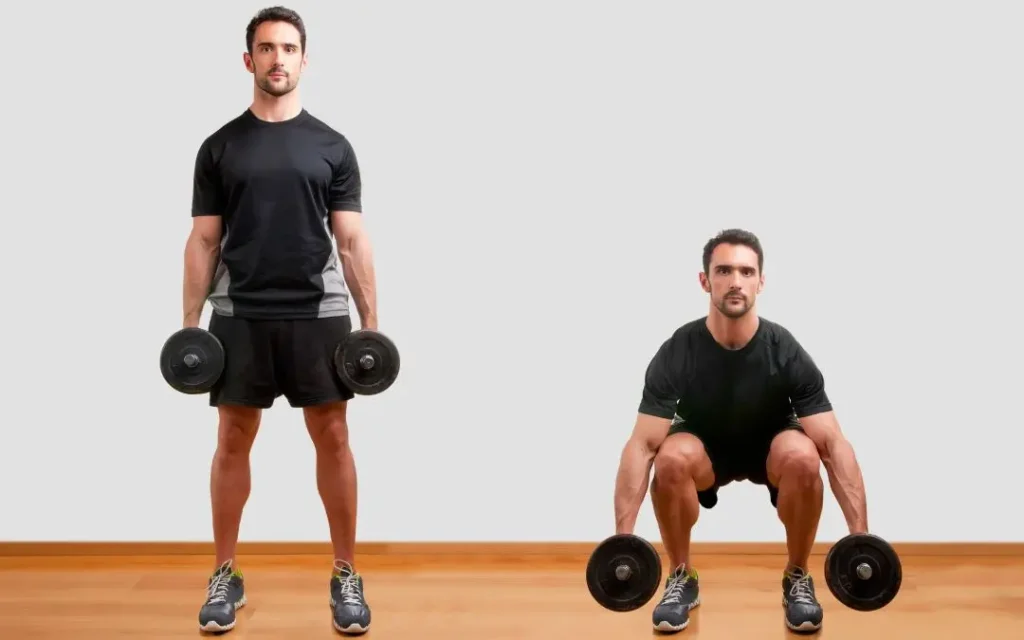
The starting position is crucial for performing a dumbbell squat effectively and safely. Begin by placing your feet shoulder-width apart with your toes turned slightly outward. Hold the dumbbells alongside your body with arms extended, keeping your back straight.
Range of Motion
Range of motion is a key factor for maximising the benefits of the dumbbell squat. Lower yourself slowly by bending your knees and hips until your thighs are parallel to the floor. Make sure to maintain an upright posture throughout the movement. Use squat shoes if you lack mobility.
Foot and Knee Position
Foot and knee position directly affects squat efficiency. Make sure your knees track in the same direction as your feet throughout the movement, avoiding any unnecessary stress on the joints.
Back Alignment
Keep your back straight throughout the squat to avoid any unnecessary strain on the spine. Good back alignment ensures even load distribution across the lower-back muscles.
Required Equipment and How to Choose the Right Dumbbells
Choosing the right equipment is essential for optimising your movement. Opt for dumbbells with a good grip so they do not slip out of your hands, suited to your strength level and training goals. Start with a load of 6 kg and increase gradually until you find a weight that allows you to perform 10 repetitions and no more.
Dumbbell Squat Training Program
Beginners
If you are just starting out, begin with light weights and perform 3 sets of 8 to 10 repetitions. Focus on technique rather than load, progressively increasing the difficulty over time.
Intermediate
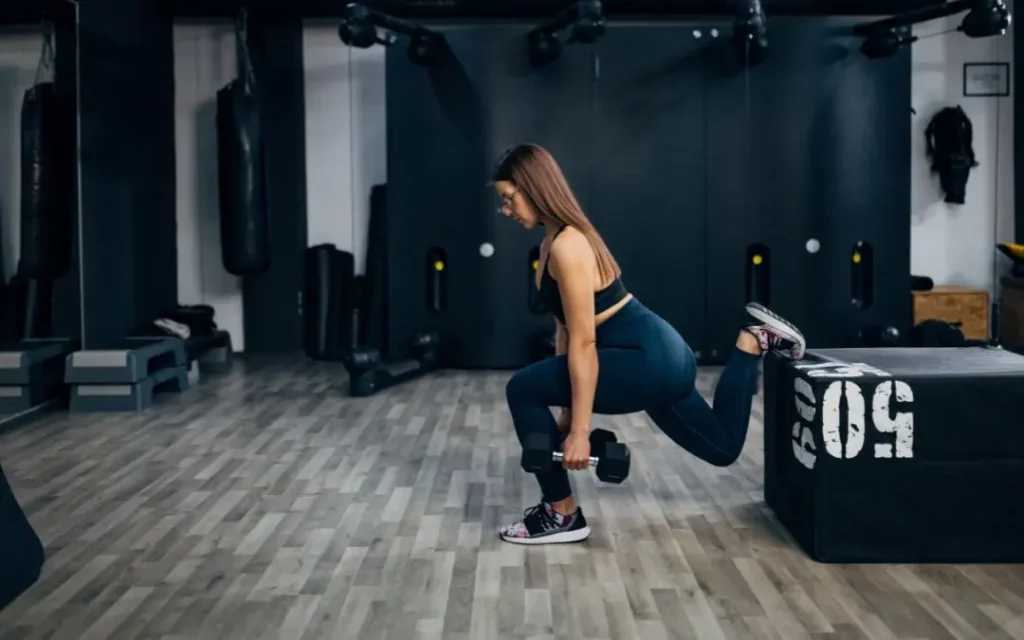
For intermediate athletes, intensify your program by adding variations such as the Bulgarian split squat with dumbbells. This variation allows a much deeper working angle and increases the difficulty. Increase the load progressively while maintaining good form.
Advanced
Advanced athletes can incorporate single-leg squats for an additional challenge. Use heavier dumbbells and adopt advanced variations to further stimulate the muscles.
Why Replace the Barbell Squat with Dumbbell Squats
Dumbbell squats offer a significant reduction in tension on the arms, making them a more accessible option for many people. In addition, the deep lower-body muscle work and movement variations bring welcome variety to your routine, strengthening the musculature needed to improve your barbell squat.
Safety Precautions and Tips
Maintain your core bracing throughout the movement. Keep your back straight and focus on your glutes, hamstrings, and quadriceps to activate them correctly without engaging the lower back.
Make sure to warm up properly before each session and do not hesitate to reduce the load if you experience any pain.
Conclusion
The dumbbell squat is a versatile exercise that deserves a prime place in your training program. By following the techniques described, choosing the right equipment, and progressing gradually, you can achieve a significant improvement in strength and stability in your lower body. Remember to consult a healthcare professional before starting any intensive training program and to prioritise safety throughout your fitness journey. Incorporating dumbbell squats can not only diversify your routine but also bring you closer to your physical conditioning goals.