
Welcome to the exciting world of strength training and muscle building! Today we explore a must-have exercise for any beginner: the pull-up. This milestone is often seen as a serious challenge, but with the right approach and proper preparation you can nail your first pull-up and go far beyond. In this article we cover what a pull-up is, the beginner exercises that will get you there, and how to keep progressing once you hit that first rep.
Start Here
- Streetlifting Program
- Weighted Muscle Up Program
- Weighted Pull-Up Program
- Weighted Dips Program
- Squat Program
What Is a Pull-Up?
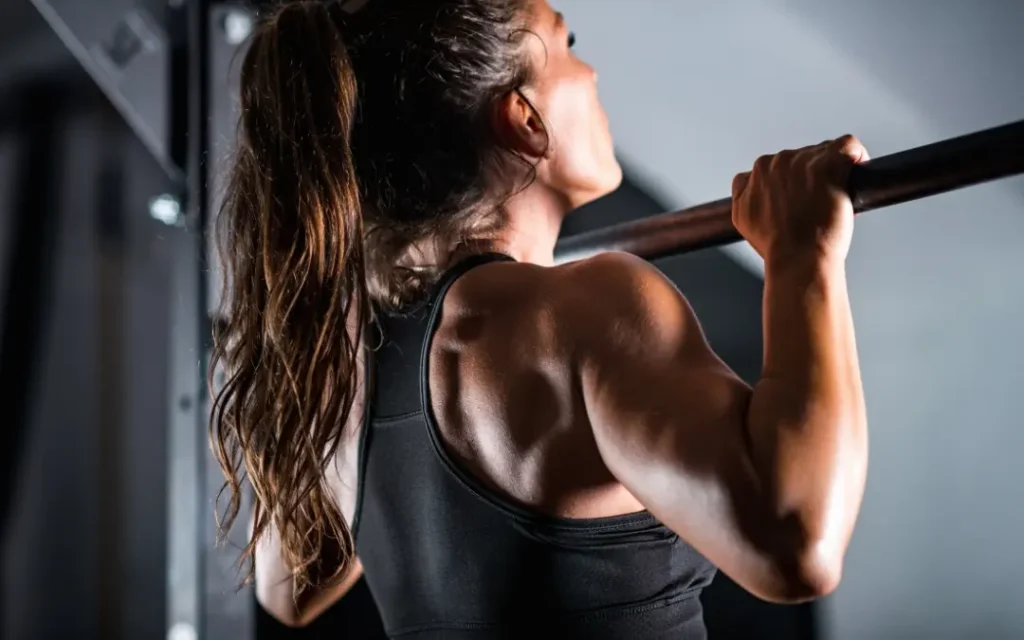
Pull-ups are a strength-training exercise that primarily targets the back, shoulder, and arm muscles – specifically the latissimus dorsi, the biceps, and the rhomboids. A pull-up consists of hanging from a fixed bar and using the strength of your arms and back to lift your body until your chin clears the bar. Several grip variants exist, but for a standard pull-up the focus is on the pronated grip (palms facing away from you).
Pull-ups are an excellent indicator of upper-body strength and are often used as a benchmark to measure progress in strength training. For beginners, however, getting that first pull-up can feel daunting, especially if arm or back strength is lacking. Fortunately, specific methods and exercises exist to build the necessary muscles and reach this goal.
Program or coaching?
Find your ideal format
Answer 4 questions and receive a personalized recommendation based on your level and goals.
Tailored result
Free
Exercises to Do Your First Pull-Up
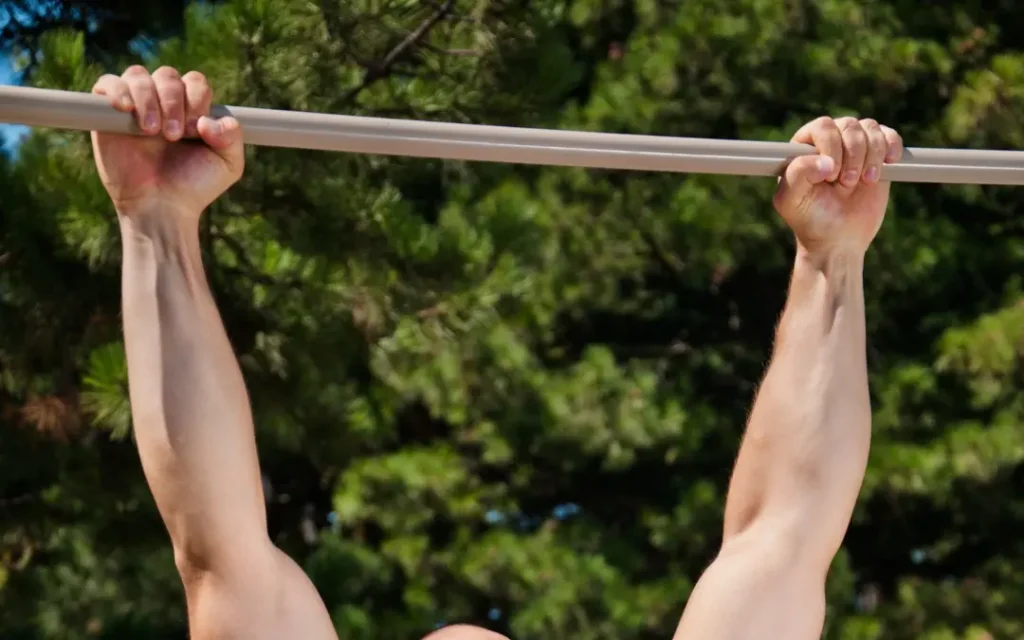
To succeed at your first pull-up, it is essential to prepare your body by progressively strengthening the muscles required. Here are some fundamental exercises that will help you build the necessary strength.
Australian Pull-Up (Inverted Row)
The Australian pull-up, also known as an inverted row, is an excellent starting point. This exercise is less demanding than a standard pull-up because your feet stay on the ground, reducing the load you have to lift. To perform an Australian pull-up, find a bar at hip height, lie underneath it, and pull your chest up to the bar while keeping your body in a straight line.
This exercise is perfect for strengthening the back and arm muscles and serves as an essential stepping stone toward a full pull-up. By adjusting your body angle and bar height, you can scale the difficulty to match your current fitness level.
Resistance Band Pull-Up
Resistance bands are fantastic tools for anyone learning to do pull-ups. They reduce the amount of weight you need to lift, making the movement more accessible. For a banded pull-up, loop the band around a pull-up bar and place your knees or feet in the loop. This supports part of your bodyweight, making the ascent easier.
Using a band not only makes pull-ups more manageable but also helps you refine your technique while lowering the risk of injury. It is a progressive method you can adjust as you get stronger by gradually switching to lighter bands.
Negative Pull-Up
The negative pull-up is another highly effective technique for building the muscles involved in a full pull-up. This exercise focuses on the lowering phase of the movement. To perform a negative pull-up, use a box or bench to help you reach the top position with your chin above the bar, then lower yourself slowly in a controlled manner until your arms are fully extended.
This method is extremely beneficial because it develops the eccentric strength of your muscles, which is critical for completing a full pull-up. By gradually increasing the duration of the descent, you improve muscular endurance and prepare your body to handle the load during a complete rep.
How to Validate Your First Pull-Up
Getting your first pull-up is a moment of genuine pride and personal satisfaction. To reach this goal, following a structured, progressive training plan is essential. Here are some tips to help you succeed.
-
Set realistic goals: Start with short-term objectives, such as completing several sets of Australian pull-ups or gradually increasing the duration of your negative pull-ups.
-
Vary the exercises: Incorporate the different pull-up variations covered above into your routine to target the muscles from different angles and avoid plateaus.
-
Add complementary exercises: Strengthen your supporting muscles – abs and shoulders – for better stability and performance during pull-ups.
-
Recovery and nutrition: Make sure you recover properly between sessions and fuel your muscles with a balanced, protein-rich diet.
-
Perseverance and patience: Progress takes time. Be patient and stay consistent, even when gains feel slow.
How to Keep Progressing on the Movement

Once you have achieved your first pull-up, the next step is to improve your performance and increase your rep count. Here are some strategies to keep progressing.
-
Increase frequency and intensity: To keep improving, progressively increase your training volume. This can mean additional sets, more reps per set, or both.
-
Experiment with different grips: Alternate between pronated, supinated (palms facing you), and neutral grip to target different muscle groups and build overall upper-body strength.
-
Add weight: Once you can perform several consecutive pull-ups, follow a weighted pull-up training program and add a dip belt with plates to increase the challenge.
-
Work on technique: Make sure your form is correct to avoid injury and maximize the effectiveness of every rep. This includes proper body alignment, full range of motion, and appropriate muscle contraction.
-
Track your progress: Keep a training log to record your progress and adjust your program based on your performance. This lets you see your improvement and stay motivated.
Conclusion
Achieving your first pull-up is a crucial milestone. Whether you are a complete beginner or looking to build more strength, pull-ups offer an excellent way to develop upper-body strength and measure your progress. By using preparatory exercises such as Australian pull-ups, banded pull-ups, and negative pull-ups, you can progressively develop the strength needed to complete a full pull-up.