Start Here
- Streetlifting Program
- Weighted Muscle Up Program
- Weighted Pull-Up Program
- Weighted Dip Program
- Squat Program
When it comes to squats, two main variations stand out: the low bar squat and the high bar squat. Both styles are widely used in gyms and by powerlifting, streetlifting, and bodybuilding athletes.
However, they differ in several ways – technique, muscles worked, and benefits. Whether you want to maximize strength, build hypertrophy, or improve mobility, understanding these differences is essential to choosing the method that fits your goals best. In this article we break down the specifics of the low bar squat and the high bar squat so you can pick the right variation for you.
What Is the High Bar Squat?
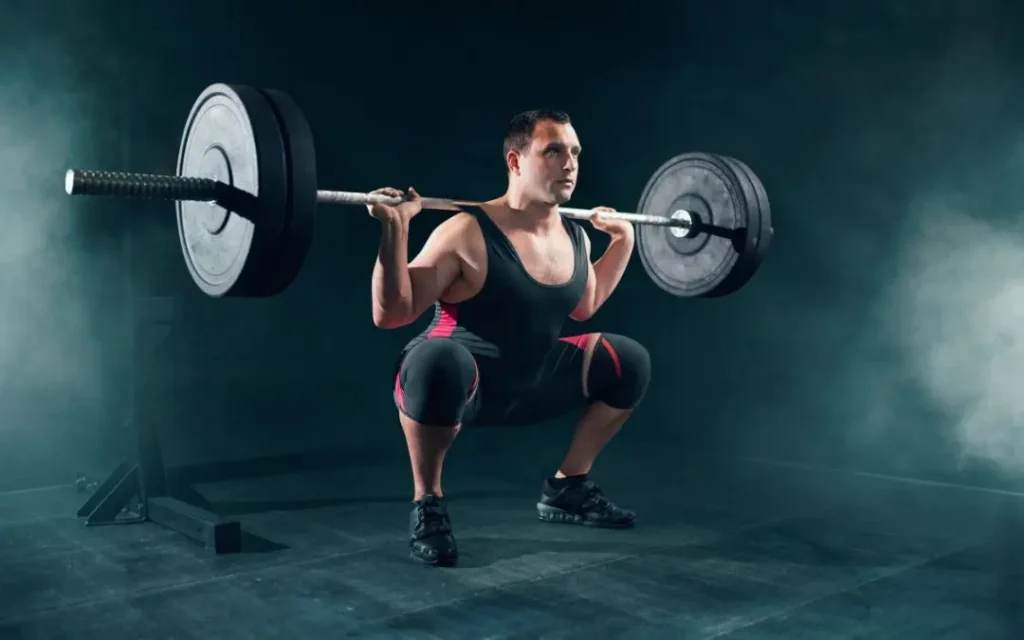
The high bar squat is the most classic squat variation and the one most commonly taught to beginners. In this variation, the bar sits higher on the back – typically on the upper traps. It is a foundational strength movement that targets the quadriceps primarily, while also working the glutes and hamstrings.
Bar Position and Technique
In a high bar squat, the bar is positioned on the upper traps. This placement lets you keep a more upright torso throughout the movement and limits lower-back involvement. To perform it correctly:
- Place the bar on your traps, just below the neck.
- Set your feet shoulder-width apart, or slightly wider.
- Descend by bending the knees while keeping your back straight and chest up.
- Reach a depth where your hips drop below parallel with your knees, then drive back up by contracting your quads and glutes.
Muscles Worked
The high bar squat targets the quadriceps above all, thanks to the more upright torso position. It also activates the glutes and, to a lesser extent, the hamstrings. The spinal erectors are engaged to stabilize the spine.
High Bar Squat Advantages
- Better for quad hypertrophy: The torso position and more vertical bar path place heavy demand on the quadriceps.
- More natural position: For many athletes, the upright stance of the high bar squat feels more intuitive and is easier to learn, especially for beginners.
- Greater range of motion: Compared to the low bar squat, the high bar squat generally allows you to squat deeper, which is beneficial for working muscles through a full range.
High Bar Squat Disadvantages
- Limited max strength expression: Because of the higher bar position and emphasis on the quads, it is often harder to load as much weight as in a low bar squat.
- Knee stress: The upright posture can place greater pressure on the knee joints, particularly as load increases.
What Is the Low Bar Squat?
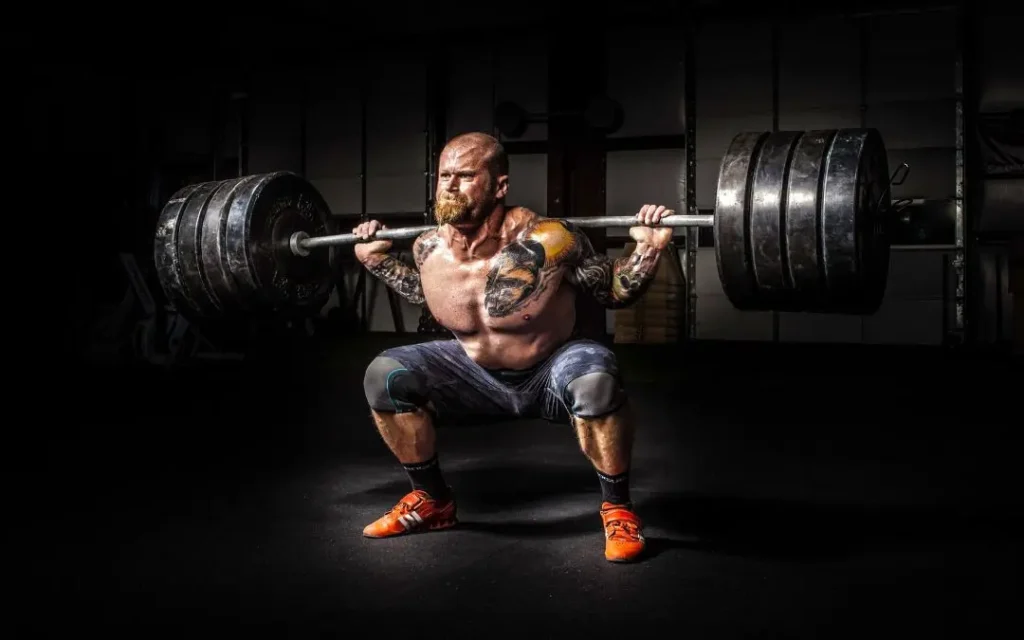
The low bar squat is favored by powerlifters, streetlifting athletes, and anyone chasing maximum load. In this variation, the bar sits lower on the back – across the rear delts – which changes the movement’s biomechanics. The low bar squat is more technical, but it generally allows you to lift heavier.
Bar Position and Technique
In a low bar squat, the bar rests lower on the posterior shoulder muscles, often across the rear delts. This forces a more pronounced forward lean of the torso, shifting the center of gravity and loading the hips more. Here is how to execute it:
- Place the bar lower on your shoulders, at the junction between the traps and the rear delts.
- Use a similar foot stance to the high bar squat, but feel free to experiment with a slightly wider stance for better stability.
- Descend while maintaining a more pronounced forward lean, keeping a natural arch in the lower back.
- Drive up by pushing through the hips while contracting the glutes and hamstrings.
Muscles Worked
The low bar squat loads the posterior chain more heavily: the glutes and hamstrings are worked harder, while the quads are relatively less involved compared to the high bar squat. The lower-back muscles (erectors) also play a larger role in stabilizing the spine.
Low Bar Squat Advantages
- Ability to lift heavier: By loading the hips and glutes more, the low bar squat lets you move more weight – making it the preferred choice for powerlifters and streetlifting athletes.
- Less knee stress: The more horizontal torso angle reduces tension on the knees by shifting more stress to the hips.
- Strength optimization: If your primary goal is to develop maximum strength, the low bar squat is generally more effective.
Low Bar Squat Disadvantages
- Harder technique to master: The bar position and forward lean demand a more refined technique. Maintaining proper back alignment is critical to avoid injury.
- Reduced range of motion: The low bar squat typically involves less depth, which can limit muscle activation in certain areas.
Key Differences Between the Low Bar Squat and the High Bar Squat
To fully understand both variations, it is useful to compare them across a few key dimensions. Although they look similar, the differences in technique and muscle recruitment make them suited to different goals.
Bar Position
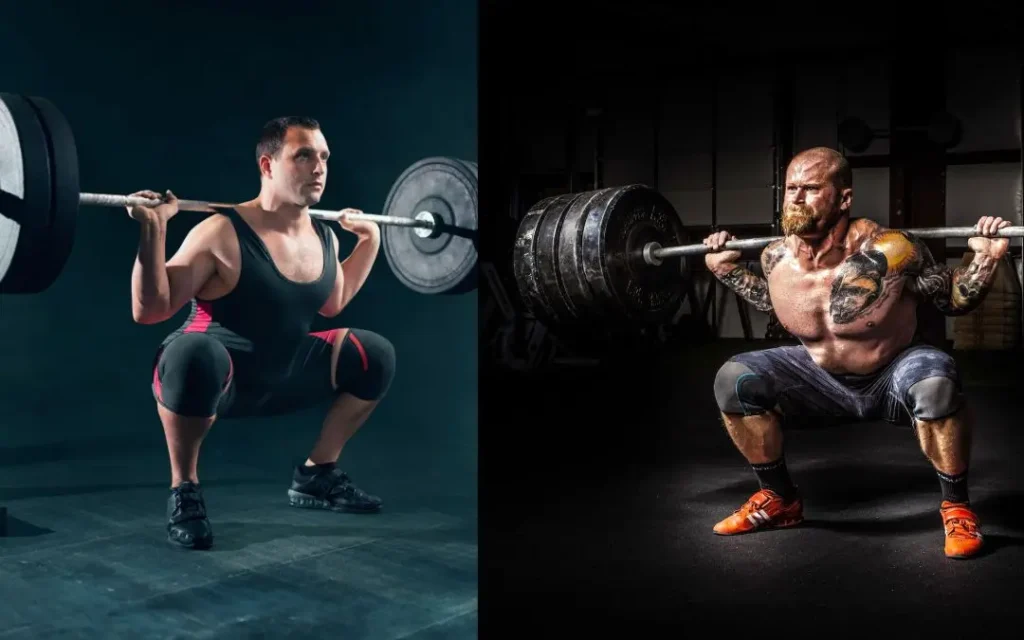
In a high bar squat, the bar rests on the upper traps, enabling a more upright posture and a vertical movement path. In a low bar squat, the bar sits lower on the back, forcing a forward lean.
Range of Motion
The range of motion in a high bar squat is generally greater, allowing you to reach more depth. The low bar squat, because of the forward torso lean, tends to limit that depth – even though it allows heavier loading.
Muscle Involvement
The high bar squat emphasizes the quadriceps, while the low bar squat recruits the glutes, hamstrings, and lower back more. The latter is better suited for strength goals, while the former favors quad hypertrophy.
Which Squat Should You Choose Based on Your Goals?
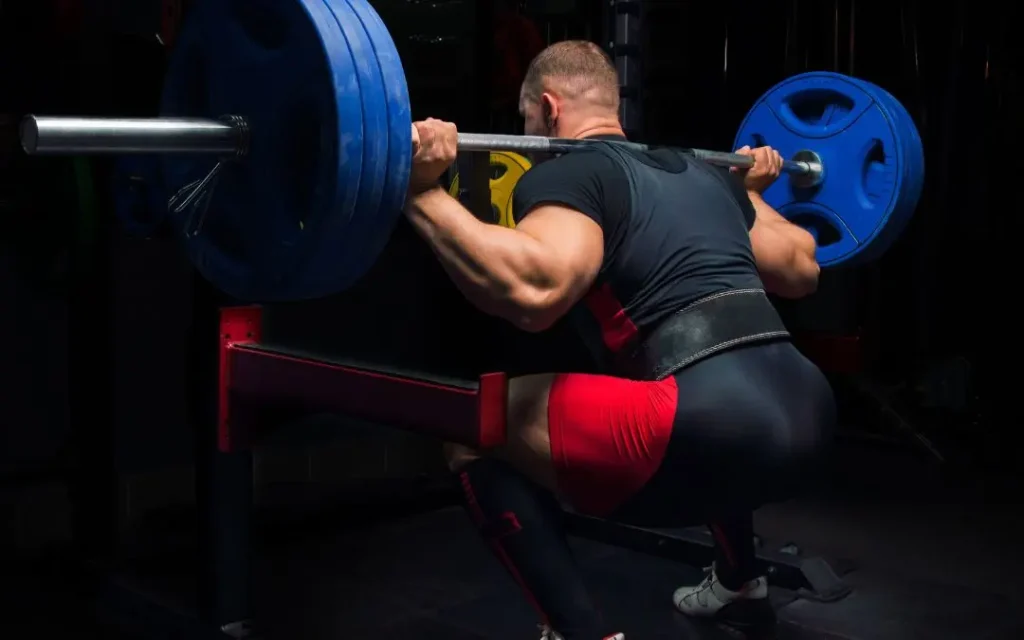
The choice between the low bar squat and the high bar squat depends primarily on your personal goals – whether they relate to strength, hypertrophy, mobility, or joint comfort.
For Strength
If your goal is to maximize strength – especially for powerlifting or streetlifting competitions – the low bar squat is generally the better choice. Its biomechanics allow you to lift heavier by loading the posterior chain.
For Hypertrophy
For those targeting muscle hypertrophy, particularly in the quads, the high bar squat is more effective. The vertical bar path produces greater quad activation and a larger range of motion.
For Mobility and Joint Health
The high bar squat is often recommended for improving mobility and preserving joint health, especially in the knees. It allows greater flexibility and is less stressful on the hips, making it an excellent choice for mobility work.
For Beginners
For beginners, the high bar squat is generally easier to learn. Its more natural position and vertical movement allow for faster skill acquisition and a lower injury risk.
How to Execute Each Squat Correctly: Technical Tips
Whichever variation you choose, solid technique is critical to avoiding injury and maximizing gains.
Tips for the High Bar Squat
- Keep your torso as vertical as possible.
- Make sure your knees track in line with your toes to avoid excessive joint stress.
- Squat deep enough to fully engage your quads and glutes.
Tips for the Low Bar Squat
- Learn to position the bar correctly to avoid shoulder pressure.
- Focus on hip drive to push the weight back up.
- Maintain good back alignment by keeping a slight natural arch.
In 1 minute
Program or coaching?
Find your ideal format
Answer 4 questions and get a personalized recommendation based on your level and goals.
1 min flat | Tailored result | Free
Conclusion
In summary, the choice between the low bar squat and the high bar squat depends primarily on your training goals. The high bar squat is ideal for quad hypertrophy, mobility work, and beginners, while the low bar squat is better suited to those looking to maximize strength and load the posterior chain. Whichever you choose, mastering solid technique and progressing gradually are essential to achieving optimal results while minimizing injury risk.

mathieu
Street workout athlete since 2019, I discovered streetlifting in 2023. Today I share my passion for the sport through streetliftings.com.