
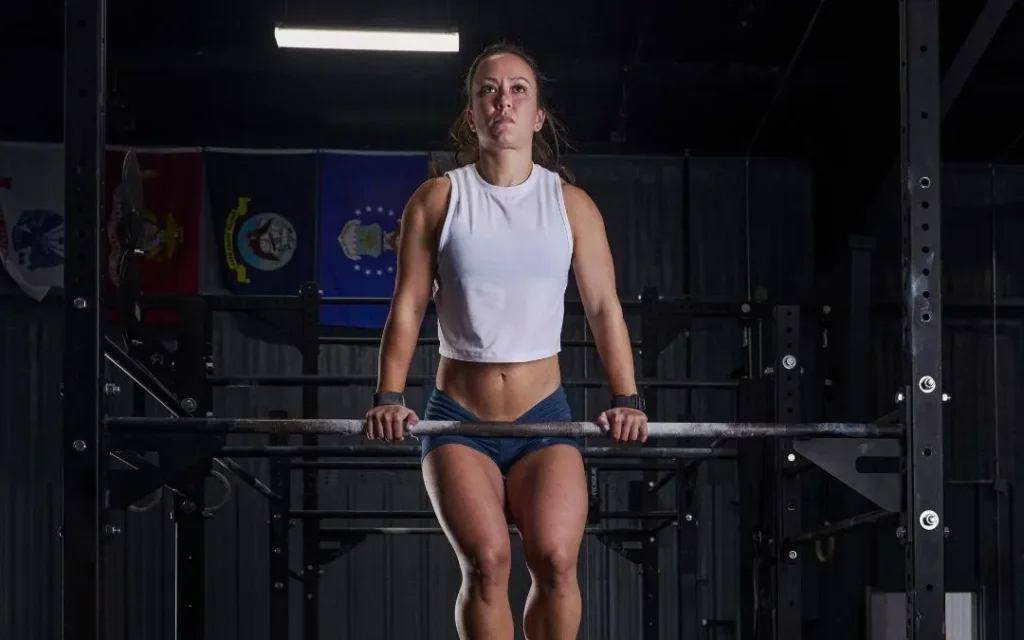
The muscle up is an exercise that many athletes and calisthenics enthusiasts dream of mastering. This impressive movement is not just a display of raw strength – it engages a wide range of muscles while demanding flawless technique. But which muscles are actually worked during a muscle up? The exercise breaks down into several phases: the pull, the transition, and the push. At each stage, different muscle groups come into play to propel your body above the bar. Whether you are a beginner or an experienced athlete, understanding which muscles are engaged during a muscle up is essential for maximizing your results and avoiding injury.
Start Here
- Streetlifting Program
- Weighted Muscle Up Program
- Weighted Pull-Up Program
- Weighted Dip Program
- Squat Program
Pull Phase: The Primary Muscles Worked in the Muscle Up – Lats and Arms in the Lead
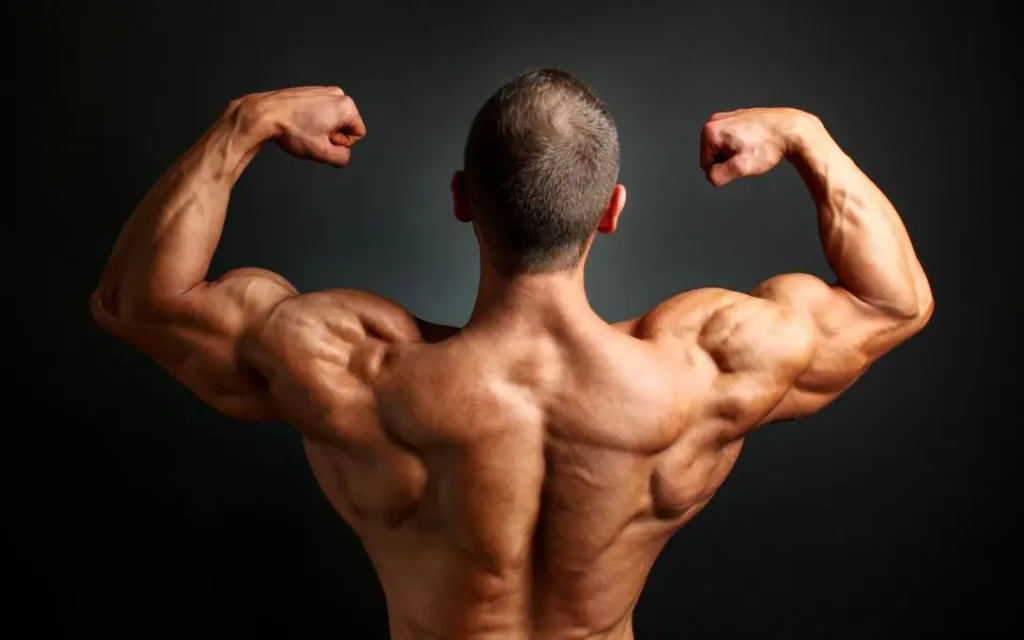
Latissimus Dorsi: The Primary Engine
In the first phase of the muscle up – the pull – the latissimus dorsi is the star muscle. This large, broad back muscle is responsible for shoulder adduction, meaning it draws the arm toward the body. When you pull on the bar, this muscle activates to lift your body. It is the foundation of the movement, and without a strong lat, you will struggle to execute this phase with fluidity.
The latissimus dorsi is often underestimated, but it is truly what allows you to rise during the pull. Strengthening this muscle with exercises such as pull-ups will optimize your muscle up performance.
Biceps Brachii and Brachialis: Arm Support
Beyond the lats, the arm muscles – particularly the biceps brachii and the brachialis – play a key role. They are responsible for elbow flexion, which is essential for pulling your chin above the bar. The biceps, well known for its aesthetic contribution, supports the back in the pulling movement here. The brachialis, a muscle that is less often mentioned, sits beneath the biceps and also participates in elbow flexion. It acts in synergy with the biceps to help you pull yourself up.
Program or coaching?
Find your ideal format
Answer 4 questions and receive a personalized recommendation based on your level and goals.
Tailored result
Free
The Transition: Intense Work for the Shoulders and Forearms
Deltoids: Stabilization and Movement Control
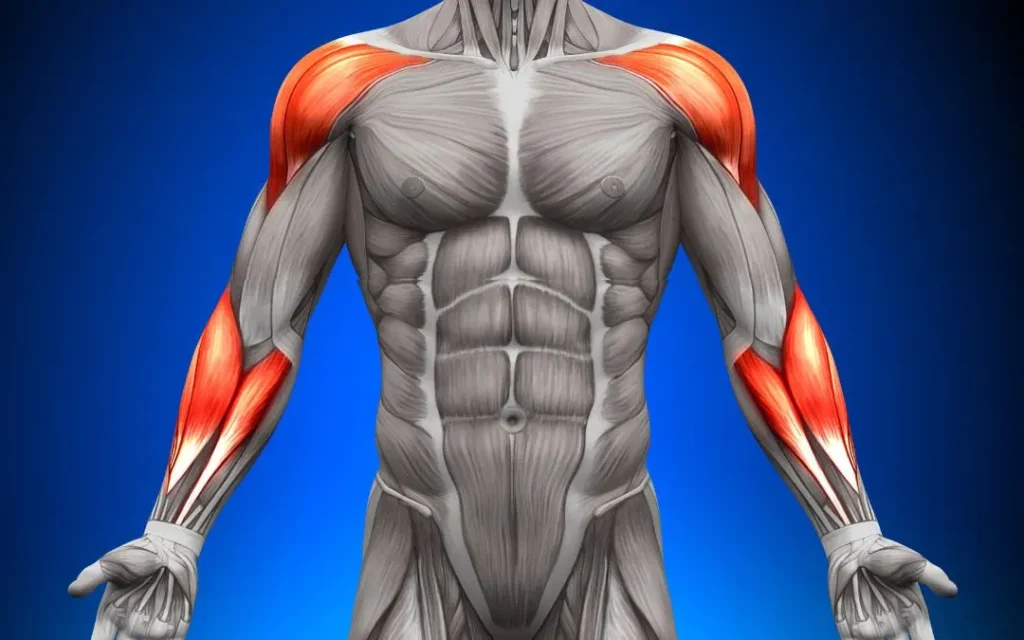
The transition is arguably the most technical phase of the muscle up. Moving from the bottom of the pull to the push phase requires good coordination and significant shoulder strength. The deltoids – the shoulder muscles – are central to this action. They help stabilize the shoulder joint and ensure a fluid movement as you pass above the bar.
The anterior deltoid in particular is heavily engaged to initiate the forward rotation of the body. Without sufficient strength in this muscle, you risk struggling to complete a smooth transition. Working on shoulder mobility and deltoid strength will make this phase more fluid and controlled.
Forearm Muscles: Grip and Control
One aspect that is often overlooked during the muscle up is grip strength. Your forearms – and in particular the finger flexor muscles – need to be strong enough to maintain a solid grip throughout the movement. If your grip gives out in the middle of the transition, you will never make it above the bar. The forearm muscles therefore play an indirect but crucial role.
Push Phase: Triceps and Chest Engaged
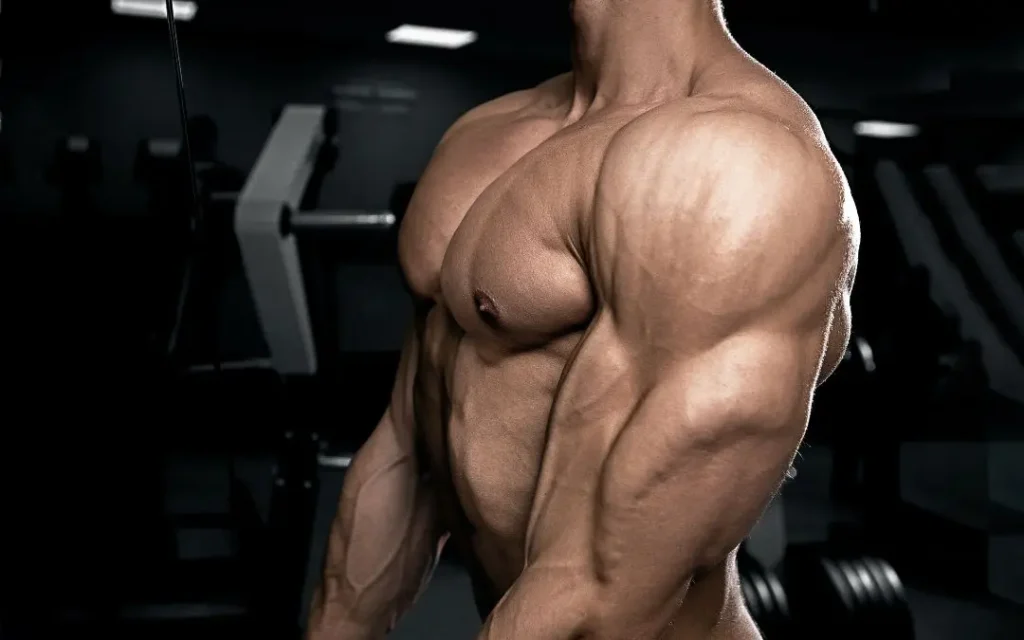
Triceps Brachii: Elbow Extension for the Push
Once you have completed the transition, you enter the final phase: the push. Here, the work focuses primarily on the triceps – specifically the triceps brachii, the muscle responsible for elbow extension. To complete the muscle up and straighten fully above the bar, the triceps must be capable of generating significant force to press your body upward.
The triceps, though less visible than the biceps during the pull phase, is critical for successfully completing the muscle up. Strengthening this muscle with exercises such as weighted dips can improve your pushing power.
Pectorals: Assistance at Extension
Although the muscle up is essentially a pulling exercise, your pectoral muscles also play a role in the push phase. The pectoralis major in particular helps stabilize the movement by activating during arm extension. If your triceps are not strong enough, your pectorals compensate.
To strengthen your pectorals and optimize their contribution during the push, exercises such as deep push-ups or parallel bar dips are ideal. These movements specifically target the muscles involved in arm extension.
Secondary Muscles and Stabilizers Engaged During the Muscle Up
Abs and Core: Body Stabilization
The core – including the abs – is often forgotten when discussing the muscles worked by the muscle up, yet it is absolutely essential. The abs are not just there for aesthetics; they play a key role in stabilizing your body throughout the entire movement. They allow you to maintain good posture, avoid unnecessary swinging, and ensure effective force transfer from the lower to the upper body.
A strong core lets you control every phase of the muscle up – the pull, the transition, and the push alike. Exercises such as planks, hanging leg raises, and hollow body holds are excellent for strengthening this area and maximizing stability during the movement.
Conclusion
The muscle up is a complete exercise that engages a broad range of muscles – including the back, arms, shoulders, chest, and core. Each phase of the movement, from the pull to the push, activates specific muscle groups and demands strength, coordination, and technique. By strengthening these muscles through targeted exercises and proper progression, you will optimize your performance and reduce the risk of injury. Mastering the muscle up is an excellent way to develop functional strength and overall muscular endurance.