
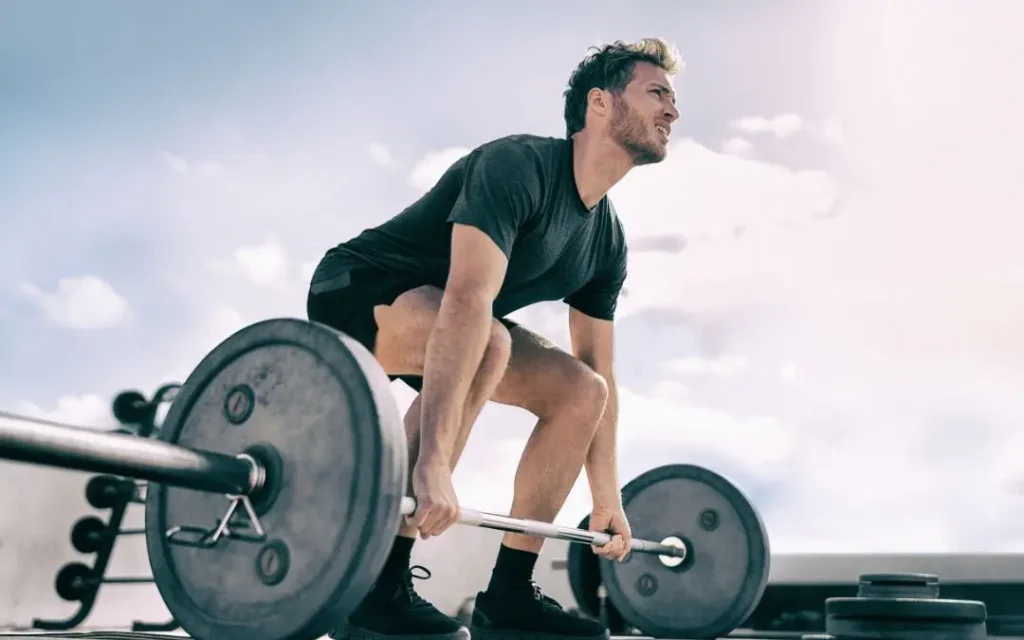
In the world of fitness and strength training, the stiff-leg deadlift is one of the most effective exercises for strengthening the back, leg, and glute muscles. To get optimal results and avoid injuries, mastering the correct technique is essential.
Start Here
- Streetlifting Program
- Weighted Muscle Up Program
- Weighted Pull-Up Program
- Weighted Dip Program
- Squat Program
Steps for the Stiff-Leg Deadlift
Before you begin, make sure the bar is loaded correctly and that you have chosen an appropriate weight. Follow these steps to perform the stiff-leg deadlift correctly:
-
Starting position: Place the bar in front of you, feet shoulder-width apart with toes turned slightly outward. Bend your knees slightly and hinge forward at the hips while keeping your back flat and your core braced. Grip the bar in a pronated grip (palms facing down) at a width slightly wider than shoulder-width.
-
The lift: Keeping your legs extended but not locked, raise the bar by driving through your hips and engaging your back muscles. Keep your back flat throughout the entire movement. Once you are standing, hold the position for one second by squeezing your back, leg, and glute muscles.
-
The descent: Lower the bar slowly by hinging at the hips and pushing your glutes back. Keep your back flat and control the movement to avoid any abrupt motion or excessive rounding of the spine. Once the bar reaches the floor, repeat the movement for the desired number of repetitions.
Program or coaching?
Find your ideal format
Answer 4 questions and receive a personalized recommendation based on your level and goals.
Tailored result
Free
Muscles Targeted During the Exercise
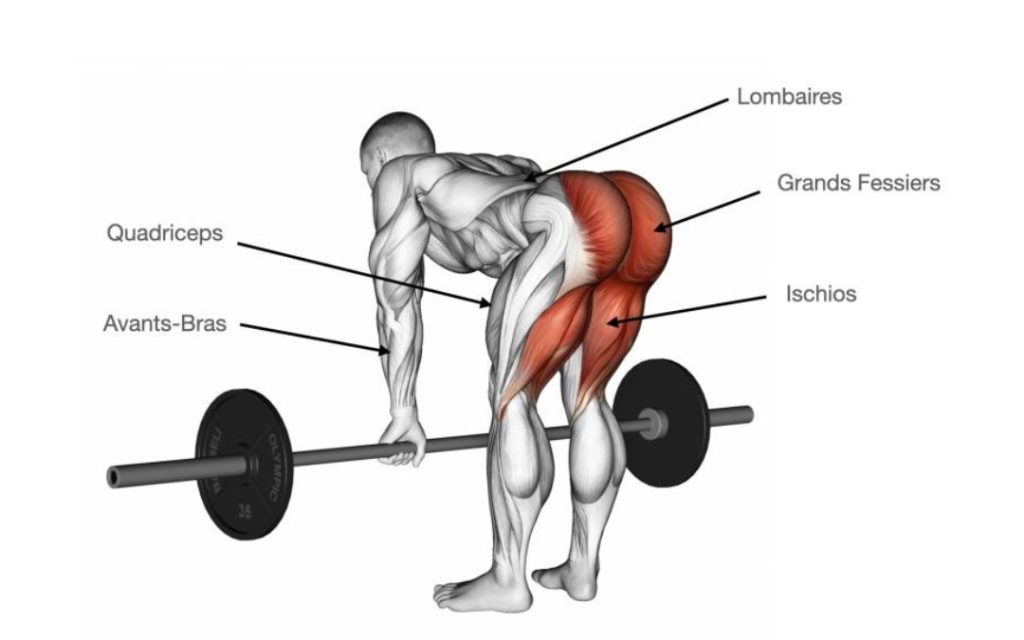
The stiff-leg deadlift is a multi-joint exercise that engages several muscle groups simultaneously. The primary muscles targeted include:
- Back muscles, including the trapezius, rhomboids, erector spinae, and lower back.
- Leg muscles, such as the quadriceps, hamstrings, and glutes.
- Core stabilizer muscles, including the abdominals and obliques.
By working these muscles synergistically, the stiff-leg deadlift strengthens the posterior chain, which is essential for improving posture, functional strength, and athletic performance – for example on the squat.
Tips to Optimize Your Training
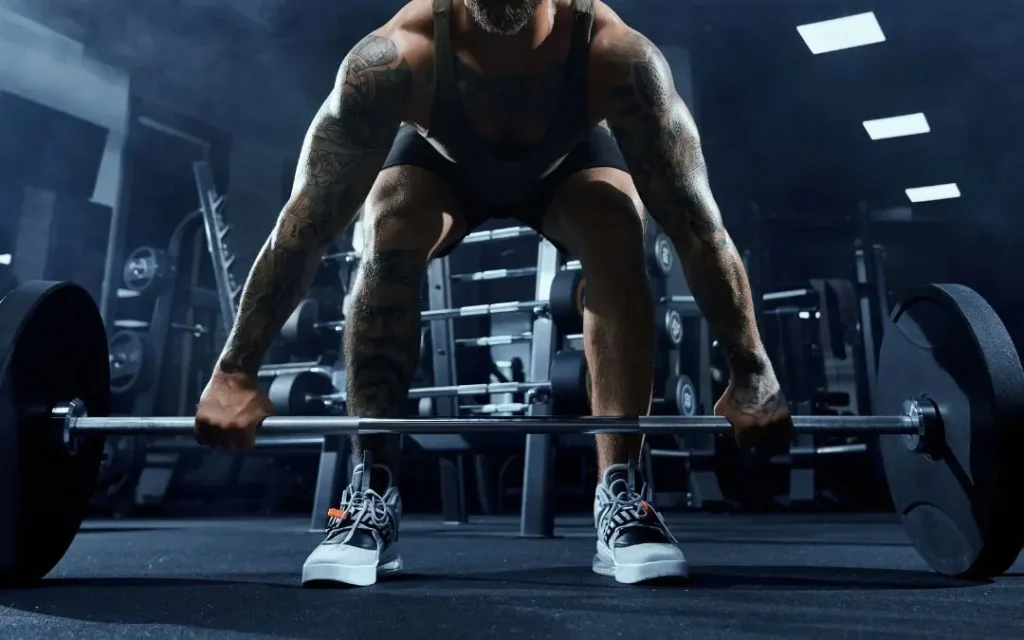
To maximize the benefits and minimize risks when performing the stiff-leg deadlift, follow these useful tips:
-
Maintain proper technique: Keep your back flat and your core braced throughout the movement to protect your spine and avoid injuries.
-
Start light: If you are a beginner, start with a light bar or even an empty bar to get comfortable with the technique before adding resistance.
-
Warm up properly: Before lifting heavy loads, make sure to do an adequate warm-up to prepare your muscles and joints for the effort ahead.
-
Be progressive: Gradually increase the load over time while maintaining correct form to stimulate muscle growth and avoid plateaus.
-
Respect your limits: Listen to your body and do not push through unusual pain. Stop and adjust your technique if necessary to avoid injuries.
Conclusion
The stiff-leg deadlift is a powerful exercise that can transform your physique and improve your athletic performance. By following the steps described in this article and applying the tips provided, you can get the most out of this exercise while minimizing the risk of injury. Incorporate it wisely into your training program and get ready to see impressive results in both strength and muscle development.

mathieu
Street workout athlete since 2019, I discovered streetlifting in 2023. Today I share my passion for the sport through streetliftings.com.