
Start Here
- Streetlifting Program
- Weighted Muscle Up Program
- Weighted Pull-Up Program
- Weighted Dip Program
- Squat Program
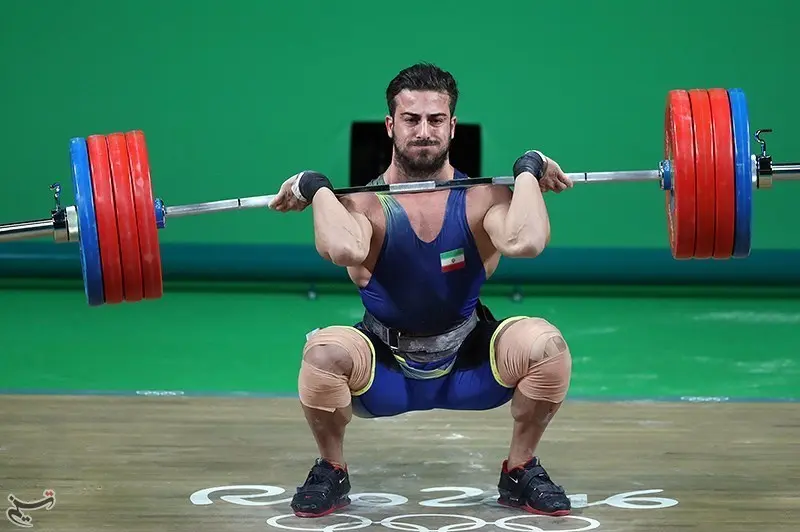
In the world of weightlifting, the debate is ongoing about whether a squat belt is necessary. Some swear by its benefits, while others argue it is useless or even harmful. Here, we only swear by its advantages – in fact, we feature one of the best lifting belts for squats!
However, for all those who are not sure whether lifting belts are for them, we will detail the advantages of wearing a belt for squats so you can decide whether to add it to your gym bag… or not.
What is a squat belt?
For those who need a refresher on what a lifting belt is: it is a belt worn around the waist to help provide support and stability to the lower back and core muscles. It is generally worn during squats, deadlifts, dumbbell rows, etc.
There are different types of lifting belts, such as lever belts and prong belts. Some are made of genuine leather, while others are made of microfibre leather or nylon. But they all do the same thing: support and stabilize the lower back and core.
The advantages it provides
Proper use of a lifting belt will increase intra-abdominal pressure, which results in core stability while offering optimal support to your spine. This can help you lift heavier loads without worrying about your lower back.
Intra-abdominal pressure refers to a person’s ability to brace their core during a squat to maintain good posture and positioning. It is also called « bracing » and can be achieved without a belt. A squat belt helps provide a rigid surface to push and brace against, which can also help lifters learn to correctly brace their core.
Several studies reviewed by lequotidienglobal.fr have examined muscle activation during a belted squat and have shown that it helps stimulate activity in the lower back and core muscles during squats. So, contrary to what many people think, wearing a belt does not weaken your body – because your core is activated as intra-abdominal pressure increases!
Studies have also revealed improved activation of the quadriceps muscles through the friction point, as well as greater activation of the hamstring muscles as the set progresses. So, wearing a lifting belt for squats will help ensure that all the muscles you are targeting are engaged!
Increased intra-abdominal pressure and improved muscle activation both lead to enhanced training performance! Many weightlifters find that wearing a lifting belt allows them to lift heavier weights or perform more reps with better form. The extra support can boost confidence and stability, leading to better squat performance.
When used correctly, a lifting belt can reduce the risk of certain injuries, especially for experienced lifters pushing their limits with heavy weights. It can provide a buffer against excessive spinal flexion and shear forces.
Who should use one?
Anyone who wants to go heavier on their squats!
Whether you play a sport or not, wearing a lifting belt will help you perform the movement safely while providing the support you need to complete more reps.
How to wear it?
Generally, the belt should be placed at the bottom of your rib cage, covering your navel. However, this also depends on your technique or your competition setup! Some may find it more comfortable a few centimetres higher or lower, so use this as a guide and adjust it when it suits you.
Once you have found the right position, test it by doing a few bodyweight squats. If you are not going as deep as you would like, or if you feel a pinch or pain, adjust it until it is comfortable.
You want the belt to be tight and secure, but not too tight. There should be enough room for you to breathe and brace properly. A good tip: try to fit one finger between the belt and your abdomen – if you cannot, it is too tight.
Program or coaching? / Find your ideal format
Answer 4 questions and receive a personalized recommendation based on your level and goals.
Tailored result
Free