The 4 Streetlifting Movements
Streetlifting is a hybrid discipline that blends strength, technique, and aesthetics. Practised outdoors or in a gym, it is built on four fundamental movements performed with added weight, with the goal of lifting as much as possible. Let’s explore the core streetlifting movements – their execution, their benefits, and how to programme them effectively.
Weighted Muscle Up
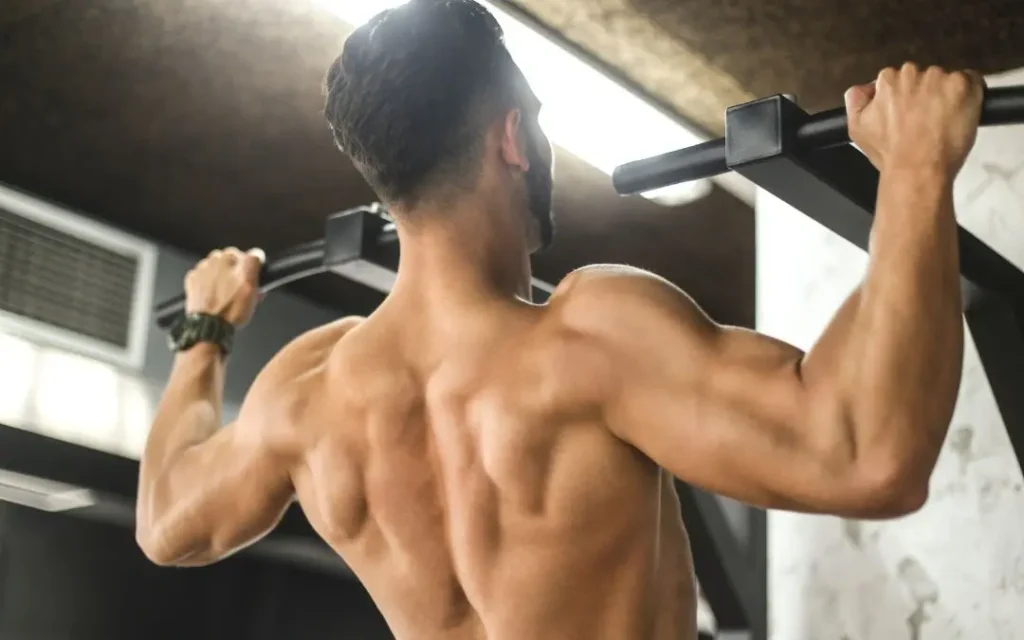
The weighted muscle up is the most iconic movement in streetlifting. It combines an explosive pull with a push above the bar. Adding weight turns this already demanding movement into a true test of power.
Technique and execution
To perform a valid weighted muscle up in a streetlifting competition:
- Start with arms fully extended, overhand (pronated) grip. A swing is allowed as long as your arms and legs remain straight.
- Wait for the judge’s command before initiating the movement.
- Pull through in one continuous motion – no lowering back down, no pause at the top of the bar. Kipping is not allowed; only a slight hip hinge is permitted.
- Once the dip phase is complete, wait for the judge’s command before stepping back down onto the box – do not release the bar and drop to the floor.
- You may secure the weight plates between your legs or in front of you, resting on your legs.
More information on the weighted muscle up
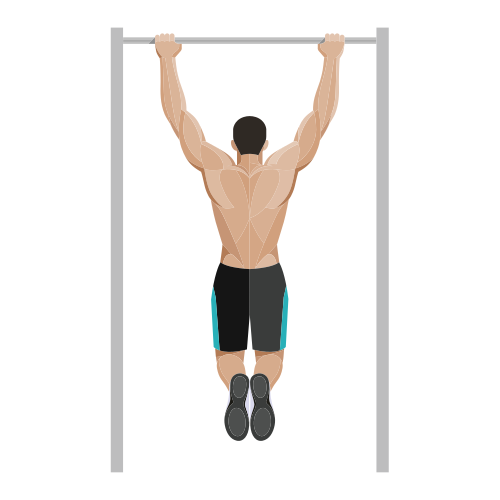
Weighted Pull-Up / Chin-Up
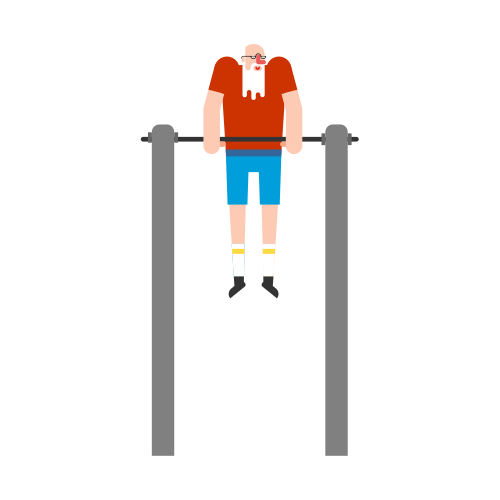
Weighted pull-ups, also called weighted chin-ups depending on grip orientation, are essential for building a thick back and strong arms.
Difference between pull-up and chin-up
- Overhand pull-up (pronated grip): palms facing away, greater emphasis on the back.
- Underhand chin-up (supinated grip): palms facing you, greater biceps involvement.
Technique and execution
To perform a valid weighted pull-up or chin-up in a streetlifting competition:
- Start with arms fully extended, using either a pronated or supinated grip. No swinging – scapulae relaxed, legs straight.
- Wait for the judge’s command before initiating the movement.
- Pull in one continuous motion – no lowering back down. Your chin must clear the bar. Kipping is not allowed.
- Step back down onto the box – do not release the bar and drop to the floor.
- You may secure the weight plates between your legs, not in front of you resting on your legs.
- Note: a scapular bounce at the start is not allowed.
More information on the weighted pull-up
Weighted Dips
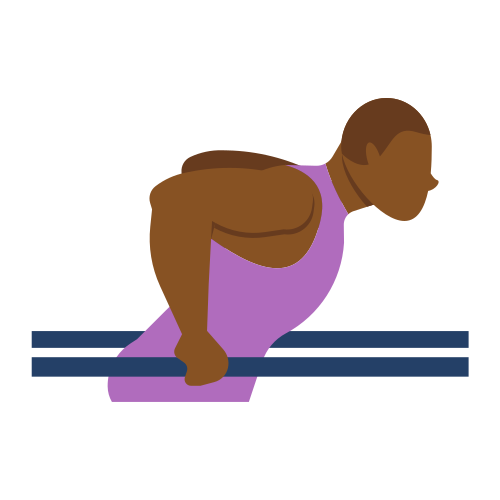
Weighted dips are the king movement for developing the anterior chain of the upper body: chest, triceps, and shoulders.
Technique and execution
To perform a valid weighted dip in a streetlifting competition:
- Start with arms fully extended, weight plates secured between your legs.
- Wait for the judge’s command before initiating the movement.
- Lower yourself until your rear shoulder drops below the level of your elbow joint. Your hips must also descend below the top of the dip station bars.
- Once the rep is complete, wait for the judge’s command before stepping back onto the box.
More information on weighted dips
Squat
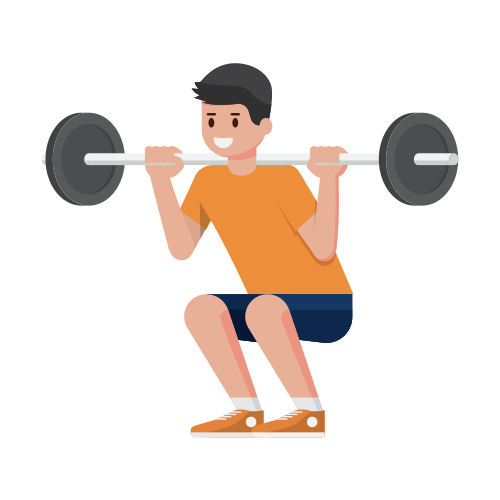
The squat is the only streetlifting movement that targets primarily the lower body. It promotes balanced development and prevents muscular imbalances.
Technique and execution
To perform a valid squat in a streetlifting competition:
- Once the bar is on your back, wait for the judge’s command before beginning your descent.
- To get a white light, your hips must break parallel with your knee joints.
- The ascent must be continuous – no downward reversal is allowed.
- Once you are back to standing with legs locked out, wait for the judge’s command before re-racking the bar.