
Muscle Up – Master the King Move of Street Workout
The muscle up has become an iconic move in street workout, generating growing enthusiasm online. This bodyweight technique involves pulling your body above a structure such as a pull-up bar, rings, a branch, or even a plank (a common prerequisite in fire stations), typically finishing above it with arms locked in the dip position.
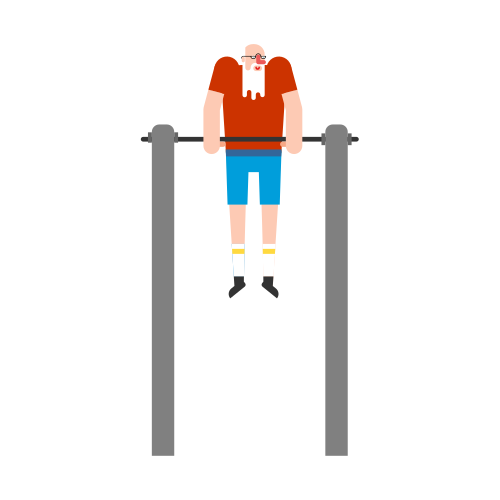
What Is a Muscle Up?

The muscle up, the signature move of street workout, is defined by the ability to pull your body above a bar or other support, followed by a transition to get over it with arms locked in the dip position. It is a demanding skill that requires strength, coordination, and technique. This move is not recommended for beginners. If that is your case, start by fully mastering dips and pull-ups before attempting muscle ups.
How to Do a Muscle Up
Performing a muscle up successfully requires a thorough understanding of technique. The key lies in combining pull-ups and dips in a fluid sequence, ensuring a smooth transition. Mastering this precise sequence is essential for executing a successful rep.
The 4 Steps of the Muscle Up
Step 1 – Starting Position – Hang from the Bar
Begin by hanging from the bar with a firm grip, hands slightly wider than shoulder-width. Make sure your palms face forward. Your arms should be fully extended and your body should hang below the bar.
Step 2 – Explosive Pull – Raise Your Body
Initiate the movement with an explosive pull-up. Pull your body upward, keeping the bar close to your chest. It is essential to maximize effort from your back and biceps during this phase while keeping your core tight. Your goal is to bring your chest to bar level.
Step 3 – Transition – Get Over the Bar
At the top of your pull, lean your torso forward while slightly bending the elbows. This forward lean facilitates the transition. Use the momentum generated by the pull to push down with your hands, getting yourself over the bar. Keep your elbows tucked close to your body throughout this phase.
Step 4 – Dip Position – Lock Your Arms
Once you have completed the transition, fully extend your arms to find yourself in the dip position above the bar. Lock out your elbows to stabilize the position. Finally, lower yourself in a controlled manner by bending your elbows to return to the starting position below the bar.

How to Train for the Muscle Up

Key Tips:
- Make sure to warm up properly to prepare your muscles.
- Focus on clean, controlled execution on every rep.
- Be patient and progress at your own pace – never force the movement.
- Do not hesitate to ask a coach for help, or record your sets for post-training analysis.
Strengthen the Key Muscles
Before attempting a muscle up, it is essential to strengthen the muscle groups involved. Focus on building your back, shoulders, and triceps, as these muscles play a crucial role in executing the movement. Incorporate specific exercises such as pull-ups, dips, and shoulder presses into your training routine.
Master Pull-Ups and Dips
Success on the muscle up depends on the fluidity of the transition between pull-ups and dips. Make sure you have mastered both foundational moves before moving on to the muscle up itself. Practice explosive pull-ups to develop the strength needed to pull your body above the bar, then focus on controlled dips to reinforce the top portion of the movement.
Learn the Transition Technique
The transition phase is critical in performing a muscle up. To succeed at this step, focus on technique. When you reach the highest point of your pull, lean your torso slightly backward while pushing upward with your hands. This smooth action will allow you to get over the bar into the locked-arm dip position. The coordination between the pulling motion and the transition is the key to success.
Train Progressively
Once you have mastered the transition technique, begin with assisted muscle ups. Use a resistance band to help pull your body above the bar, reducing the load. As you gain confidence and strength, gradually reduce the band assistance until you can perform a full muscle up without help.
Progressing on the Muscle Up

Progression on the muscle up relies on careful planning and a structured approach. Break your training into distinct phases, focusing on strengthening the specific muscles involved in the movement. To master the move, use a resistance band to help with the ascent. Once you can handle clean bodyweight reps, start adding weight using a dip belt, placing plates between your legs.
To go further, check out our muscle up program.
Benefits of the Muscle Up
Mastering this movement offers a wide range of benefits, including improved overall strength and explosiveness. It also contributes to the development of functional upper-body muscle mass, while improving running, sprinting, and vertical locomotion skills such as climbing. On top of being deeply rewarding, the muscle up commands respect thanks to its impressive look.
Risks
Practicing the muscle up carries potential risks, particularly to the shoulders and elbows. The transition phase in particular demands careful attention to avoid excessive stress on these joints. It is essential to follow a gradual progression, use proper technique, and not neglect recovery in order to minimize injury risk. If you experience persistent pain, consult a healthcare professional.
Everything About the Muscle Up
- Muscle Up Program: 3 weeks to progress
- How to do a strict muscle up
- Mastering the Muscle Up: complete technical guide
- 3 tips to improve your muscle up
- 5 mistakes holding back your muscle up progress
- Muscle Up: which muscles does it work?
- Ring muscle up
- Muscle up for women: unlock the move
- Bar Muscle Up: ultimate guide
- French records – weighted muscle up
- World records – weighted muscle up
- Buying guide: gymnastic rings
- The complete streetlifting guide