
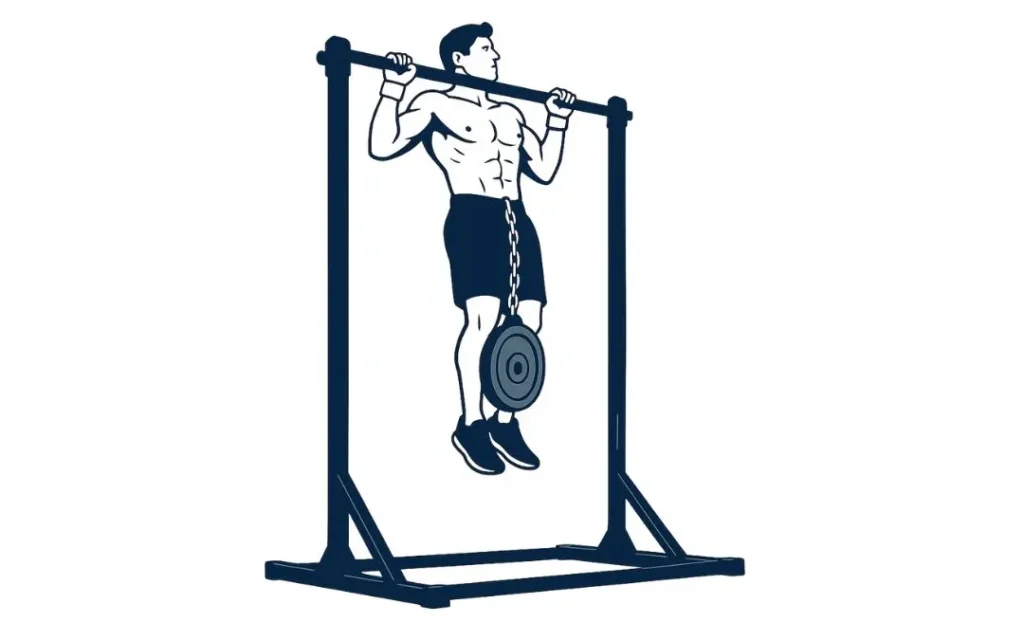
Weighted pull-ups are a cornerstone exercise for building strength, especially in street workout and streetlifting. But make no mistake: as impressive as they look, this exercise is not without risks. The added load brings a level of intensity that can quickly become counter-productive if poorly managed. So, are weighted pull-ups actually dangerous? When should you add them to your training? Here is what you need to know.
Why Weighted Pull-Ups Can Be Dangerous
Increased Intensity That Multiplies Injury Risk
The principle is straightforward: you take a bodyweight exercise – the pull-up – and add external load via a dip belt or weighted vest. The result is far greater intensity… but also significantly higher muscular and joint stress.
The most common injuries associated with weighted pull-ups are:
- Tendinitis (biceps, elbows, shoulders)
- Shoulder injuries (particularly to the rotator cuff)
- Lower back overload when posture is poor
- Excessive forearm strain that can lead to chronic pain
These injuries most often appear due to progressing too fast or lacking proper technique on standard pull-ups.
Poorly Managed Training Volume
In calisthenics or streetlifting, weighted pull-ups are often programmed with high volume: multiple sessions per week, heavy loads, and a large number of sets. The body then absorbs significant mechanical stress, which can lead to overtraining and injury if the foundation is not solid.
Program or coaching?
Find your ideal format
Answer 4 questions and get a personalized recommendation based on your level and goals.
Tailored result
Free
The Essential First Step: Master Bodyweight Pull-Ups
Before even thinking about adding weight, you must fully master the bodyweight pull-up. Why? Because a body that is not properly prepared simply cannot handle the extra load.
The general recommendation is to be able to perform between 15 and 20 strict pull-ups before adding any weight. The criteria to meet are:
- Full range of motion (arms fully extended at the bottom, chin above the bar at the top)
- Clean execution (no swinging, no kipping)
- Controlled tempo (smooth, controlled movement with no uncontrolled explosiveness)
This foundation ensures you have sufficient strength, muscular endurance, and joint stability to handle the intensity of weighted pull-ups.
How to Safely Integrate Weighted Pull-Ups
1. Progress in Increments
Load selection should never be random. Start with a light weight (2.5 to 5 kg) to let your body adapt to the overload. Then increase progressively, always maintaining impeccable technique.
2. Reduce Volume at First
When you first start weighted pull-ups, there is no need to replicate your usual volumes. 3 to 4 sets of 3 to 5 reps is more than enough at the start to build a solid base without overtraining.
3. Specific Warm-Up
Shoulders, elbows, and lats must be mobilized and warmed up carefully. Work on scapular mobility, activate your external rotators, and do a few lighter sets before moving to heavier loads.
4. Listen to Your Body
One of the worst dangers in strength training is pushing through pain. As soon as discomfort appears (tendinitis, loss of mobility, acute pain), you need to reduce intensity or even temporarily stop weighted pull-ups. A smart approach prevents long-term injuries.
Benefits of Weighted Pull-Ups (When Properly Executed)
While potentially risky, properly integrated weighted pull-ups are extremely effective for:
- Developing upper body strength, particularly lats, biceps, and traps
- Improving streetlifting performance, where they are a competition staple
- Strengthening the muscles of the posterior chain
- Improving efficiency on bodyweight pull-ups
It is an excellent progression tool, provided you follow a progressive methodology.
Safe Progression Example Toward Weighted Pull-Ups
- Target 20 strict pull-ups at bodyweight
- Introduce light weight (2.5 kg), 3×5 reps
- Progressively increase load every 2 to 3 weeks
- Integrate into strength cycles with deload phases
- Constantly monitor pain and joint health
This plan turns weighted pull-ups into an asset without compromising your joint health.
Conclusion
Weighted pull-ups are not inherently dangerous, but misusing them is. Too often, street workout and calisthenics athletes jump in without a solid foundation, skipping steps. The result: chronic pain, stagnation, or even stopping training altogether.
Take the time to master the bodyweight pull-up, build a strength base, and progress intelligently. With this approach, weighted pull-ups will become a powerful lever for developing your physique without compromising your physical integrity.
Start Here
- Streetlifting Program
- Weighted Muscle Up Program
- Weighted Pull-Up Program
- Weighted Dip Program
- Squat Program