

Strength training is a discipline that demands discipline, consistency, and adaptation. To keep progressing and push past your limits, it is sometimes necessary to add weight. In this article we explore the different aspects of weighted training and how to optimise this technique to get the best results.
Start Here
- Streetlifting Program
- Weighted Muscle Up Program
- Weighted Pull-Up Program
- Weighted Dip Program
- Squat Program
Why Add Weight?
After several months of practice, repeating the same movements, those movements can start to feel too easy. The solution to keep progressing is to add weight to increase the difficulty of the exercise.
Benefits of Weighted Training
Weighted training offers many advantages. Here are some notable benefits:
- Strength gains: By adding extra weight, your muscles are forced to work harder, which leads to increased strength.
- Muscle mass gains: Progressive overload is a key principle of muscle hypertrophy. Adding weight stimulates more muscle fibres, promoting their growth.
- Improved endurance: Weighted training improves both muscular and cardiovascular endurance, as the body must adapt to the increased effort.
- Training variety: Adding weight introduces a new dimension to your training routines, which can help you break through performance plateaus.
The Risks
Although weighted training is beneficial, it also carries risks if not practised correctly:
- Joint injuries: Excessive overload can put pressure on the joints, causing pain or injury.
- Poor posture: Adding weight can affect your posture. It is crucial to maintain correct technique to avoid muscular imbalances.
- Excessive fatigue: Overtraining with extra weight can lead to excessive fatigue and an increased risk of injury. It is important to listen to your body and allow adequate recovery periods.
Program or coaching?
Find your ideal format
Answer 4 questions and receive a personalised recommendation based on your level and goals.
Tailored result
Free
How to Add Weight in Training
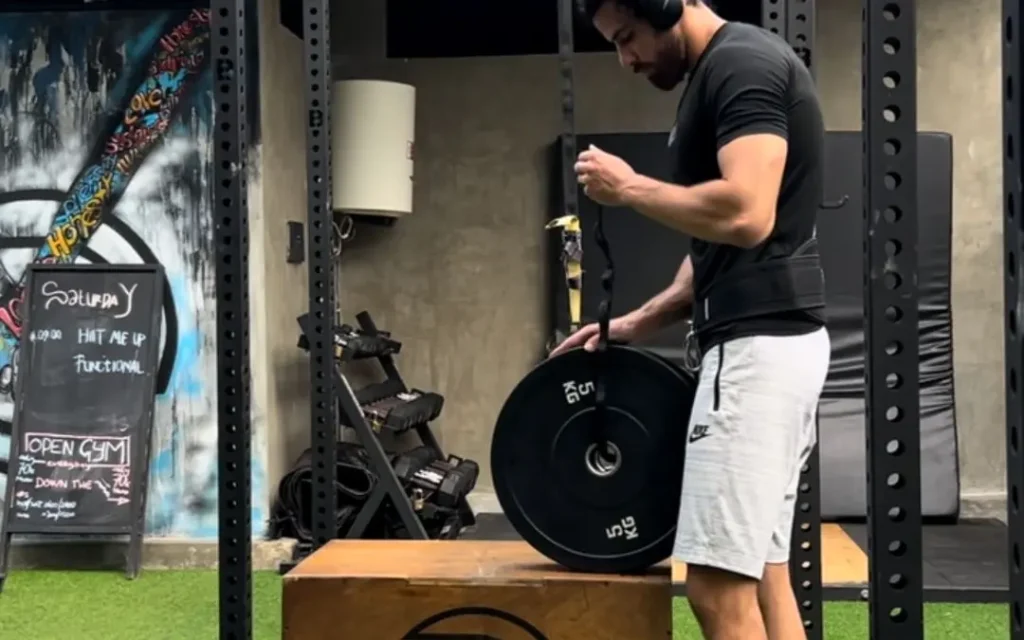
So how do you go about it? First, know that adding weight to your training means attaching extra load to your body to increase resistance during the exercise. This can be done in several ways:
- Dip belt: This is probably the most common method. A dip belt lets you attach weight plates to increase the load.
- Weighted vests: These vests are worn like a garment and feature pockets into which you insert weights. They allow an even distribution of the load.
- Ankle and wrist weights: These attach to the extremities to specifically target certain body parts.
To add weight effectively, it is crucial to start light and progressively increase the load as your strength and endurance improve. A proper warm-up is also essential to avoid injury.
How to Choose Your Weighted Training Equipment
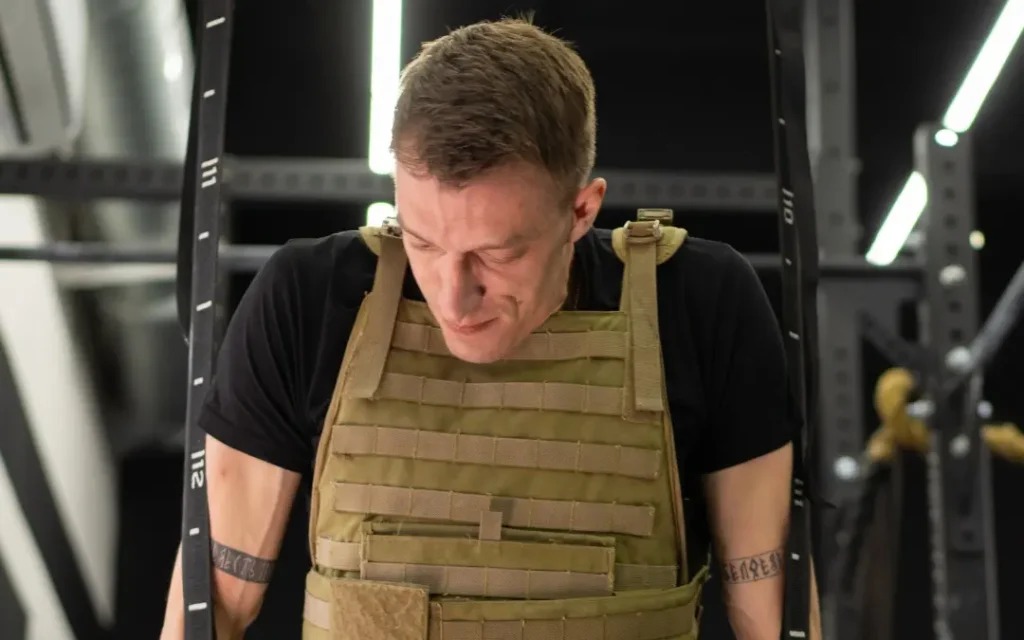
Choosing the right equipment depends on several factors, including the type of exercise, your experience level, and your personal goals. Comfort and adjustability are paramount; whether you opt for a dip belt, a weighted vest, or ankle and wrist weights, make sure they are comfortable and easily adjustable. Materials and durability also matter – prioritise high-quality equipment for maximum longevity, as cheap products wear out quickly and may not provide the necessary support.
Weight capacity is another essential criterion. Choose equipment that lets you adjust the load as you progress – for example a dip belt with a chain that accommodates more or fewer plates as needed. Finally, do not overlook safety. Make sure the equipment is secure and will not come loose or shift during the exercise.
The Best Exercises for Weighted Training
Some exercises are particularly well suited to the addition of extra weight. Here is a selection of the best weighted training exercises:
Pull-Ups
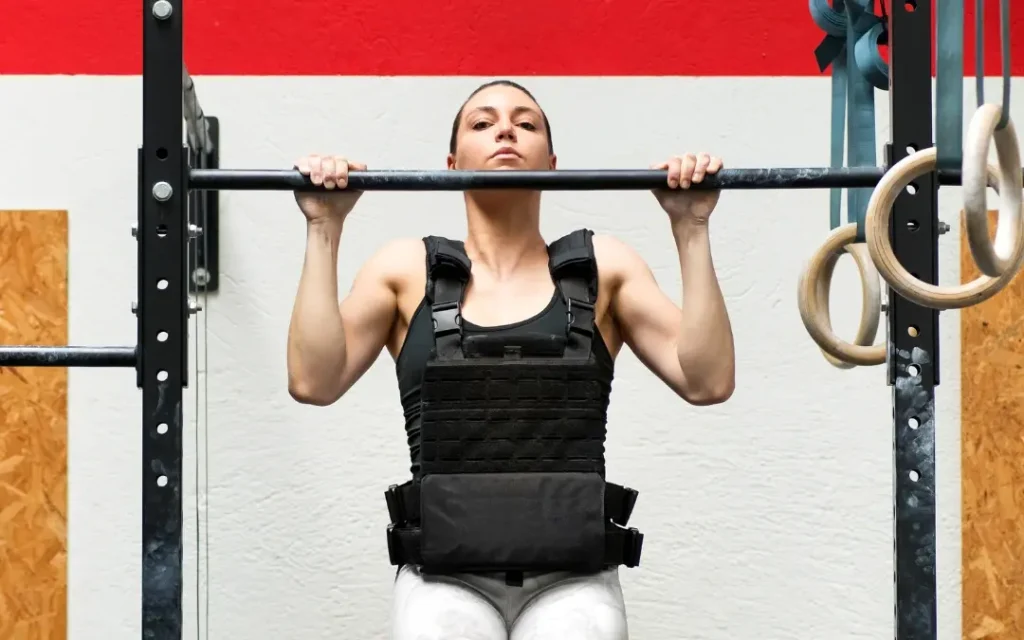
Pull-ups are an excellent exercise for developing the upper body, especially the back, shoulders, and biceps. By adding weight to pull-ups, you increase the difficulty and intensify muscle recruitment. Grip a pull-up bar with a wide grip, pull up until your chin clears the bar, then lower yourself in a controlled manner. Use a dip belt with weight plates or a weighted vest to increase resistance.
Dips
Dips are perfect for targeting the triceps, chest, and shoulders. This versatile exercise becomes even more effective with added weight. Place your hands on two parallel bars and lower your body by bending the elbows. Push back up to full arm extension. A dip belt or weighted vest are ideal for increasing the load.
Push-Ups
Push-ups are fundamental for developing the upper body, particularly the chest, triceps, and shoulders. They are probably the exercise where you can start adding weight the quickest. In a plank position, lower your body until your chest nearly touches the floor, then push back up. To intensify the exercise, wear a weighted vest.
When Should You Start Adding Weight?
It is important not to rush into using extra weight. Before adding load, make sure you have mastered the technique of the basic bodyweight exercises. Correct execution is crucial to avoid injury. Also, wait until you have reached a natural plateau – when your bodyweight exercises start feeling too easy, that is the signal that you can add weight.
If possible, consult a sports coach who can assess your level and advise you on how to add weight safely. Following these guidelines will let you progress with extra load in an effective and injury-free way.
Key Takeaways
Weighted training is an excellent method to intensify your workouts and progress in strength, muscle mass, and endurance. By adding extra weight progressively and in a controlled manner, you can break through plateaus and reach your goals faster. However, it is crucial to choose the right equipment, maintain correct technique, and listen to your body to avoid injury. Integrate these practices wisely and you will see significant results in your training journey.

mathieu
Street workout athlete since 2019, I discovered streetlifting in 2023. Today I share my passion for the sport through streetliftings.com.