

Welcome to this complete guide on how to do dips – a versatile exercise that can transform your training routine and is the push movement in streetlifting. Dips are not only straightforward to perform, they also offer a wide range of benefits for upper-body strength. In this detailed breakdown, we will cover the basic technique, the benefits, safety precautions, and sample routines to help you integrate dips effectively into your training program.
Start Here
- Streetlifting Program
- Weighted Muscle Up Program
- Weighted Pull-Up Program
- Weighted Dips Program
- Squat Program
What are dips?
Dips are a strength exercise that targets primarily the upper-body muscles. This versatile movement engages the triceps, shoulders, chest, and even the back muscles. They can be performed in a number of ways depending on your fitness level and personal goals. In streetlifting, the movement is performed on two parallel bars.
Program or coaching?
Find your ideal format
Answer 4 questions and receive a personalized recommendation based on your level and your goals.
Tailored result
Free
Why dips matter in your training
Dips play a crucial role in overall physical strength development. By including them in your routine, you can target several muscle groups at the same time, making them an effective exercise for toning and strengthening the upper body.
Benefits of dips
Upper-body muscle development
Dips are particularly effective for building upper-body muscles, including the triceps, pectorals, and shoulders. As you lower and press back up, these muscles are actively engaged, promoting muscle growth and increased strength.
Improved shoulder stability
An often-overlooked benefit of dips is their ability to strengthen shoulder stability. When performed in a controlled manner, dips help stabilize the shoulder joints, reducing the risk of injury.
Multiple muscle engagement
Dips do not just work a single muscle group. By nature, they engage several muscle groups simultaneously, making them an efficient exercise for a complete upper-body workout.
How to do dips
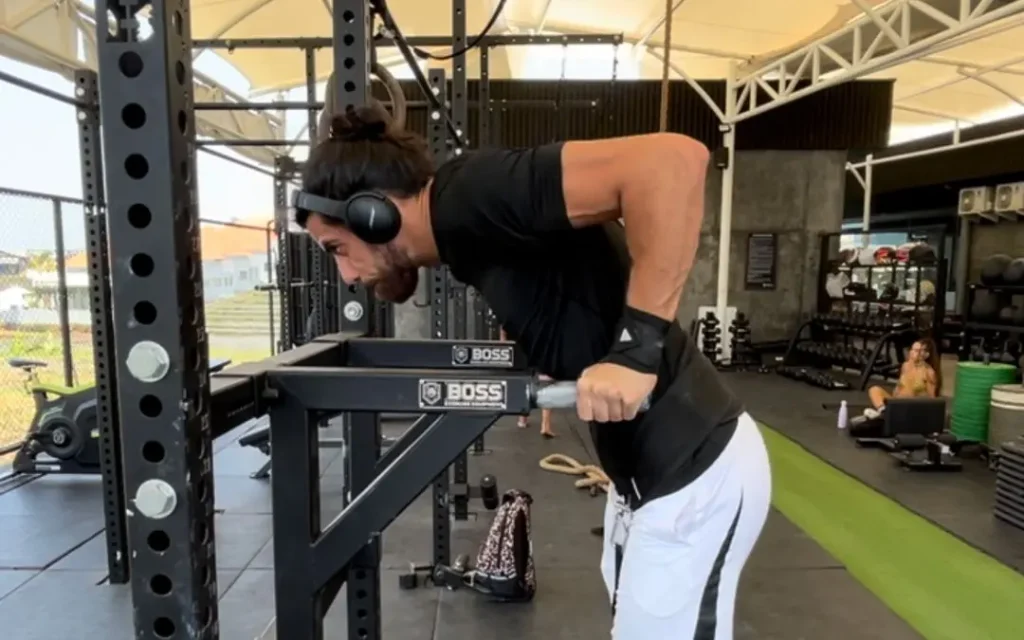
Preparation before doing dips
Proper warm-up
A proper warm-up is essential to prepare the muscles for effort. Start by warming up your joints, arms, triceps, shoulders, and chest using a resistance band.
Then do a few push-ups and triceps extensions with the band.
Tips for beginners
If you are new to dips, start with easier variations and use assistance if needed. Gradually increase the intensity as you build strength.
Equipment needed
You can perform the movement on parallel bars – commonly found in street workout parks – or on a dip station, which is more typical of gym environments.
More advanced athletes can use a dip belt to increase the difficulty. Wrist wraps can also provide extra stability during the movement.
Parallel bars
For optimal dips, parallel bars are ideal. They offer a solid grip and allow a full range of motion.
Dip station
A dip station is purpose-built equipment that provides stability and safety. However, alternatives can be considered if a station is not available.
How to do a dip in 3 steps
Starting position
Begin by suspending your body between the parallel bars with your arms fully extended and legs straight. Brace your abs, glutes, lats, and triceps.
Downward movement
Lower your body by bending your elbows while keeping your back straight. Descend until your shoulders are slightly below your elbows.
Upward movement
Press back up by extending your arms in a controlled manner until you return to the starting position.
Tips for maintaining good form
Keep your body upright, elbows pointing backward, and avoid excessive wrist flexion. Engage your core muscles to maintain stability throughout the movement.
Dip variations
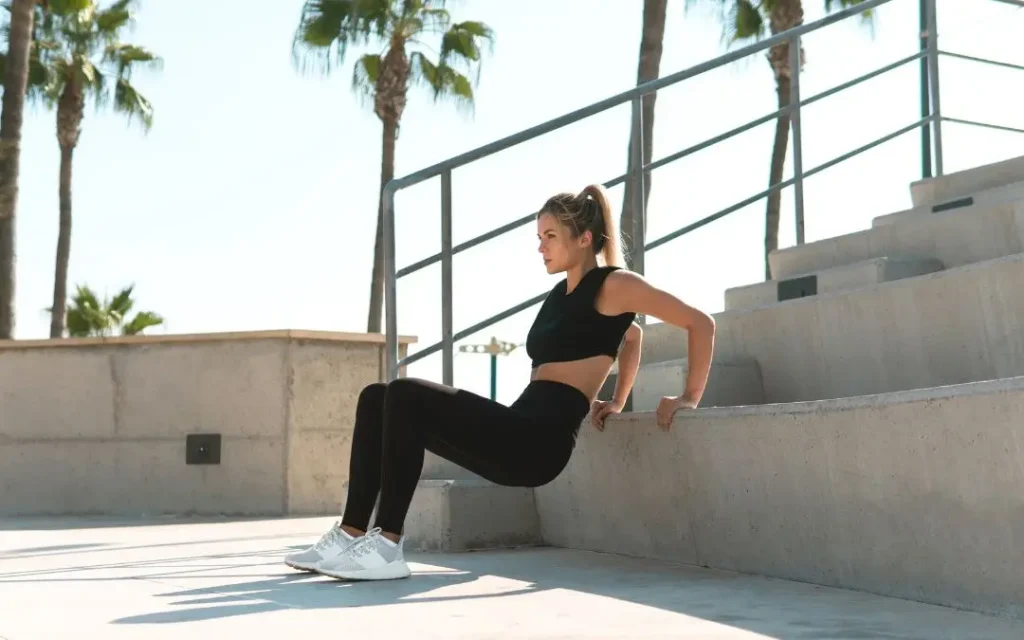
Weighted dips
Weighted dips are a natural progression for those looking for an extra challenge. To perform them, use a dip belt or a weighted vest. Attach your chosen weight around your waist with the dip belt or put the weighted vest on before the exercise. This added resistance increases the intensity of the dips, putting greater demand on the upper-body muscles and driving more pronounced muscle growth. It is essential to start with a moderate load and adjust gradually to avoid overloading.
Between-bench dips
If parallel bars are unavailable, or if you prefer an alternative, bench dips offer a practical solution. Place two benches parallel to each other, with enough space between them for your body to descend. Suspend yourself from the edge of the benches with arms extended, then lower your body by bending your elbows. This variation keeps the upper-body muscles engaged while adapting to different training environments.
Stair dips
Stair dips are a creative, accessible variation of the classic dip. Using a staircase as a support, place your hands on the steps at shoulder width and lower your body toward the floor by bending your elbows. The natural incline of the staircase intensifies engagement through the core, arms, shoulders, and chest. Stair dips are an excellent option for those looking to diversify their training and an effective way to build upper-body strength and stability.
Single-bar dips
Single-bar dips are an advanced challenge that tests overall stability and strength. Hang from a bar with both hands, feet crossed or extended in front of you. Performing dips on a single bar places heavy demand on the stabilizing muscles, particularly the core. This variation requires a high level of form to avoid excessive swinging and is recommended for experienced practitioners seeking an additional intensity stimulus.
How to progress at dips
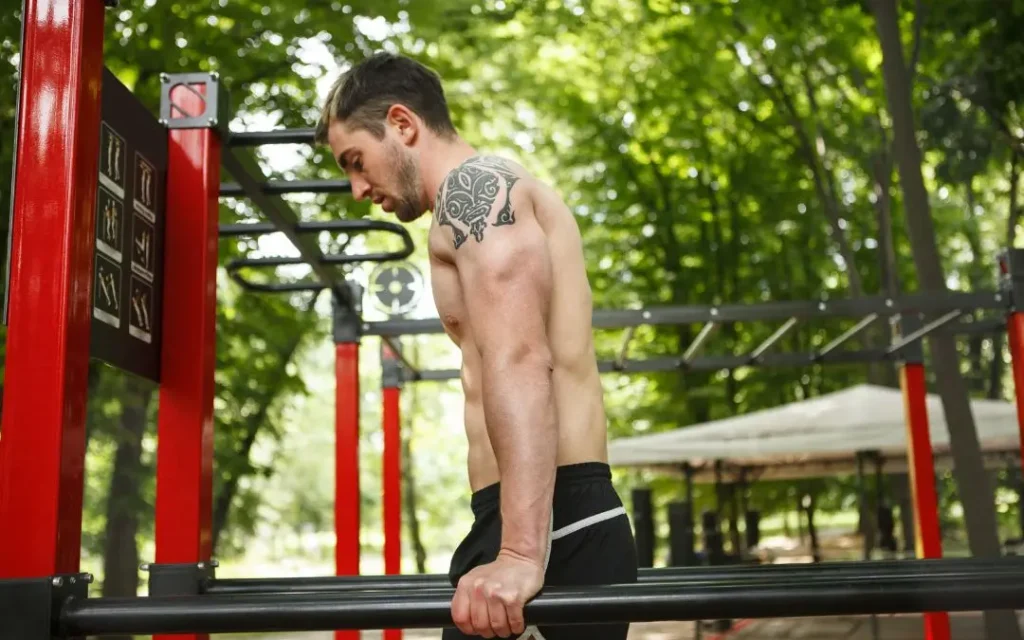
To get the full benefit of dips, it is recommended to include them in your training routine two to three times per week. This allows you to optimize muscle building while leaving enough recovery time between sessions. The ideal frequency depends on your fitness level, personal goals, and how your body responds to training. By varying the intensity and adjusting the frequency to suit your needs, you can steadily improve your strength and endurance.
Integrating dips into an overall program
Dips are a valuable addition to a complete training program, offering a wide range of upper-body benefits. For a balanced session, combine dips with other exercises targeting different muscle areas. For example, include leg, back, and core exercises in your routine. This approach ensures harmonious muscular development and prevents imbalances that could lead to long-term injuries.
Combining with other exercises
Dips pair well with several exercises to create a full-body workout session. Combining dips with pull-ups, push-ups, and squats can form a versatile training session. Pull-ups target the back, push-ups work the chest, and squats train the legs. By incorporating these movements into your program, you effectively engage a variety of muscle groups, promoting overall balanced muscular development.
Safety precautions and tips
Avoid overloading
When integrating dips into your training program, it is crucial to take a progressive approach. Avoid overloading your body, especially if you are new to dips. Start with a moderate number of reps and intensity, then increase gradually over time. This allows your muscles, joints, and tendons to adapt progressively to the stress, minimizing the risk of injury.
Listen to your body
The key to safe and effective training is staying attentive to your body’s signals. If you feel unusual pain, excessive tension, or persistent fatigue, stop immediately. Assess the situation, adjust your form if necessary, and do not hesitate to consult a healthcare professional if symptoms persist. Listening to your body is essential to prevent injuries and ensure steady progress in your training program.
Conclusion
In conclusion, learning how to do dips can be an excellent addition to your training routine. The benefits of muscle building, shoulder stability, and overall muscle engagement make dips a versatile and effective exercise. By following the advice in this guide, you can progressively integrate dips into your training program safely and with visible results. Remember to personalize your routine based on your fitness level and consult a healthcare professional if in doubt. Now dive into the world of dips and sculpt a strong, toned upper body!

mathieu
Street workout athlete since 2019, I discovered streetlifting in 2023. Today I share my passion for the sport through streetliftings.com.