
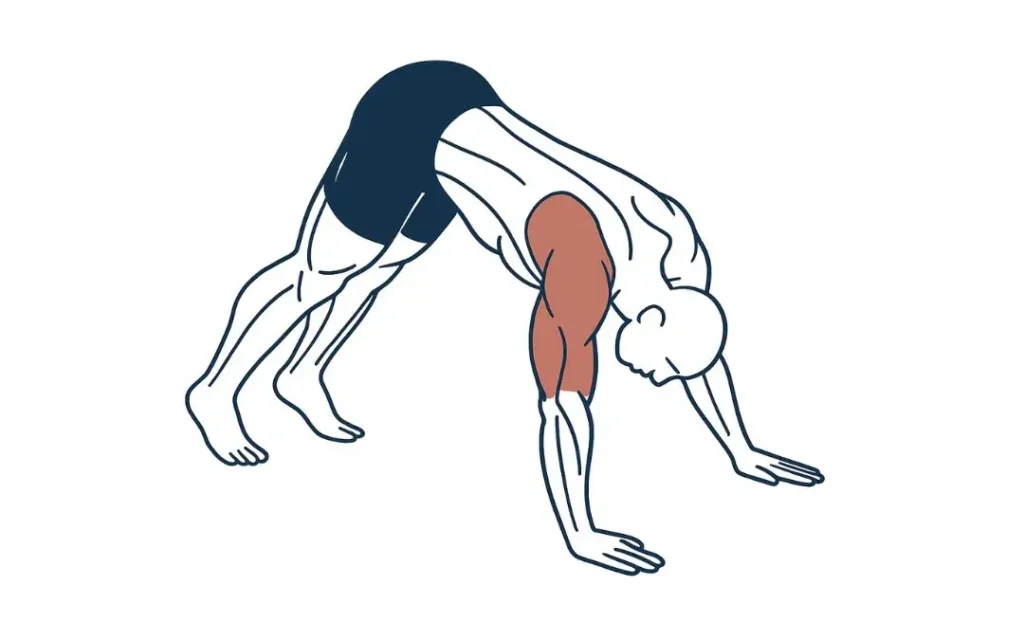
Pike push-ups are an incredibly effective exercise for strengthening the upper body, particularly the shoulders. As a fitness coach, I recommend this exercise to anyone looking to improve their strength, stability, and shoulder mobility. Whether you are a beginner looking to diversify your training routine or an advanced athlete wanting to perfect your form, pike push-ups offer an excellent opportunity to make progress.
How to Do Pike Push-ups
Preparation Before Pike Push-ups
Before you begin, proper preparation is essential to keep the movement safe and improve your performance.
-
Targeted warm-up:
Take a few minutes to warm up your shoulders, arms, and wrists. Shoulder rotations, arm circles, light push-ups, or dynamic planks are ideal for activating the muscles. -
Shoulder and back mobility:
Sufficient mobility makes it easier to hold the inverted V position. Exercises such as downward dog or shoulder openers help reduce unnecessary tension. -
Core engagement:
Even before you start, brace your abs and deep core muscles. A braced core is essential for staying stable throughout the movement.
Correct Execution of Pike Push-ups
Starting Position
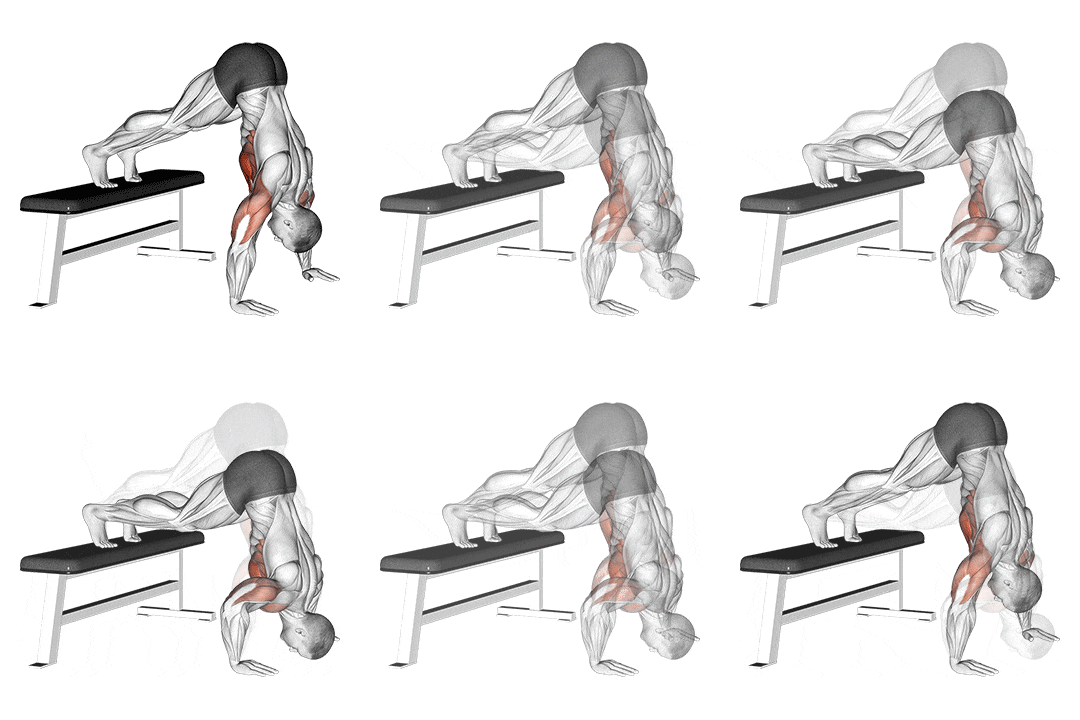
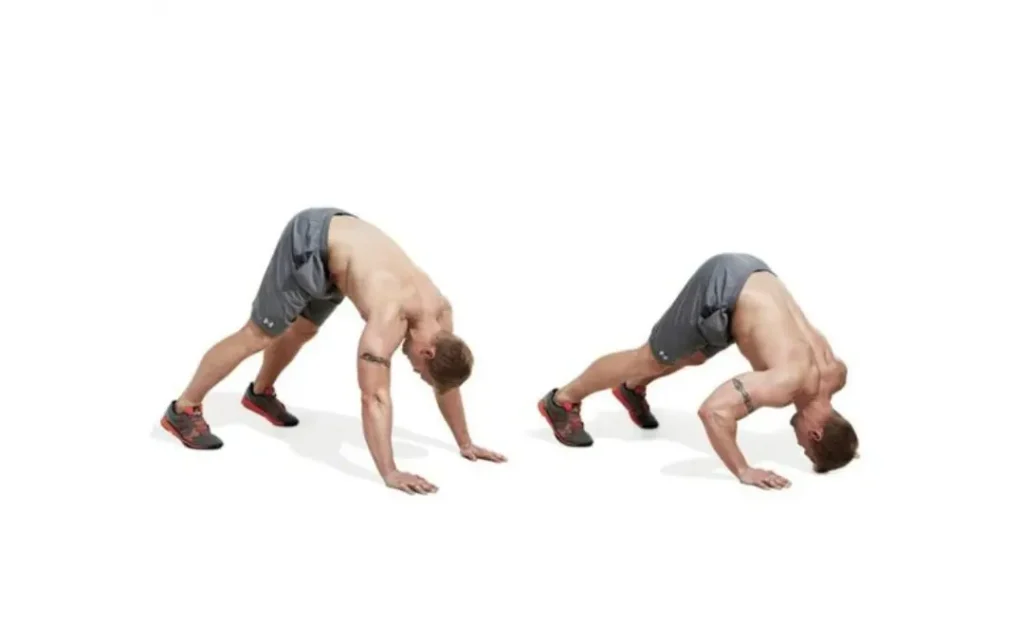
Get into a push-up position with your hands on the floor slightly wider than shoulder-width. Push your hips up to form an inverted V. Keep your arms straight, your head aligned with your arms, and try to bring your heels toward the floor. Your legs may be slightly bent if needed.
Descent Phase (Eccentric)
Slowly bend your elbows, keeping them close to your head. Lower yourself in a controlled manner until the top of your skull approaches the floor. Your core stays braced, without the lower back sagging.
Push Phase
Drive forcefully into the floor with your shoulders and arms to return to the starting position. Keep your hips high and your deltoids actively contracted until the end of the movement.
Breathing
-
Inhale on the way down
-
Exhale on the push
Program or coaching?
Find your ideal format
Answer 4 questions and receive a personalised recommendation based on your level and goals.
Tailored result
Free
Target Muscles
Pike push-ups are particularly effective for developing the deltoids, the muscles that make up the top of your shoulders. These are the muscles that provide most of the force needed to perform the movement. But pike push-ups do not stop at the deltoids – several other muscle groups are also recruited.
- Triceps: These muscles at the back of the arms are engaged every time you push your body upward.
- Pectorals: Although less targeted than in standard push-ups, the pectorals still play a role in stabilising the movement.
- Core: Holding the inverted V position requires significant engagement from the abs and lower-back muscles, contributing to improved core stability and strength.
- Trapezius and back stabilisers are also recruited to help stabilise the movement and prevent postural collapse.
You can target the same muscle groups with exercises such as the behind-the-neck press or the overhead press.
What Are the Benefits of Pike Push-ups?
Pike push-ups are a simple yet effective exercise, with several key benefits:
Shoulder strengthening
They place a heavy demand on the shoulders, especially the deltoids, and are an excellent preparation for more advanced movements such as the handstand push-up or overhead pressing exercises.
Core stability
The inverted V position engages the abs and lower-back muscles, improving overall stability and balance.
No equipment needed
A calisthenics exercise, the pike push-up is performed using bodyweight only, making it easy to do at home without any gear.
Mistakes to Avoid to Stay Injury-Free
Pike push-ups, although very effective, can lead to injuries if certain errors are not corrected. Here are the most common ones and how to avoid them:
-
Poor elbow position:
Avoid letting your elbows flare out to the sides. Excessive flaring increases tension on the shoulders. Keep them close to your head for a safer and more effective movement. -
Lower-back collapse:
A poorly engaged core can cause lumbar sagging, creating unnecessary pressure on the spine. Remember to brace your abs throughout the movement to maintain a stable posture. -
Insufficient shoulder mobility:
Performing pike push-ups without adequate mobility can lead to pain or injury. If the position is hard to hold, first work on your shoulder mobility before fully incorporating this exercise into your routine.
Coach’s Conclusion
Pike push-ups are an exceptional exercise for strengthening the shoulders and improving core stability. Whether you are a beginner or a seasoned athlete, they represent a natural progression toward more advanced movements such as handstand push-ups. In addition to building muscle, this exercise also improves mobility and can be performed without equipment, making it an excellent choice for a home workout.
See More Shoulder Exercises
- Face Pull
- Reverse Pec Deck
- Bent-Over Reverse Fly
- Seated Dumbbell Press
- Behind-the-Neck Press
- Overhead Press