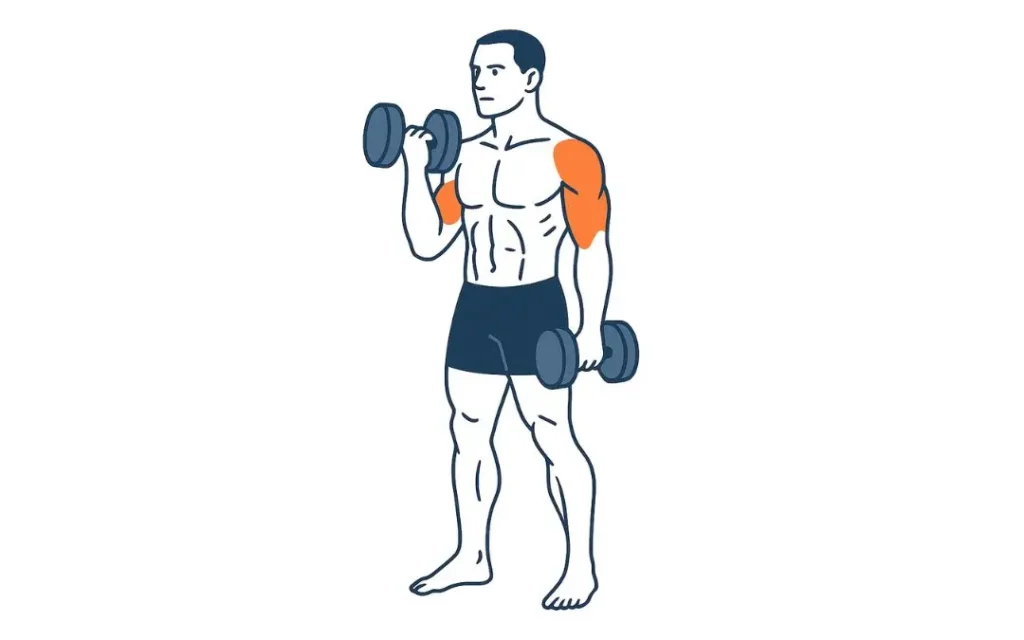
The hammer curl is an essential strength-training exercise for building your arms, targeting the biceps and forearms in particular. Less well-known than the classic curl, it is nonetheless highly effective for improving functional strength and muscle aesthetics. Whether you are a beginner or an experienced lifter, this movement deserves a prime spot in your program. Here is everything you need to know to master it.
Start Here
- Streetlifting Program
- Weighted Muscle Up Program
- Weighted Pull-Up Program
- Weighted Dips Program
- Squat Program
How to Do the Hammer Curl
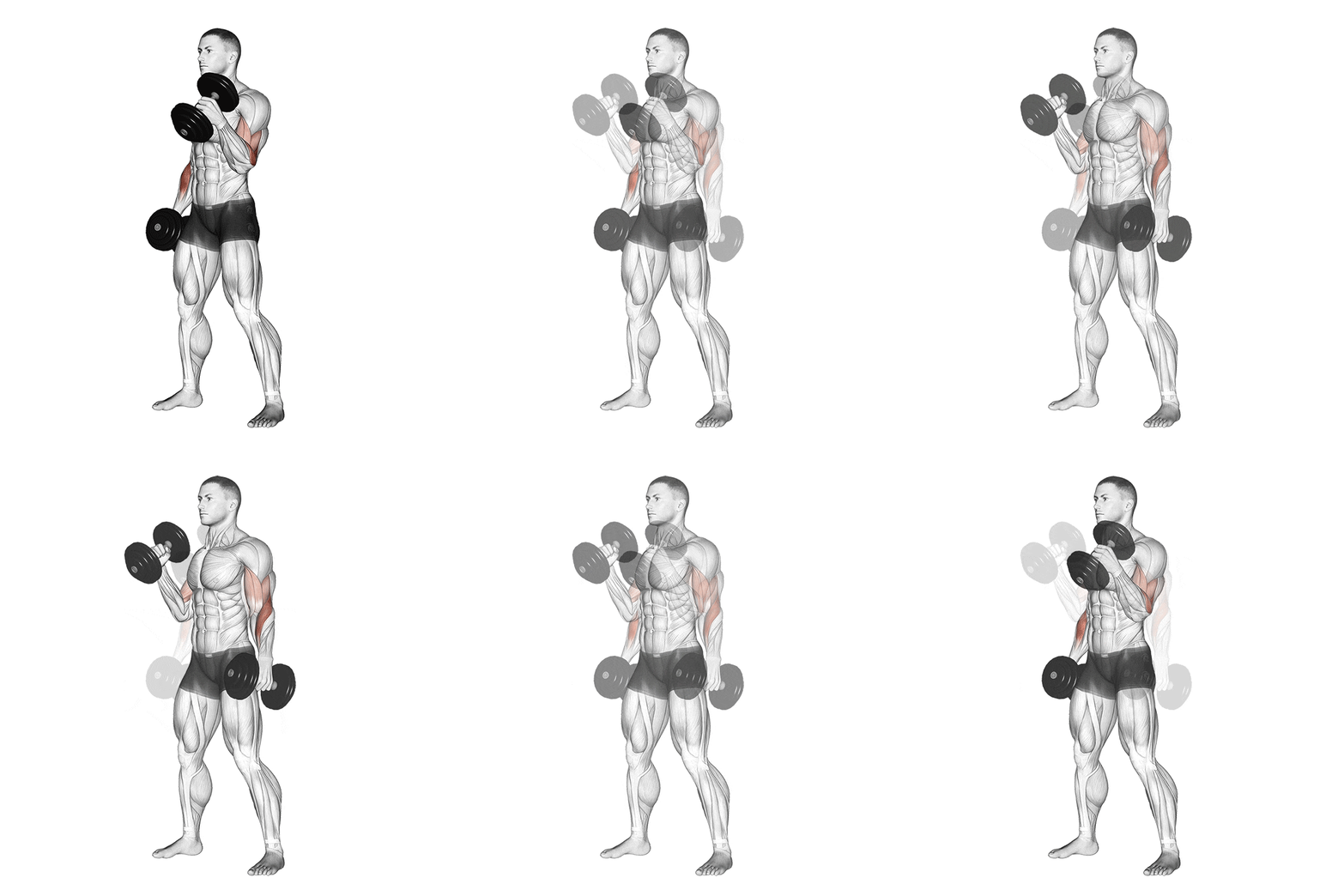
The hammer curl is performed standing or seated, with a pair of dumbbells. It is an isolation movement targeting the arms, ideal for gaining size and strength.
Correct Execution of the Hammer Curl
Follow these steps for perfect form:
-
Starting position:
Stand with your feet shoulder-width apart. Hold a dumbbell in each hand, palms facing your body (neutral grip). -
The movement:
Keeping your elbows tucked close to your body, flex your arms to curl the dumbbells up toward your shoulders. Do not rotate your wrists – maintain the neutral grip throughout the entire movement. -
Control and return:
Slowly lower the dumbbells back to the starting position without fully releasing the tension. -
Breathing:
Inhale on the way down, exhale on the way up.
Program or coaching?
Find your ideal format
Answer 4 questions and get a personalized recommendation based on your level and goals.
Tailored result
Free
Muscles Worked
The hammer curl does not target only the biceps. It also activates key supporting muscles for powerful, balanced arms:
| Primary Muscle | Function |
|---|---|
| Brachialis | Elbow flexion, arm size |
| Biceps brachii (long head) | Supination and elbow flexion |
| Brachioradialis (forearm) | Stabilization and elbow flexion |
| Forearm extensors | Overall arm strengthening |
Why Do Hammer Curls for Bigger Biceps?
The hammer curl is much more than a simple arm exercise:
-
Complete muscle development: It targets both the biceps and the forearms, optimizing muscle mass gains.
-
Improved functional strength: Thanks to the neutral grip, the hammer curl strengthens the muscles used in everyday movements.
-
Preventing imbalances: By working often-neglected muscles (such as the brachialis), it promotes better muscular balance.
-
Less wrist stress: Compared to the classic curl, the neutral grip is more natural and reduces joint discomfort.
Mistakes to Avoid to Stay Injury-Free
When performed incorrectly, the hammer curl can become counterproductive or even dangerous. Here are the most common mistakes:
-
Going too heavy: Excessive weight leads to swinging and places the shoulders under tension.
-
Elbows drifting away from the body: This reduces the exercise’s effectiveness and recruits unintended muscles.
-
Moving too fast: Lack of control undermines the muscle work and increases injury risk.
-
Incomplete range of motion: Not lowering the dumbbells far enough limits muscle recruitment.
Variations
To avoid monotony and stimulate your muscles differently, here are some effective hammer curl variations.
Seated Hammer Curl
This seated version allows you to eliminate momentum and better isolate the biceps. Perfect for strict-form work and concentrated effort.
Low-Cable Hammer Curl
Thanks to the constant resistance of the cable, this variation delivers continuous tension throughout the full range of motion. Ideal for hypertrophy cycles.
Preacher Hammer Curl
Also called the « Larry Scott bench curl », this preacher bench version isolates the brachialis even further. Very useful for developing the lower portion of the biceps.
Spider Curl
Performed face-down on an incline bench, the spider curl provides a maximum stretch of the biceps at the bottom position. It is also highly effective for developing the biceps peak.
Adding Hammer Curls to Your Training
Here are a few tips on how to program the hammer curl effectively:
-
At the end of an arm session: To finish the biceps work with a solid pump.
-
After a classic curl: Following up with hammer curls allows you to recruit the brachialis further.
-
In a superset: Pair it with a triceps exercise for a complete arm workout.
-
Recommended frequency: 1 to 2 times per week depending on your training split.
Coach’s Conclusion
The hammer curl is a simple yet devastatingly effective exercise for building arm strength and aesthetics. Thanks to its neutral grip, it protects the joints while deeply engaging the brachialis and brachioradialis. Whether you are in a mass-gaining or muscle-definition phase, it is a valuable ally to include in your routines. By varying your execution and avoiding classic mistakes, you will progress quickly and safely.