The air squat is a fundamental exercise in strength training, and an excellent tool for building functional strength throughout your body – a great complement to your squat program. Whether you are a beginner or an experienced athlete, this movement is essential for improving your overall fitness, working your muscles, and preventing injuries. It is one of the simplest exercises, yet remains highly effective when performed correctly. In this article, I will explain how to do an air squat properly, the benefits it offers, and the mistakes to avoid to maximize your results.
Steps to perform an air squat
Learning to do an air squat correctly is essential to fully benefit from it. The movement itself is simple, but attention to certain details will help you get the most out of it and avoid injuries. Here are the key steps to execute a perfect air squat:
1. Starting position
The first thing to do is place yourself in a good starting position. Stand with your feet slightly wider than shoulder-width apart. Your toes should be turned slightly outward. This will give you better stability and allow you to activate your muscles properly throughout the movement. Keep your chest up and engage your core to maintain a solid posture.
2. The descent
The descent phase is one of the most critical steps of the air squat. Keeping your back straight, push your hips backward as if you were about to sit on an invisible chair. Your knees should bend progressively, while avoiding going past the line of your toes. It is important that your weight is distributed evenly across your feet, with slightly more pressure on your heels. Lower until your thighs are parallel to the floor, or even slightly below if your mobility allows.
3. The ascent
Once you have reached the bottom position, it is time to come back up. Push through your heels while contracting your quadriceps and glutes to return to the starting position. Make sure your knees continue to track along the line of your toes, and avoid letting them cave inward. The ascent should be controlled and fluid, while maintaining steady breathing.
4. Breathing
Breathing plays a crucial role in executing the air squat. Inhale deeply as you descend and exhale during the ascent. Proper breathing helps better stabilize your body and optimize performance on each rep.
Program or coaching?
Find your ideal format
Answer 4 questions and receive a personalized recommendation based on your level and goals.
Tailored result
Free
Benefits of air squats
The air squat offers many benefits for improving overall physical fitness. It primarily strengthens the leg muscles, such as the quadriceps – similar to the leg extension or the kettlebell sumo squat – as well as the hamstrings and glutes, while also engaging the core to stabilize the body. This exercise also improves hip, knee, and ankle mobility, while helping to prevent injuries through muscle strengthening and better posture. Beyond that, the air squat builds cardiovascular endurance when performed repeatedly or at high intensity. It is also an excellent exercise for burning fat, since it engages multiple muscle groups simultaneously, increasing caloric expenditure. Easy to perform with no equipment whatsoever, the air squat can be done anywhere, making it a practical and accessible movement for all fitness levels.
Muscles worked
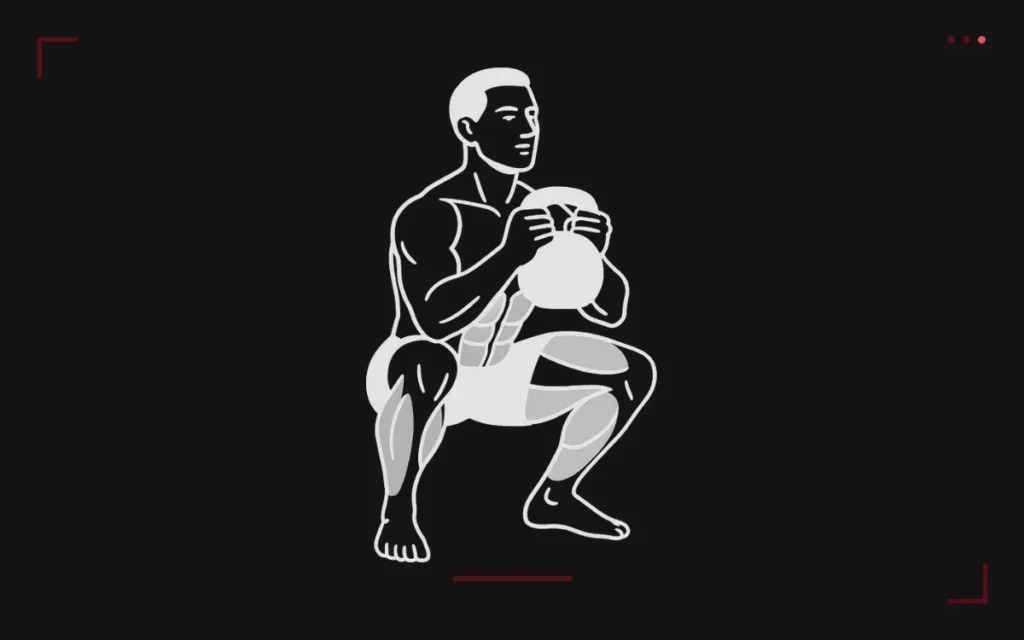
The air squat is a complete exercise that works several muscle groups – similar to the belt squat – primarily in the lower body but also at the core level. The quadriceps (front of the thighs) are the most actively engaged muscles, especially during the ascent phase. The hamstrings (back of the thighs) and the glutes are also heavily recruited, particularly during the descent phase where they contribute to stabilization and propulsion. The calves play a role in ankle stabilization, while the abdominals and lower back muscles are activated to maintain good posture and stabilize the body throughout the movement. This core muscle work is essential for maintaining balance and preventing injuries during more complex movements. The air squat is therefore an excellent exercise for simultaneously strengthening the muscles of the legs, hips, and core, promoting better overall stability and power.
Common air squat mistakes to avoid
-
Knees caving inward: Avoid letting your knees collapse inward – this can cause joint pain over time. Keep them aligned with your toes throughout the movement.
-
Rounded back: A curved back increases the risk of injury, particularly in the lower back. Maintain an upright posture and engage your core to stabilize the trunk.
-
Weight shifting to the balls of the feet: Do not let your weight shift forward. Focus on keeping your weight over your heels for better glute activation and reduced knee pressure.
-
Insufficient depth: Do not stop too early in the descent. Lower until your thighs are parallel to the floor to maximize muscle activation.
-
Incorrect breathing: Make sure to breathe correctly – inhaling on the way down and exhaling on the way up – to improve stability and performance.
Conclusion
The air squat is a fundamental exercise that everyone, regardless of their level, should include in their training routine. Easy to perform, requiring no equipment, this exercise strengthens the muscles of the legs and core, improves mobility, boosts endurance, and helps burn fat.
Start Here
- Streetlifting Program
- Weighted Muscle Up Program
- Weighted Pull-Up Program
- Weighted Dip Program
- Squat Program

mathieu
Street workout athlete since 2019, I discovered streetlifting in 2023. Today I share my passion for the sport through streetliftings.com.