
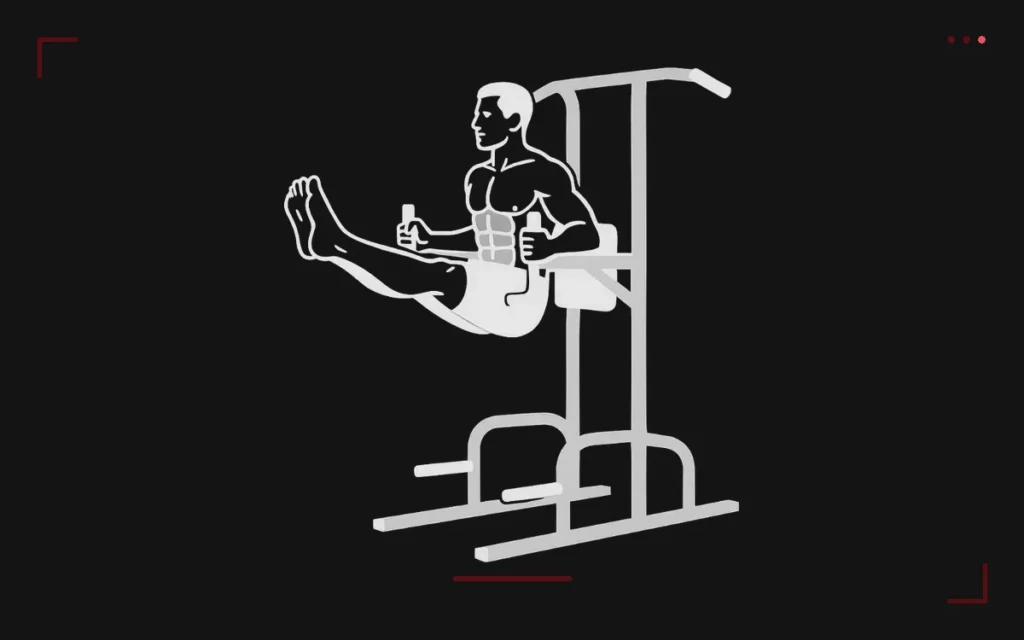
The leg raise is an essential strength exercise for effectively training your abs, particularly the lower portion of the core. Equipment-free and suitable for beginners and advanced athletes alike, it can be performed on the floor or hanging from a pull-up bar. But to get the most out of it, proper execution is everything. Here is everything you need to know to build your abs with leg raises.
Start Here
- Streetlifting Program
- Weighted Muscle Up Program
- Weighted Pull-up Program
- Weighted Dip Program
- Squat Program
How to Do Leg Raises to Build Your Abs
Proper Leg Raise Technique
Whether you are on the floor or hanging, technique is critical to avoid compensating with your lower back or hip flexors. Here are the key steps for an effective leg raise:
Floor version (lying leg raise):
- Lie on your back with your arms along your sides or tucked under your glutes for extra stability.
- Keep your legs straight or slightly bent depending on your level.
- Brace your abs and raise your legs to a 90-degree angle without lifting your lower back off the floor.
- Lower slowly with control, keeping your heels from touching the ground to maintain tension.
Hanging version (hanging leg raise):
- Hang from a pull-up bar with an overhand grip, keeping your body tight.
- With legs straight or bent, raise them to hip level or up to your chest depending on your mobility.
- Keep your torso still – no swinging.
- Control the descent to maximise abs contraction.
Program or coaching?
Find your ideal format
Answer 4 questions and receive a personalized recommendation based on your level and goals.
Tailored result
Free
Muscles Worked
The leg raise primarily targets the lower abs, but also engages several secondary muscle groups:
- Rectus abdominis: the main muscle involved, particularly its lower portion.
- Obliques: especially in rotational variations.
- Iliopsoas (hip flexors): secondary stabilizers – avoid over-relying on them.
- Rectus femoris: part of the quadriceps, activated during the leg raise.
Benefits of Leg Raises
Adding leg raises to your abs routine offers many advantages:
- Targeted lower ab training, an area often neglected by classic exercises like crunches.
- Improved core bracing and posture by strengthening the deep abdominal wall.
- Lower back pain prevention when performed correctly with good control.
- Versatile exercise that can be done anywhere, with no equipment or just a pull-up bar.
- Better coordination and mobility, especially with hanging variations.
Leg Raise Variations
To keep progressing and avoid plateaus, here are several leg raise variations to incorporate based on your level:
Bent-knee floor leg raise: ideal for beginners, easier on the lower back.
Straight-leg floor raise with isometric pause: add a 2-second hold at the top to intensify the contraction.
Hanging leg raise: advanced version that engages the entire trunk.
Toes to bar: legs straight up to touch the bar – very intense, for experienced athletes.
Hanging knee raise with rotation (obliques): targets the obliques more, improves lateral mobility.
Weighted leg raise: add ankle weights or hold a medicine ball between your feet for extra resistance.
Coach’s Conclusion
The leg raise looks simple but is devastatingly effective for building deep, strong abs – provided you master the technique. It strengthens the core, improves posture, and fits easily into any strength training or street workout program.
Take the time to do it right. Start with the floor version if you are a beginner, then progress to more advanced variations to sculpt strong, functional abs. Above all, pair it with a balanced diet and a complete training routine for visible results.

mathieu
Street workout athlete since 2019, I discovered streetlifting in 2023. Today I share my passion for the sport through streetliftings.com.