
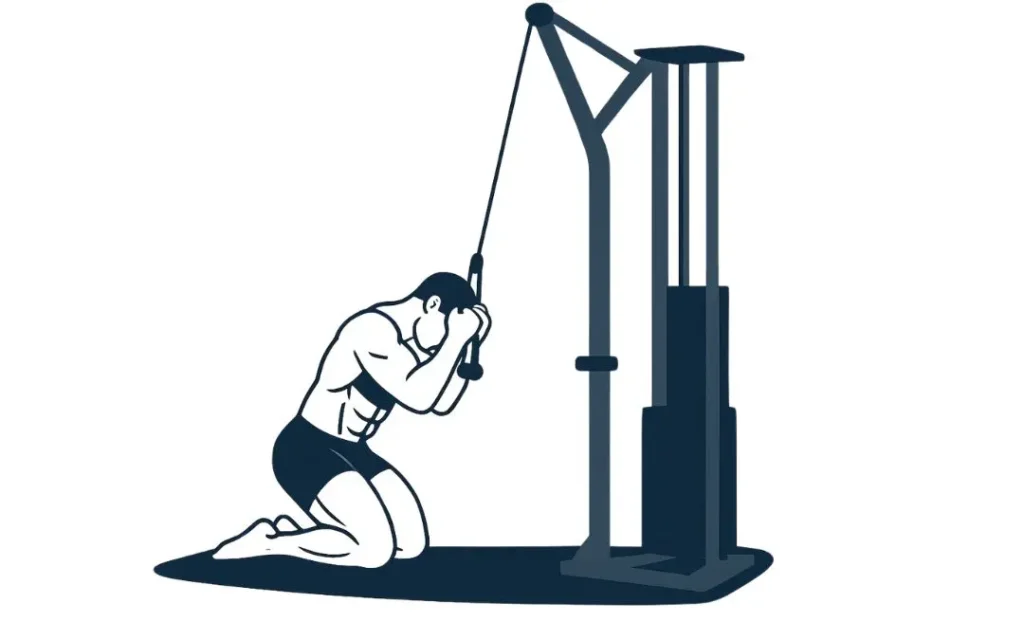
Cable crunches are an excellent option for anyone looking to strengthen their abs and build a solid core. Whether you are a beginner or an experienced athlete, this exercise can help you achieve impressive results while preventing lower-back pain through controlled execution – and it will also help you stabilise your body on movements like the weighted muscle up, the weighted pull-up, or weighted dips. In this article I will walk you through the exercise step by step, explain which muscles it targets, its benefits, and the mistakes to avoid so you can maximise your effort without risking injury.
Start Here
- Streetlifting Program
- Weighted Muscle Up Program
- Weighted Pull-Up Program
- Weighted Dip Program
- Squat Program
How to Do Cable Crunches
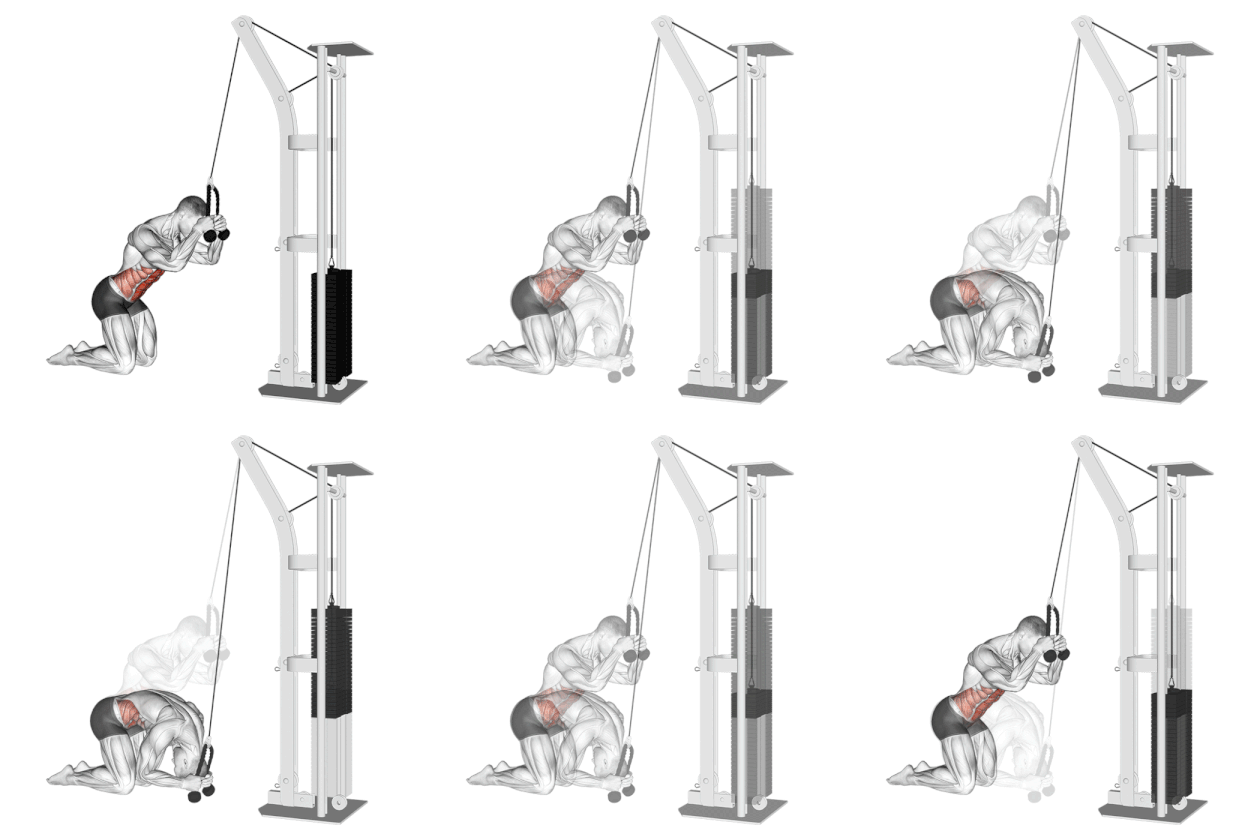
Cable crunches primarily target the abdominal wall – much like a Deadbug – but their correct execution depends on precise technique and a solid understanding of the high pulley. Here is everything you need to know to get started.
Setting Up the Cable Machine
To perform this exercise you need a cable machine fitted with a rope attachment or an adjustable bar. The high pulley is commonly used for pull-down exercises, but it is equally effective for training the deep abdominals.
- Equipment setup: Attach a rope to the pulley. Set the weight so you feel moderate resistance without compromising your posture.
- Starting position: Kneel facing the machine. Grasp the rope handles with both hands, keeping the rope at forehead height.
Make sure you have a stable posture before you begin the movement.
Execution
Cable crunches must be performed slowly and under control to maximise the effectiveness of the exercise while minimising injury risk.
- Starting position: Keep your back straight and lightly brace your abs. Your elbows should remain bent, close to your face.
- Movement: Round your spine by contracting your abs. Bring your forehead toward the floor while keeping your arms stationary. The goal is to perform a genuine crunching motion.
- Return: Slowly return to the starting position without fully releasing the tension in your abs.
Perform 3 to 4 sets of 12 to 15 reps, depending on your level. The key is to maintain clean form throughout the entire set.
Program or coaching?
Find your ideal format
Answer 4 questions and receive a personalised recommendation based on your level and your goals.
Tailored result
Free
Muscles Targeted
Cable crunches are one of the best exercises for specifically targeting the rectus abdominis – the muscle most commonly associated with the « six-pack ». That said, the exercise also engages other stabilising muscles.
- Rectus abdominis: The primary driver of spinal flexion, directly activated during the crunch movement.
- Obliques: Less heavily loaded but still contribute to stabilising the movement.
- Transverse abdominis: Located deep in the core, this muscle plays a crucial role in trunk stability and maintaining correct posture.
What Are the Benefits of Cable Crunches?
Cable crunches offer numerous benefits that you will not necessarily find in other classic ab exercises.
- Greater overload: The adjustable resistance makes it easy to progress by increasing the load, stimulating the muscles more than a traditional floor crunch.
- Targeted work: The isolation of the abs allows better focus on that area without heavily involving other muscle groups.
- Training variety: Cable crunches provide an alternative to classic exercises, keeping your sessions stimulating and effective.
- Posture improvement: By strengthening the transverse abdominis and the stabilising muscles, this exercise contributes to better everyday posture.
Common Mistakes to Avoid
To get the most out of this exercise, you must avoid certain common errors that can reduce its effectiveness or cause injury.
- Pulling with your arms: Your arms should not do the work. The movement must come exclusively from your abs. Keep your arms fixed throughout the entire rep.
- Too much weight: It is tempting to increase the resistance, but excessive load can compromise your posture and cause lower-back pain.
- Poor posture: Keep your back straight and avoid arching. Bad posture places unnecessary pressure on the spine.
- Incorrect range of motion: Do not use too short a range, nor an overly exaggerated one. Correct execution relies on a deliberate, controlled ab contraction.
Coach’s Conclusion
Cable crunches are an essential exercise for strengthening your abs and improving your overall physical condition. By adding this exercise to your training sessions, you can work your core effectively while protecting your posture. Remember to stay disciplined in your technique, avoid the common mistakes, and increase the load progressively to maximise your results.
More Exercises to Train Your Abs