
The deadlift is an iconic strength training exercise. Versatile and comprehensive, it engages numerous muscle groups and improves functional strength. However, performed incorrectly, it can cause injuries. Learn here how to execute it properly to get the most out of its benefits.
Start Here
- Streetlifting Program
- Weighted Muscle Up Program
- Weighted Pull-Up Program
- Weighted Dips Program
- Squat Program
Exercise Technique
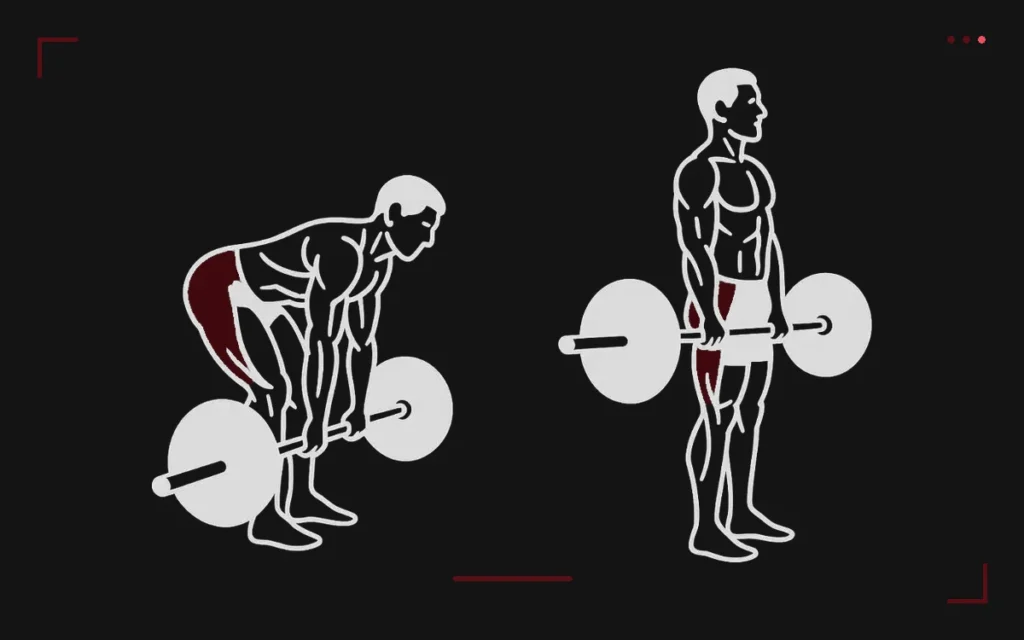
Good technique is essential to maximise results and minimise injury risk. The conventional deadlift is typically performed with a loaded barbell on the floor, which you lift until standing upright.
Steps to perform the Deadlift correctly:
-
Starting position: Place your feet shoulder-width apart, toes turned slightly outward. The bar should be directly above the middle of your feet.
-
Gripping the bar: Hinge at the hips and bend the knees to grab the bar with a pronated grip (or mixed grip). Your arms should remain outside your knees.
-
Straight back, chest out: Keep your back flat, squeeze your shoulder blades together, and look straight ahead.
-
The pull: Drive through your heels, extending your legs and hips simultaneously to lift the bar. Keep it as close to your body as possible.
-
Top position: Once standing, lock out your hips without excessively arching your lower back.
-
Controlled descent: Lower the bar back down following the same movement pattern, controlling the descent with your glutes and hamstrings.
Program or coaching?
Find your ideal format
Answer 4 questions and get a personalised recommendation based on your level and goals.
Tailored result
Free
Muscles Worked
The deadlift is a complete strength training movement, engaging an impressive posterior chain:
-
Back: spinal erectors, latissimus dorsi, trapezius
-
Legs: hamstrings, quadriceps
-
Glutes
-
Core (bracing)
-
Forearms (grip)
What Are the Advantages of the Conventional Deadlift Over the Sumo Deadlift?
The conventional deadlift and the sumo deadlift are both effective variations, but they present notable differences:
-
Range of motion: The conventional deadlift requires a greater range of motion, meaning a longer time under tension for the muscles.
-
Muscle recruitment: The conventional deadlift places more emphasis on the back and hamstrings, whereas the sumo targets the adductors and quadriceps more.
-
Functional carry-over: The conventional movement is often considered closer to everyday movements (picking up a heavy object from the floor).
-
Maximum load: Some athletes can lift heavier in sumo thanks to a more mechanically advantageous position, but the conventional remains the reference for overall strength development.
Common Mistakes to Avoid to Prevent Injury
A poor deadlift technique can cause injuries, particularly to the lower back. Here are the most frequent errors:
-
Rounding the back: A rounded back under load is dangerous. Maintain a flat spine and engage your core.
-
Bar too far from the body: It should drag along your shins to avoid excessive leverage.
-
Hips starting too high or too low: Initial alignment is crucial. Too high and you overload the back; too low and you lose power.
-
Not engaging the legs: The movement must come from your legs AND your hips, not just your back.
-
Too much weight too soon: Progress with loads appropriate to your level.
Coach’s Conclusion
The deadlift is one of the most effective exercises for developing strength, power and stability. However, it demands discipline, technique and progressive overload. Take the time to learn the correct movement pattern before loading heavy. Incorporate it into your training program to strengthen your posterior chain and improve your overall performance.
Explore More Hamstring Exercises
- Back Extensions
- Standing Leg Curl
- Seated Leg Curl
- Sumo Deadlift
- Romanian Deadlift
- Lying Leg Curl
- Leg Curl

mathieu
Street workout athlete since 2019, I discovered streetlifting in 2023. Today I share my passion for the sport through streetliftings.com.