
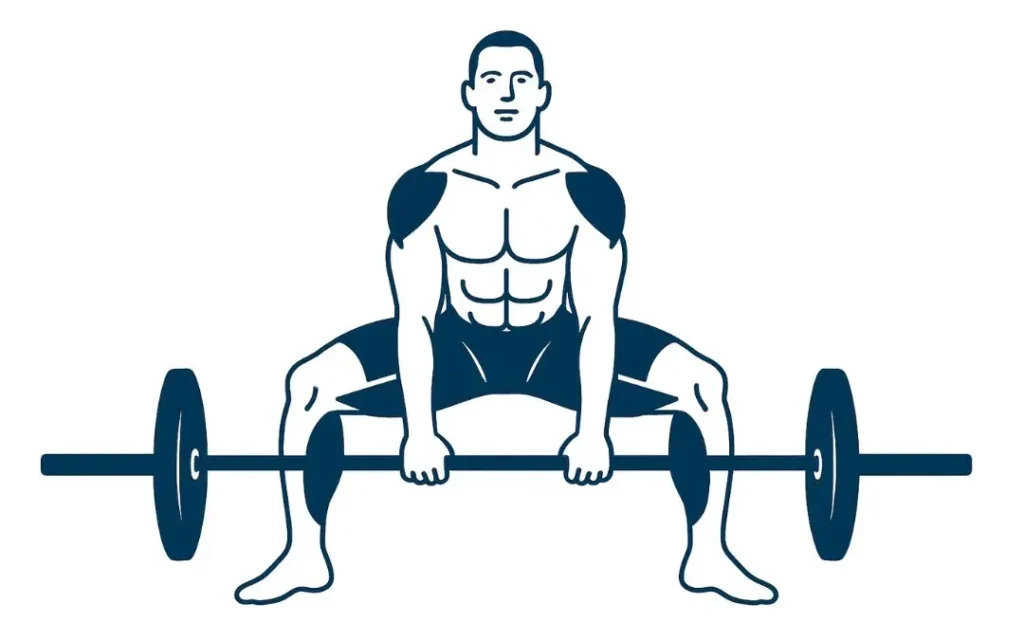
The sumo deadlift is a variation of the conventional deadlift that emphasizes explosiveness and leg strength while reducing tension on the lower back. This exercise is highly valued by weightlifters and powerlifters, but it is also beneficial for fitness enthusiasts looking to strengthen their posterior muscles.
In this article, we will detail how to correctly perform this movement, which muscles are targeted, the advantages of this stance, and the mistakes to avoid in order to optimize your performance while protecting your physical integrity.
How to do the sumo deadlift?
Correct execution of the sumo deadlift is essential to maximize its effectiveness and prevent injuries. Here are the key steps to follow:
- Foot placement and starting position
Take a wide stance, significantly wider than in a conventional deadlift. Point your feet slightly outward for better engagement of the adductors and hips. - Grip the bar
Grip the bar with an overhand (pronated) grip or a mixed grip (one hand pronated, one supinated) for added stability. Your hands should be positioned inside your knees. - Back position and core engagement
Keep your back straight, your chest slightly proud, and your gaze fixed forward. Brace your core and engage your shoulders to stabilize your posture. - Initiating the movement
Drive through your heels while keeping the bar close to your body. Engage your glutes and quadriceps to initiate the lift. - Lockout at the top
Once standing, lock out your hips by squeezing your glutes. Do not excessively arch your lower back. - Controlled descent
Lower the bar back to the floor under control, maintaining proper spinal alignment throughout.
Muscles targeted
The sumo deadlift engages a wide range of muscle groups – much like the Romanian deadlift – making it a foundational exercise for developing overall strength.
- Quadriceps: Heavily engaged from the start of the movement, they drive the initial push.
- Hamstrings: Contribute to hip extension and stabilize the knee.
- Glutes: Particularly active during the lockout at the top of the movement.
What are the advantages of a sumo stance in the deadlift?
Adopting a sumo stance offers several advantages over the conventional deadlift, especially for athletes with mobility limitations or those looking to maximize their peak strength.
- Reduced stress on the lower back
The torso remains more upright than in a conventional deadlift, decreasing stress on the lumbar spine. - Greater leg and hip engagement
The wider stance allows for greater recruitment of the adductors and glutes. - Improved stability
With a broader base, the center of gravity is lowered, providing better balance during the lift.
Mistakes to avoid to prevent injury
To fully benefit from the sumo deadlift, avoid these common mistakes:
- Rounding your back: Always maintain a neutral spine to protect your vertebral column.
- Failing to engage the hips: Pushing with your legs without activating the glutes limits force production and increases injury risk.
- Poor knee tracking: Your knees must follow the line of your feet and must not collapse inward.
- Pulling with your arms: The effort must come from your legs and hips, not your biceps or shoulders.
Coach’s conclusion
The sumo deadlift is an exceptional exercise for building overall strength and protecting your back while optimizing leg and hip drive. By integrating this variation into your training program and adhering to sound execution principles, you will improve your performance while reducing the risk of injury.
Always remember to warm up properly before you start, progress with loads suited to your level, and maintain impeccable technique throughout.
So, are you ready to test this ultra-effective version of the deadlift to boost your power and muscular endurance?