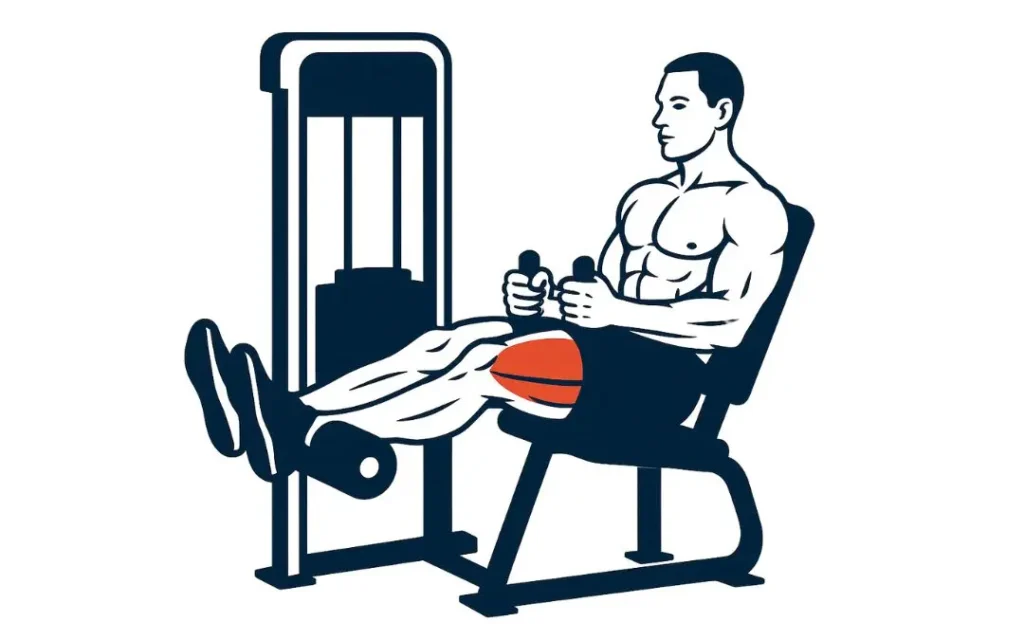
The seated leg curl is an essential strength training exercise for targeting the hamstrings in isolation. It is often underestimated, yet this exercise can make an enormous difference in your athletic performance – particularly on the squat movement – your posture, and even injury prevention. Whether you are a beginner or an experienced athlete, mastering it can supercharge your leg training sessions.
How to Do a Seated Leg Curl
The seated leg curl is performed on a specific machine found in most gyms. To get the most out of it, it is crucial to set up properly and execute the movement with precision.
Setup
Before starting your sets of seated leg curl, here is how to position yourself correctly:
-
Adjust the seat backrest so that your knees are aligned with the machine’s rotation axis.
-
Position your legs under the padded rollers. They should sit just above your heels.
-
Press your torso firmly against the backrest, with your hips locked in place. This prevents any compensatory movement during the exercise.
-
Choose an appropriate weight: start light to master the movement before progressively increasing the load.
This setup phase is essential for correctly engaging the hamstrings, the primary muscle group targeted by this exercise.
Proper Execution of the Seated Leg Curl
-
Contract your hamstrings and bring your heels toward your glutes while exhaling.
-
Control the upward phase without any jerking motion, to maintain muscle tension throughout the movement.
-
Hold the contraction for 1 second at the top position to maximise muscle activation.
-
Lower slowly back to the starting position while inhaling, without letting the weight drop suddenly.
Program or coaching?
Find your ideal format
Answer 4 questions and receive a personalised recommendation based on your level and goals.
Tailored result
Free
Targeted Muscles
The seated leg curl is a muscle isolation exercise that primarily works the hamstrings, located at the back of the thigh.
In addition, other muscles contribute in a secondary capacity:
-
The calves, specifically the gastrocnemius, which acts as a synergist muscle.
-
The glutes, which remain active to stabilise the hips throughout the movement.
-
The core muscles also provide light bracing to maintain posture.
Advantages of the Seated Leg Curl vs. Other Variations
Among the many variations of the leg curl (lying, standing, with resistance bands…), the seated leg curl offers some notable advantages.
-
Full range of motion: compared to the lying leg curl, the seated position allows greater hip extension, resulting in a deeper stretch of the hamstrings.
-
Increased stability: the backrest locks the upper body in place, limiting compensatory movements.
-
Joint comfort: ideal for those with lower back pain or limitations in forward trunk flexion.
-
Unilateral execution possible: you can work one leg at a time to correct a muscular imbalance.
Common Mistakes to Avoid on the Seated Leg Curl
Even though the movement appears simple, many mistakes can undermine its effectiveness and cause injury. Here are the most frequent ones to correct:
-
Using too much weight: this leads to poor execution and increases the risk of compensating with muscles other than the hamstrings.
-
Bouncing at the bottom of the movement: this reflex reduces muscle tension and stresses the joints in a dangerous way.
-
Not adjusting the machine to your body proportions: if the rollers are poorly positioned, the tension is not optimal and can even be ineffective.
-
Stopping the movement halfway: a partial range of motion drastically reduces muscle recruitment. To progress, you need to achieve a full contraction.
-
Losing your brace: a poorly locked torso or relaxed abs leads to parasitic movement at the pelvis.
Coach’s Conclusion
The seated leg curl is an ultra-effective isolation exercise for strengthening the hamstrings, which are often neglected in favour of the quadriceps. Easy to perform and to incorporate into a training programme, it suits all levels. By practising it with discipline and avoiding the classic mistakes, you will gain strength, stability, and injury resilience. Do not underestimate the power of this exercise – it could well become a cornerstone of your lower-body training sessions.