
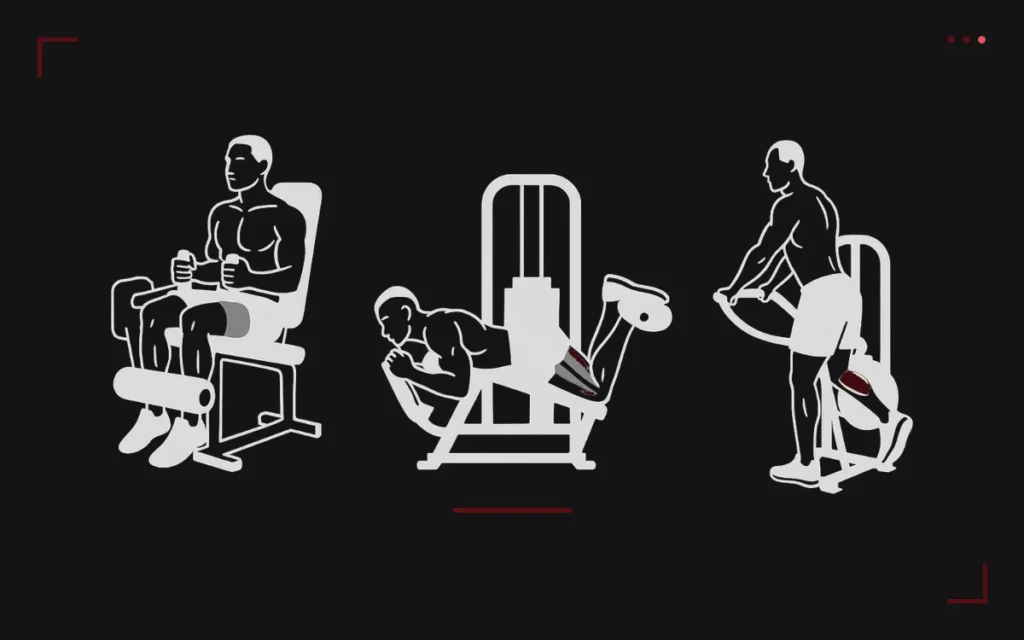
The leg curl is a strength-training exercise that primarily targets the hamstrings, a muscle group located at the back of the thigh. Although it is often overlooked in favor of more popular exercises such as the squat or the deadlift, the leg curl plays an essential role in muscular balance and injury prevention. This article will guide you through everything you need to know about the leg curl: its definition, its benefits, execution techniques, the muscles it works, and the mistakes to avoid in order to maximize your results.
Start Here
- Streetlifting Program
- Weighted Muscle Up Program
- Weighted Pull-Up Program
- Weighted Dips Program
- Squat Program
What is the leg curl?
The leg curl is an isolation exercise designed to work the hamstrings, a muscle chain that is often less developed than the quadriceps (the muscles at the front of the thighs). This exercise is generally performed using a dedicated machine available in most gyms. It consists of bending the knees against resistance, which contracts the muscles at the back of the thigh.
There are several variations of this exercise, including the lying leg curl, the seated leg curl, and the standing leg curl. Each variation targets the hamstrings in a slightly different way, but they all aim to strengthen this crucial area for knee stability and overall performance.
Program or coaching?
Find your ideal format
Answer 4 questions and receive a personalized recommendation based on your level and goals.
Tailored result
Free
What are the benefits of the leg curl?
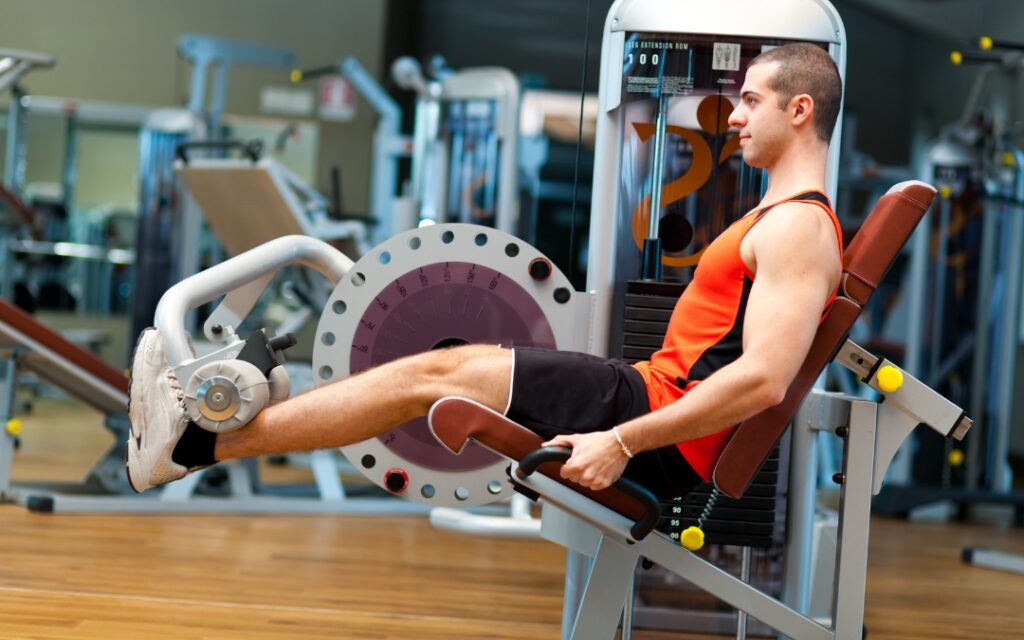
The leg curl offers numerous benefits, ranging from injury prevention to improved athletic performance. Here is why you should incorporate this exercise into your routine:
1. Hamstring strengthening
The leg curl is one of the best exercises for isolating and strengthening the hamstring muscles. Strong hamstrings are essential for maintaining good muscular balance in the legs, which helps prevent injuries, particularly at the knees and hips.
2. Improved knee stability
Weak hamstrings can lead to instability at the knee, which increases the risk of injury, especially in sports that require rapid changes of direction. The leg curl helps strengthen the muscles surrounding this joint, thereby improving overall knee stability.
3. Injury prevention
Well-developed hamstrings help balance the forces in the legs. This muscle, frequently undertrained, is crucial for preventing injuries to the knees, hips, and lower back. Athletes who neglect their hamstrings risk muscular imbalances that can lead to overcompensation by other muscles.
4. Improved athletic performance
The hamstrings play a key role in many athletic movements, such as running, jumping, and even weightlifting. Regular strengthening of these muscles through the leg curl improves leg power, increases running speed, and provides better endurance over long distances.
How to perform a leg curl?
There are several leg curl variations that can be performed in the gym, each with its own characteristics. We will now detail the three main variations of this exercise: lying, seated, and standing. Each one targets the hamstrings in a slightly different way, allowing you to achieve a complete workout.
Performing a lying leg curl
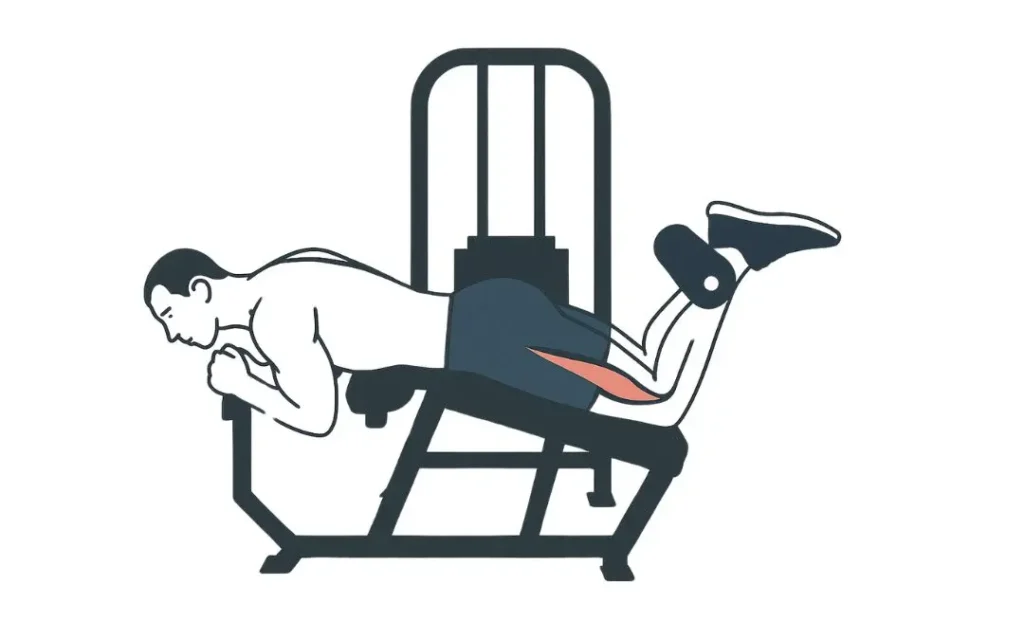
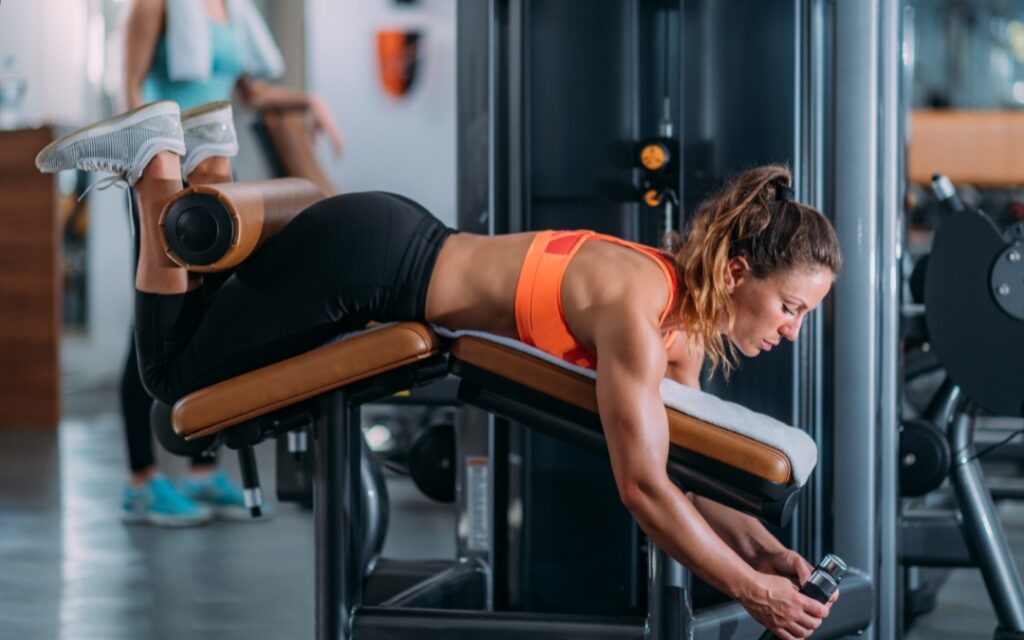
The lying leg curl (also called the prone leg curl) is the most commonly used variation. It is generally performed on a dedicated machine where you lie face down with your ankles under the pads. Here is how to execute this movement correctly:
- Starting position: Lie face down on the leg curl machine bench. Your knees should be aligned with the machine’s axis of rotation, and your ankles should be placed under the pad.
- Movement: Contract your hamstrings to bend your knees and bring your heels toward your glutes. Keep your torso and hips pressed against the bench throughout the movement to avoid compensating with other muscles.
- Return to starting position: Lower the weight in a controlled manner until your legs are almost straight, without fully locking the knees.
Tips: Maintain continuous tension in the hamstrings, even during the lowering phase. Breathe regularly and in a controlled manner for better performance.
Performing a seated leg curl
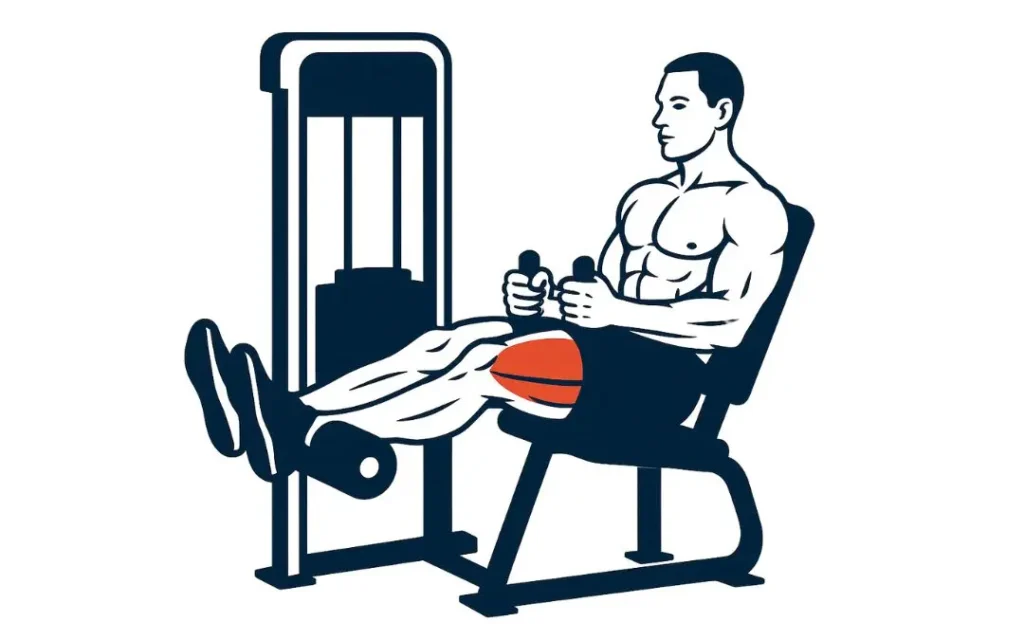
The seated leg curl is another highly effective variation, ideal for people with lower back pain since this position puts less pressure on the lumbar spine. Here is how to perform it:
- Starting position: Sit on the seated leg curl machine with your back straight against the backrest. Place your ankles under the designated pad.
- Movement: Bend your knees to bring your heels toward your glutes, contracting your hamstrings. Be careful not to arch your back during the movement.
- Return to starting position: Release the weight slowly, maintaining constant tension in your hamstrings.
Tips: Maintain good posture throughout the exercise. The seated leg curl is particularly beneficial for strengthening the hamstrings from a different position, promoting balanced muscle development.
Performing a standing leg curl
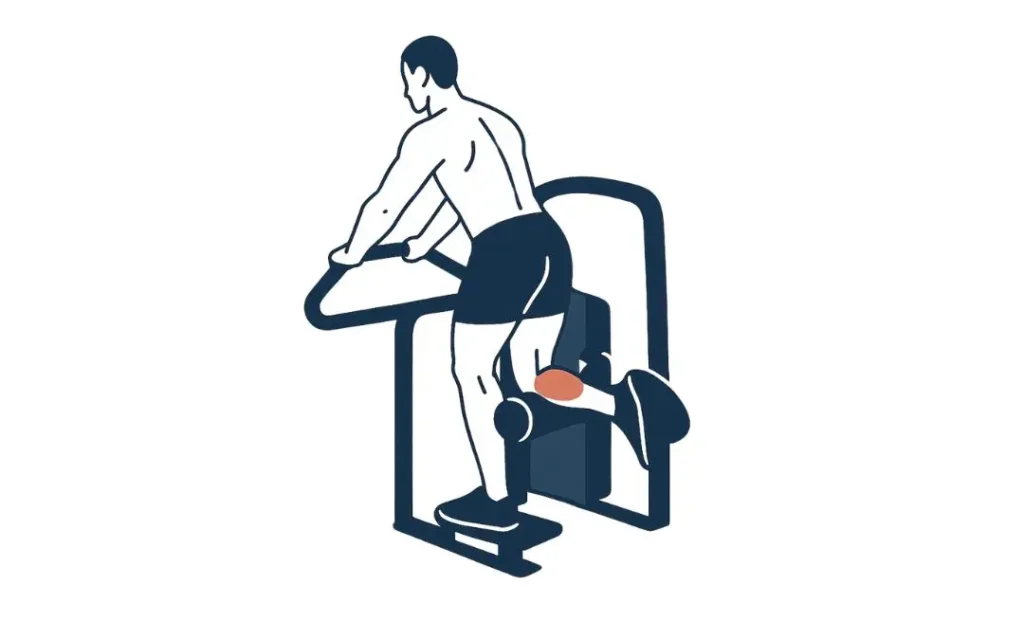
The standing leg curl is a variation that works one leg at a time. This variation is ideal for further isolating each hamstring and correcting any muscular imbalances. Here is how to proceed:
- Starting position: Stand on the dedicated machine and place one ankle under the pad.
- Movement: Contract your hamstring to bring your heel toward your glute, while keeping the opposite leg stable.
- Return to starting position: Lower the weight slowly to return to the starting position. Repeat with the other leg.
Tips: This movement is often more challenging, so focus on proper execution before adding weight. Control both the upward and downward phases of the movement to maximize results.
Which muscles does the leg curl work?
The leg curl primarily targets the hamstrings, which comprise three main muscles: the biceps femoris, the semitendinosus, and the semimembranosus. These muscles are essential for knee flexion and hip stabilization.
Hamstrings: The most directly engaged muscle group is the hamstrings. These muscles are responsible for knee flexion and are crucial for running, jumping, and lower-body stability. Strengthening these muscles not only improves athletic performance but also prevents injuries.
Glutes: The glutes are also slightly activated, particularly during the peak contraction phases of the leg curl. Although their involvement is lesser than that of the hamstrings, proper complementary training will help maximize lower-body development.
Stabilizer muscles: Depending on the leg curl variation performed, stabilizer muscles such as the core and calf muscles may also be recruited to maintain correct posture and control the movement.
Tips for proper execution in strength training
Here are some tips to maximize the effectiveness of your leg curl and reduce the risk of injury:
- Use an appropriate load: Never sacrifice technique to lift heavier. Start with a light weight to properly master the movement, then increase progressively.
- Control the movement: It is essential to maintain full control during the eccentric phase (lowering). Do not simply let the weight drop – keep the muscles under tension.
- Stay aligned: Make sure your knees, hips, and ankles remain aligned throughout the exercise to avoid placing too much stress on the joints.
- Vary the angles: For complete hamstring development, do not hesitate to alternate between the different leg curl variations (lying, seated, standing). Each position targets the hamstrings from slightly different angles, which allows you to work the entire muscle and avoid imbalances.
Mistakes to avoid to prevent injury
Like any strength-training exercise, the leg curl must be performed correctly to prevent injuries. Here are the most common mistakes to avoid:
Using too heavy a load: One of the most frequent mistakes is choosing a weight that is too heavy at the expense of technique. This often leads to jerky and poorly controlled movements, which can place excessive stress on the knees and lower back. Always start with a weight you can control throughout the full range of motion.
Not controlling the eccentric phase: The eccentric phase, or the lowering of the weight, is just as important as the concentric phase (the lifting). Many practitioners release the load too quickly, which reduces the effectiveness of the exercise and increases the risk of injury. Take the time to lower the weight slowly, maintaining constant tension in the muscles.
Letting the hips or lower back lift off: Whether in the lying or seated position, it is essential to keep the lower back and hips in contact with the bench or seat at all times. Lifting these parts of the body places excessive stress on the spine and reduces the exercise’s effectiveness on the hamstrings.
Conclusion
The leg curl is a fundamental exercise for strengthening the hamstrings and improving knee stability. Whether you choose to perform it lying, seated, or standing, mastering the technique is essential to avoid injuries and maximize your muscle gains.
This isolation exercise, often underestimated, is crucial for balancing leg strength, preventing injuries, and improving performance in many sports. By incorporating the different leg curl variations into your training program, you ensure complete hamstring development and better progression in strength training.
See other exercises to strengthen your hamstrings
- Lower back extensions
- Standing leg curl
- Seated leg curl
- Sumo deadlift
- Romanian deadlift
- Lying leg curl

mathieu
Street workout athlete since 2019, I discovered streetlifting in 2023. Today I share my passion for the sport through streetliftings.com.