
Start Here
- Streetlifting Program
- Weighted Muscle Up Program
- Weighted Pull-Up Program
- Weighted Dip Program
- Squat Program
The cable fly is an essential strength training exercise for developing and strengthening the pectorals. Often overlooked in favor of the bench press or other classic movements, this pulley-based exercise has many advantages for those who want to sculpt a balanced and well-defined chest. As a fitness coach, I will walk you through the techniques, benefits, and mistakes to avoid so you can get the most out of the cable fly.
Muscles Targeted
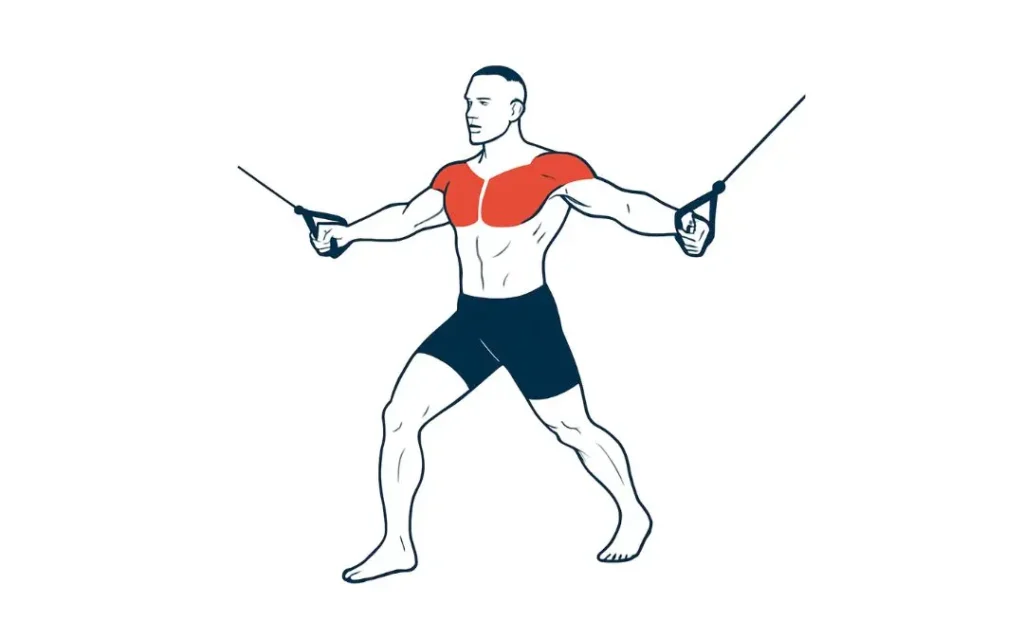
The cable fly primarily targets the pectorals – much like the chest press or the peck deck – but it also recruits several stabilizing muscles for a comprehensive upper-body workout:
- Pectoralis major: This is the primary muscle worked during the cable fly. It is responsible for arm flexion and adduction, which allows you to bring the handles together while intensely contracting the chest.
- Pectoralis minor: Located beneath the pectoralis major, these muscles play a role in shoulder stabilization and are activated during the closing motion.
- Anterior deltoids: Although this exercise is not specifically designed for the shoulders, the anterior deltoids (front of the shoulder) participate in the movement and stabilize the joint throughout the range of motion.
- Biceps brachii: The biceps stabilize the arms and control the flexion movement required during the fly.
- Scapular stabilizers: By maintaining proper posture, you also activate muscles such as the rhomboids, trapezius, and shoulder rotators, which are essential for injury prevention.
Program or coaching?
Find your ideal format
Answer 4 questions and receive a personalized recommendation based on your level and goals.
Tailored result
Free
Why Do the Cable Fly?
The cable fly offers several advantages compared to classic dumbbell flys or the bench press:
- Constant tension: Unlike dumbbells, the cable provides constant resistance on the muscle throughout the full range of motion. This means the pectorals work equally hard during both the stretching phase and the contraction phase – ideal for making progress on weighted dips.
- Adjustable range of motion: You can adjust the starting height to target specific parts of the pectoral: higher for the lower fibers, lower for the upper fibers.
- Reduced injury risk: Compared to free weights, cables provide better stability, which can reduce the risk of injury – especially for those dealing with shoulder pain.
- Isolation work: This exercise is ideal for isolating the pectorals. For those looking to balance their muscle development or correct an asymmetry, the cable fly can be an excellent addition.
- Improved posture: By strengthening the stabilizing muscles of the chest and back, this exercise also helps improve posture, which is essential for overall health.
How to Do the Cable Fly
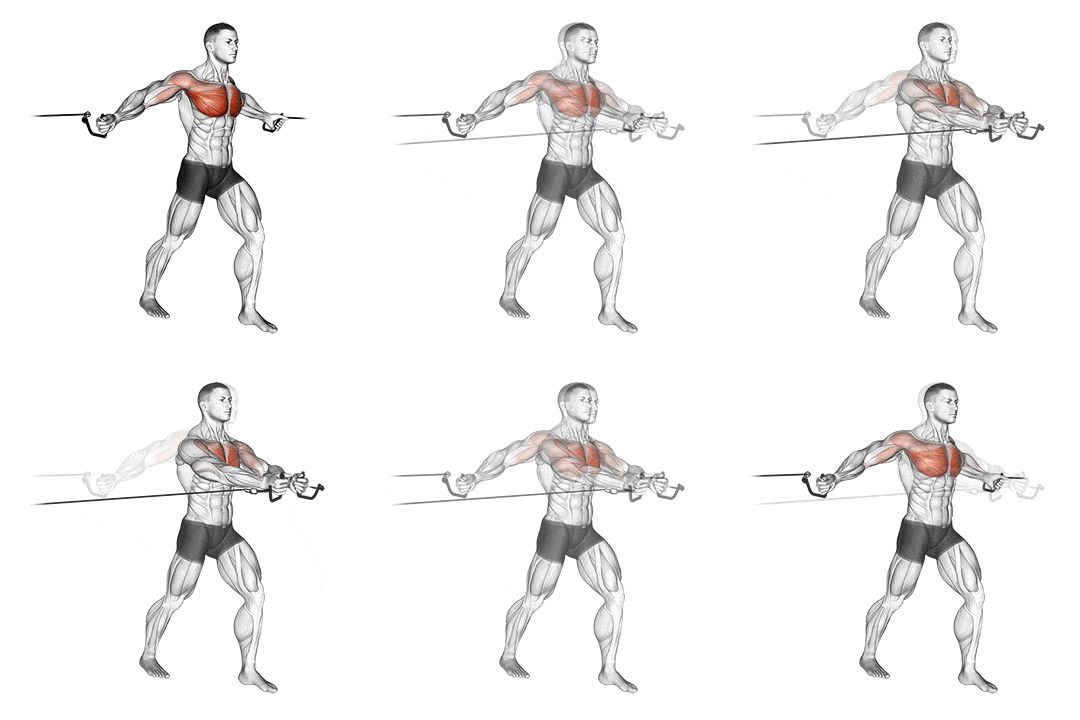
To perform this exercise effectively, follow the detailed steps for each phase of the movement:
- Load selection: Do not start too heavy. The goal is to isolate the pectorals, so choose a moderate weight that allows a controlled, fluid movement.
- Cable positioning: Depending on which part of the chest you want to target, adjust the cable height. A high setting will work the lower pectoral fibers more, while a low setting will target the upper fibers.
- Breathing: Breathing is essential for stabilizing the body and maximizing strength. Inhale as you return your arms back, and exhale as you bring the handles together.
- Focus on muscle contraction: During execution, concentrate on contracting the pectorals. Mental visualization can help activate the target muscle more effectively.
- Controlled return: The phase of returning the handles to the starting position is often neglected. Do not let your arms fly back too quickly. This control is fundamental for optimizing muscular stimulation and protecting the shoulders.
Common Mistakes to Avoid
The cable fly is an excellent exercise, but it can be risky if certain errors are not corrected. Here are the most frequent mistakes:
- Too much weight: Overloading is one of the most common mistakes. Too heavy a weight will prevent you from executing the movement correctly and increases the risk of injury.
- Poor elbow position: Elbows that are too bent or too open engage the shoulders more than the pectorals, which reduces the exercise’s effectiveness and creates unwanted tension.
- Excessive range of motion: By trying to stretch the muscle too far, you risk creating unnecessary tension on the shoulder joint. Keep a controlled range of motion and do not let your arms go too far behind you.
- Poor body alignment: For good posture, the torso should be slightly leaning forward, but avoid hunching excessively or over-arching the back.
- Uncontrolled return: The return of the arms must be just as controlled as the closing phase. A quick return reduces the exercise’s effectiveness and can cause pain.
Coach’s Conclusion
In conclusion, the cable fly is a valuable exercise for anyone looking to develop their pectorals efficiently and safely. Whether you want to maximize pectoral muscle development, balance your chest, or improve your posture, this exercise fits perfectly into a well-structured strength training program.
Other Exercises to Build Your Chest
- Assisted Dips
- Weighted Push-Up Program
- Build Your Chest with Weighted Dips
- Incline Press: Dumbbells or Barbell
- Decline Bench Press
- Dumbbell Bench Press
- Peck Deck
- Chest Press
- Archer Push-Up
- One-Arm Push-Up