
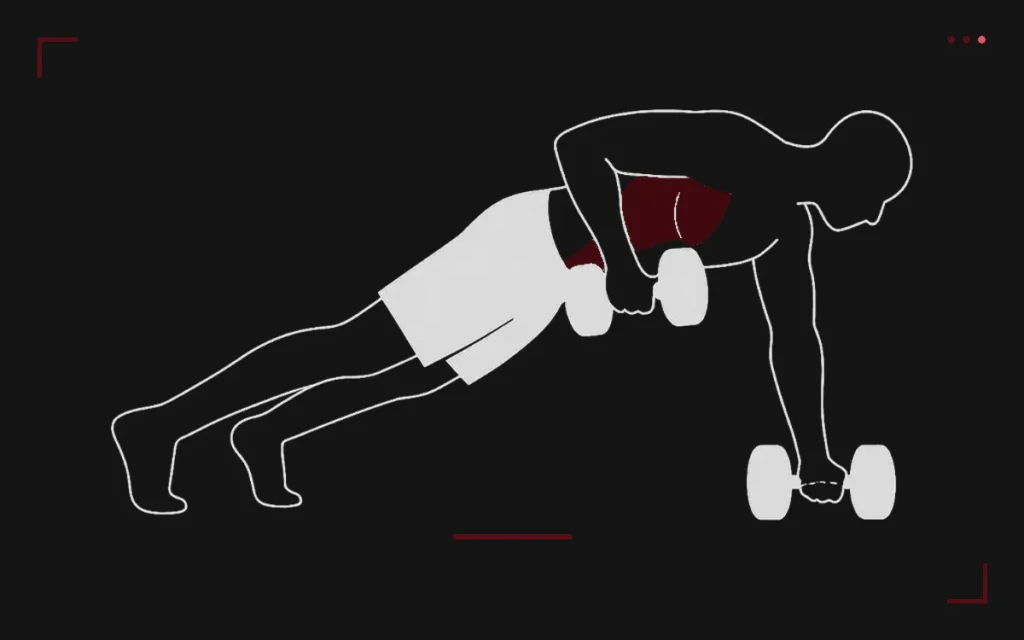
The Renegade Row is a compound exercise loved by strength training enthusiasts, athletes, and coaches for its many benefits. This muscle-building movement intensely engages several upper-body muscles as well as the core and stabilizing muscles. Whether you are a beginner or an experienced athlete, learning and mastering the Renegade Row will help you optimize your training sessions. In this article, we explain the technique in detail, the muscles targeted, the advantages of the Renegade Row, and the errors to avoid.
Exercise Technique
Technique is paramount for a successful Renegade Row and for avoiding injury. This is not a simple barbell row; it combines core engagement with a pulling movement, which makes it particularly demanding. To perform the Renegade Row safely, it is essential to master the starting position and to understand each step of execution. We will walk you through the technique step by step so you can get the most out of this exercise while reducing injury risk.
Program or coaching?
Find your ideal format
Answer 4 questions and receive a personalized recommendation based on your level and your goals.
Tailored result
Free
Muscles Targeted
The Renegade Row is a very complete exercise that engages a wide range of muscles. Beyond working the back muscles, this movement also stimulates the core and the shoulders. Here are the main muscles engaged during the Renegade Row:
- The back: The latissimus dorsi, trapezius, and rhomboids are strongly engaged in the pulling movement.
- The shoulders: The deltoids stabilize the exercise, in particular the posterior deltoids.
- The biceps: They assist during the pulling movement.
- The core: The trunk muscles are constantly engaged to maintain body stability.
- The hip and glute stabilizers: Although less stressed than the other muscles, they play a key role in maintaining balance and preventing any swinging motion.
The lat pulldown and the superman hold target the same muscle groups.
What Are the Benefits of the Renegade Row?
The Renegade Row offers numerous benefits for athletes. Here are the main advantages this exercise can bring to your training routine.
-
Improved back strength: Thanks to the pulling movement, the Renegade Row effectively strengthens the back muscles, which can improve your weighted muscle up and weighted pull-up.
-
Core stabilization and strengthening: The plank position imposed by the Renegade Row forces the abdominal muscles to work intensely. This strengthens the core and improves overall trunk stability.
-
Functional exercise: The Renegade Row is a functional exercise that strengthens not only the muscles but also the entire kinetic chain, which can improve athletic performance.
-
Increased caloric expenditure: This exercise is intense and demands a significant muscular effort, making it ideal for burning calories and improving overall fitness.
-
Better coordination and motor control: By executing the Renegade Row correctly, you improve your coordination and develop better control of your movements, which benefits other strength training exercises.
How to Do a Renegade Row?
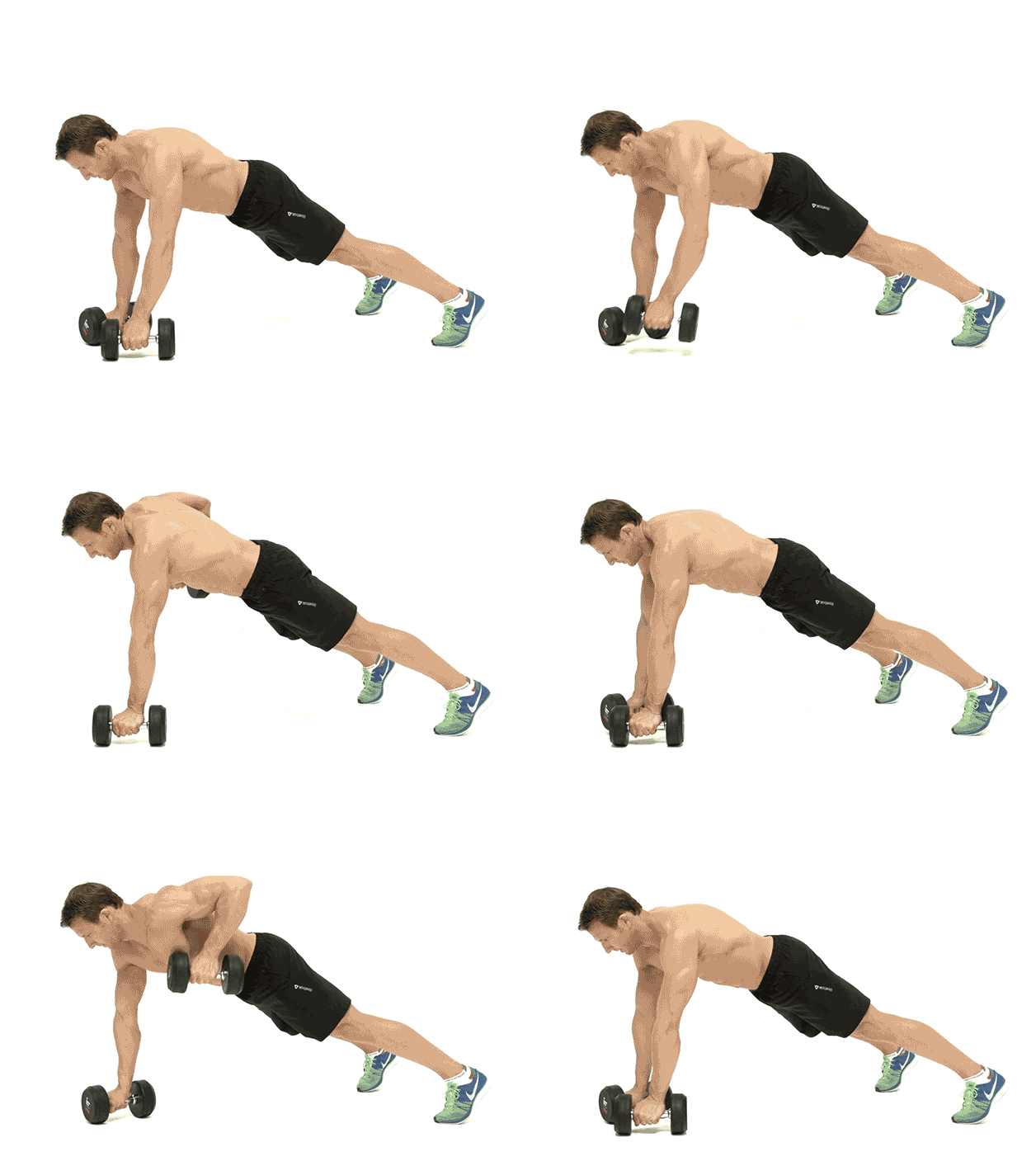
To perform the Renegade Row successfully, it is essential to prepare each step properly, from the starting position to the movement execution. Here is how to do a Renegade Row safely and effectively.
Setting Up for the Renegade Row
Before starting the Renegade Row, make sure you have dumbbells of a weight appropriate for your level. A weight that is too heavy could compromise proper execution. You will also need a floor mat for additional comfort under your hands and feet.
- Starting position: Get into a plank position with your feet shoulder-width apart for better stability.
- Grip the dumbbells: Hold a dumbbell in each hand with palms facing inward, and make sure your wrists are aligned with your shoulders.
- Core engagement: Brace your abdominals and keep your body in a straight line. It is important not to let your hips sag to avoid excessive pressure on the lower back.
Executing the Movement
Once properly set up, you can move on to the execution of the Renegade Row.
- The pull: While maintaining a solid plank position, lift one dumbbell toward your hip, keeping the elbow close to your body. The movement should be smooth and controlled.
- Stabilization: While you pull the dumbbell, engage the stabilizing muscles to prevent hip rotation.
- Return: Lower the dumbbell in a controlled manner back to the starting position without releasing tension in the abdominals.
- Repeat on the other side: Perform the same movement with the other arm following the same cues.
Renegade Row vs. Classic Row – Comparison
| Criterion | Renegade Row | Classic Row (Barbell/Dumbbell Row) |
|---|---|---|
| Exercise type | Compound (pulling + core) | Pure pull (back work) |
| Muscle groups targeted | Back, biceps, core, shoulders | Back (lats, traps, rhomboids), biceps |
| Equipment required | 2 dumbbells + stable surface | Dumbbells or barbell |
| Stability / technical difficulty | Requires solid core engagement and significant stability | More stable, more technically accessible |
| Core work | Very high (active bracing in plank position) | Low (depending on the variation) |
| Mobility required | High (especially at the shoulders and wrists) | Moderate |
| Injury risk | Higher if core is insufficient (lumbar arching) | Moderate, depends on load and technique |
| Pure muscle development | Less optimal for hypertrophy | Reference exercise for back mass gains |
| Unilateral stimulation | Yes (each arm works independently) | Possible with dumbbells, but not always |
| Primary goal | Functional strength, core, endurance | Strength, back hypertrophy |
| Use in street workout | Very suitable: bodyweight + free load | Less used, often requires more equipment |
| Ease of execution | Moderate to difficult (technique + core) | Moderate (but requires good posture) |
| More dynamic variation? | Yes, can be combined with burpees or push-ups | No, more of a “static” exercise |
| Suitable for beginners? | Yes, but under supervision or with a simplified version | Yes, with light loads and good technique |
Errors to Avoid to Prevent Injury
As with the neutral-grip pull-up, certain errors are common during the Renegade Row and can increase injury risk or reduce the exercise’s effectiveness. Here are the most frequent mistakes and how to avoid them.
-
Hips that rotate or swing: One of the most common errors is allowing the hips to swing from side to side during the pull. To prevent this, brace your abdominals and widen your foot stance slightly for more stability.
-
Failing to engage the core: If the abdominals are not sufficiently braced, the lower back may bear excessive tension. This can lead to lower back pain.
-
Using too much weight: If the weight is too heavy, it becomes difficult to control the movement and maintain good posture. Choose a weight that allows you to stay in control of the exercise while still feeling sufficient resistance.
-
Incorrect hand alignment: The wrists must be aligned with the shoulders to avoid excessive pressure on the joints.
Coach’s Conclusion
The Renegade Row is an essential exercise for anyone looking to strengthen their back, their core, and their overall body stability. It is a functional movement that combines strength, balance, and endurance. By incorporating it into your training program, you will benefit not only from improved upper-body strength but also from better trunk control.
Other Exercises to Build Your Back
- Assisted pull-up
- Dead Hang
- Resistance band pull-ups: the first step toward unassisted pull-ups
- How to do chin-ups and blast your biceps with the supination grip pull-up
- Ring muscle up
- TRX row
- Close-grip lat pulldown
- Planche row
- Barbell row: techniques and tips
- Neutral-grip pull-up

mathieu
Street workout athlete since 2019, I discovered streetlifting in 2023. Today I share my passion for the sport through streetliftings.com.